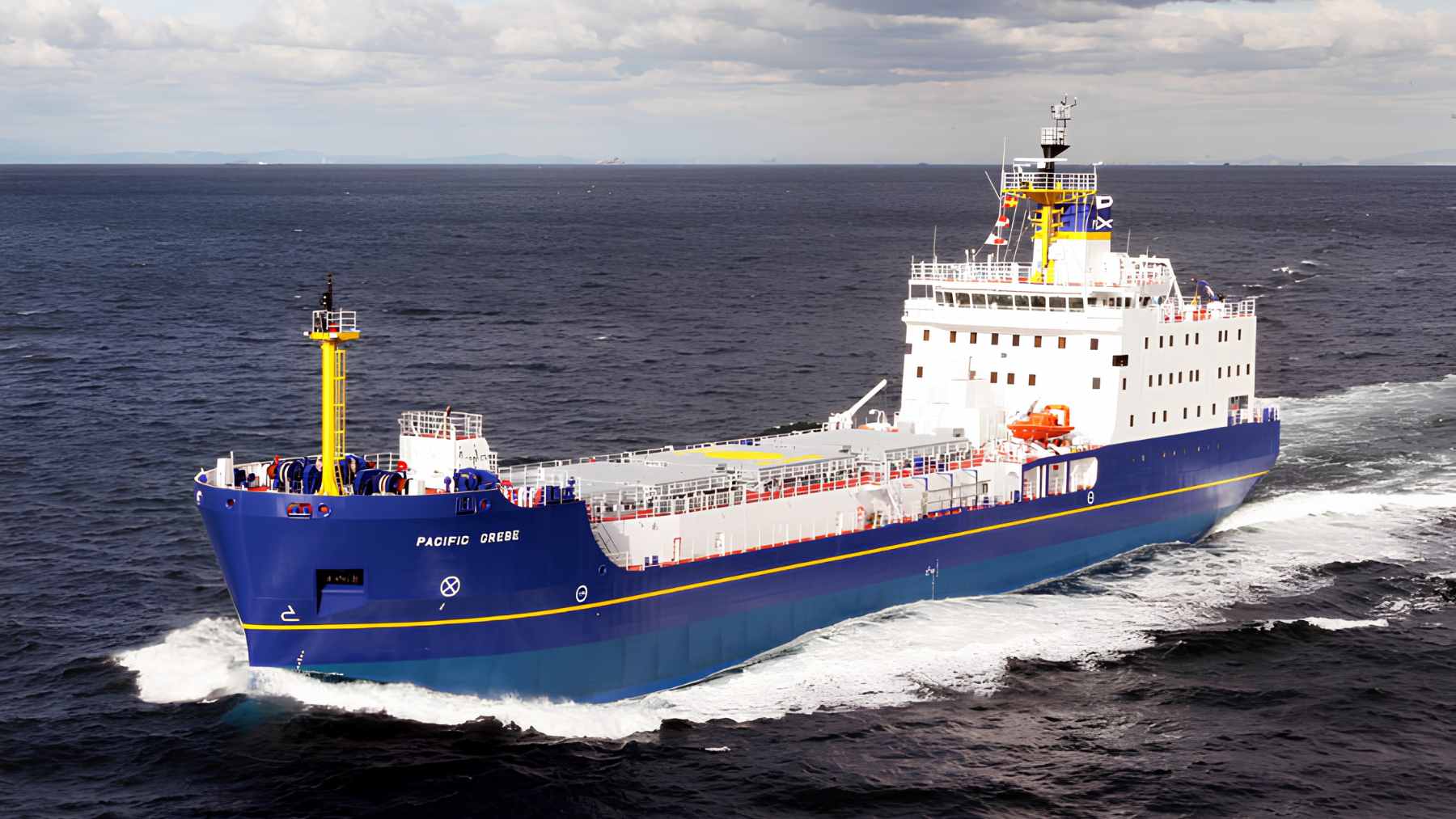
A specialist diesel-powered ship has been redesigned to carry a nuclear fuel container so heavy that it forced engineers to rethink the way the cargo locks into the vessel. The ship is the Pacific Grebe, part of Pacific Nuclear Transport Limited’s fleet, and the container is Orano’s TN Eagle, built for spent mixed oxide fuel.
At first glance, it sounds like a narrow shipping update. But it points to a bigger environmental question hiding behind the energy transition. If nuclear power remains part of the electricity mix, countries also need a safe, highly controlled way to move the fuel after it has done its job.
A huge nuclear container
TN Eagle is Orano’s new-generation packaging model for the transport and dry storage of used nuclear fuel. Orano says the system can weigh up to 150 metric tons (165 US tons) in transport configuration and has licensing approvals in Europe and the United States.
The container was not simply rolled into place like a freight box on a dock. NTS says Pacific Grebe became the first ship in the PNTL fleet adapted to accommodate it, after initial trials at Barrow Marine Terminal and a full-scale fitting in Cherbourg, France.
Precision work below deck
To hold the new container securely, NTS engineers produced a custom adapter plate for the ship’s hold. The company said the job required millimeter precision, plus a specialized tool to align the ship’s removable decks with the TN Eagle during loading and unloading.
The 165-ton container was placed in several ship holds to check compatibility. NTS called the exercise a success, and Conner Love, NTS director of shipping, said it was “a fantastic collaborative effort between NTS and PNTL.”
Why this is an environmental story
Spent MOX fuel is not just another industrial product. MOX fuel is made from plutonium recovered from used reactor fuel and mixed with depleted uranium, according to the World Nuclear Association.
That makes the container itself a key part of environmental protection. The World Nuclear Association says highly radioactive materials such as used fuel and high-level waste are moved in purpose-designed containers with shielding, and dual-purpose casks are often used for both storage and transport.
It is easy to focus on the ship. But for communities near ports and shipping lanes, the container, procedures, maintenance, and emergency planning are the parts that matter most.
A diesel fleet with a nuclear mission
The Pacific Grebe is not a new ship. PNTL says it was delivered in 2010, entered full service in 2011, has four holds, and is an INF 3 certified vessel under the International Maritime Organization’s INF Code.
The fact that this is a diesel-powered fleet adds a slightly awkward detail. Nuclear energy is often discussed as part of a lower-carbon power system, but the back end of the fuel cycle still depends on heavy maritime logistics, port infrastructure, and specialized crews.
That does not make the system unsafe by itself, but it does mean environmental claims around nuclear energy cannot stop at the reactor fence.
Built for accidents, not routine luck
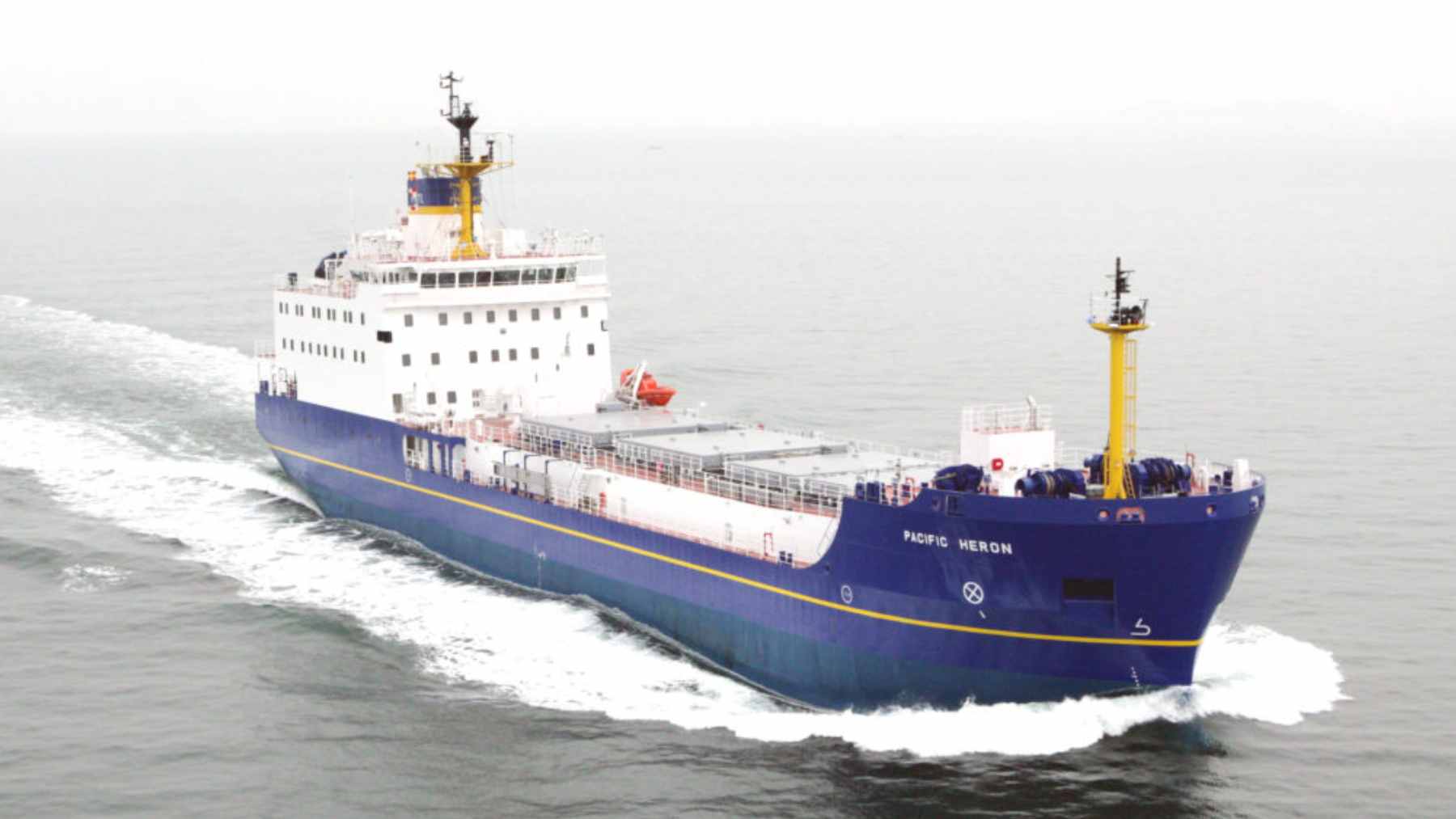
PNTL says Pacific Grebe has a double hull, strengthened hold areas, separated machinery and steering rooms, and no oil tanks positioned directly beside the outer hull. In practical terms, those features are designed to reduce the chance that a mechanical failure or collision turns into a pollution problem.
The ship’s cargo packages are designed and tested to International Atomic Energy Agency standards, according to PNTL. That matters when the public’s main concern is rarely the routine trip, it is the “what happens if something goes wrong” scenario.
More shipments may follow
This modification is not a one-off test for a museum piece. World Nuclear News reported that Orano has received orders for several dozen TN Eagle casks from French and international customers.
NTS also says another PNTL ship, Pacific Egret, will be adapted in the near future to transport the new flask. That points to a broader logistics pipeline for spent fuel, not just one successful fit check in France.
At the end of the day, the story is simple. Nuclear fuel transport is becoming larger, more specialized, and more visible as countries deal with the materials already used by their reactors.
The official statement was published on Nuclear Transport Solutions.