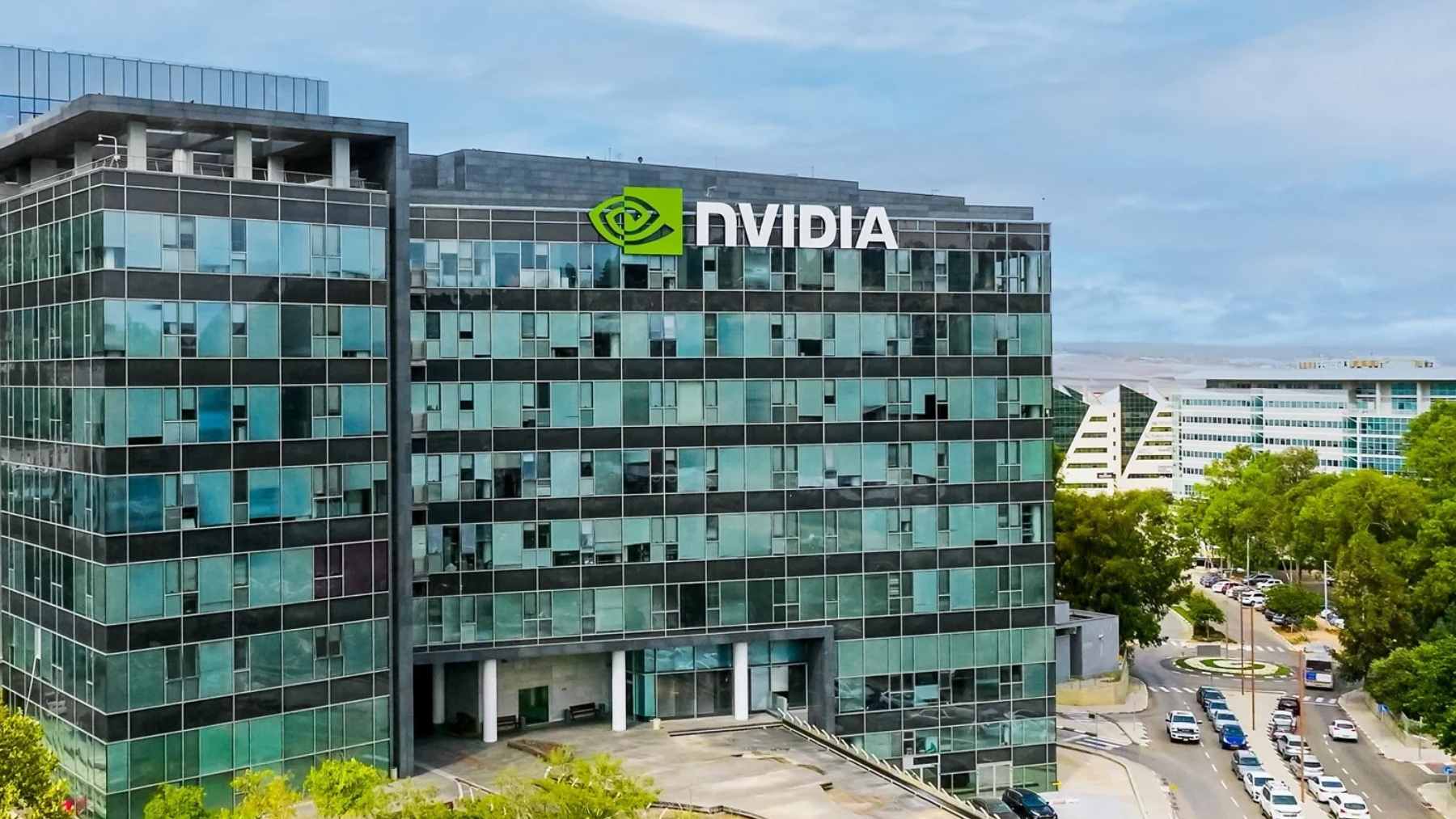
Nvidia’s plan for a major research and development campus in Kiryat Tivon is no longer just a corporate real estate project. Israeli media report that government officials are already discussing new access roads, a dedicated rail station, and even an airstrip, largely because nobody wants 10,000 daily commutes to turn northern Israel into one long traffic jam.
There is a climate angle here that is easy to miss if you only look at the shiny rendering. AI labs run on electricity, and the world is adding that load at a pace that is starting to reshape grid planning. The big question is simple, can a new “future of AI” hub grow without also raising emissions and local pollution?
A chip campus with city level energy needs
Nvidia has said the Kiryat Tivon campus is designed for up to 10,000 employees and about 160,000 m² (1.7 million ft.²) of built space, with construction expected to begin in 2027 and initial occupancy planned for 2031. The company described the build as a long-term “multibillion-shekel” investment, and CEO Jensen Huang has called Israel Nvidia’s “second home.”
In the same statement, Huang said the new campus would help teams “build the future of AI.”
Israel Hayom reported that electricity supply is one of the biggest hurdles, describing the planned complex as a major “power eater” with demand comparable to a small or mid-sized Israeli city. That local warning fits the global pattern the International Energy Agency is now tracking in real time.
In April 2026, the IEA said data center electricity demand rose 17% in 2025 and it projects global data center power use roughly doubling to around 950 TWh by 2030, with AI-focused data centers growing even faster.
Roads or rail will shape the footprint
The transportation math is alarming. Israel Hayom reported that Nvidia executives warned officials that if most workers arrive by private car, congestion and parking could become severe enough to put the project at risk.
The same report said the transport ministry’s steering team began moving on dedicated access roads, a tailored train station, and plans for an airstrip suited to narrow-body aircraft.
This is where ecology shows up in ordinary life. A car-heavy commute means more tailpipe emissions near homes and schools, plus extra noise and heat from clogged highways. Local reporting has also noted that public transportation around Kiryat Tivon is already strained, which raises the stakes for getting rail frequency and last-mile links right.
The grid is now part of the AI business plan
Israel’s government is treating data centers as a national infrastructure issue, not just a private-sector growth story.
In February 2026, AI Israel published interim recommendations from an interministerial task force examining the energy requirements of data centers, with participation that included finance, energy, the Electricity Authority, the Innovation Authority, and the environmental protection ministry.
The stated goal is to expand computing infrastructure while safeguarding the resilience and stability of the national electricity system.
The numbers behind that policy debate are not abstract. Israel has a national target of 30% renewable electricity by 2030, and officials have framed rooftop solar as a way to cut electricity bills while improving energy security.
Meanwhile, the State Comptroller has warned that under current trajectories, renewable electricity in 2030 could be closer to 19% than the 30% target, a gap that gets harder to close when new “city-sized” loads arrive.
Defense, resilience, and supply chains are in the mix
In Israel, power reliability is also a security question. A 2024 Reuters report described efforts to build microgrids sometimes called “energy islands” so communities can keep the lights on during wartime disruptions, using combinations of solar, wind, biogas, and storage.
Israel’s Institute for National Security Studies has likewise argued that renewables strengthen security by decentralizing supply and reducing reliance on single points of failure.
That same national security lens follows AI hardware, too, because cutting-edge chips and high-performance networking are deeply dual-use. Israel Hayom reported a diplomatic wrinkle, saying a dispute flared between the White House and Nvidia after President Donald Trump pushed for advanced chip production to move to the United States.
When chip policy becomes geopolitics, even local infrastructure decisions can start to feel like part of a larger board game.
What a greener tech hub could look like
A project this large has environmental outcomes baked in early. Cleaner results usually come from unglamorous choices like making rail and buses the default commute, designing buildings for efficiency, and using onsite solar and storage so the campus can shave peak demand instead of spiking it.
Long-term power procurement matters, too, because it can either accelerate new clean generation or quietly lock in a fossil-heavy mix.
For readers following the story, the headline is Nvidia, but the test is whether Israel can match AI growth with transport capacity and faster grid modernization. If it can, Kiryat Tivon becomes a case study in how to scale tech without scaling the smog and the stress.
The official update was published on International Energy Agency.