A coalition of 40 residents has asked Ireland’s national planning body to overturn approval for a roughly $1.14 billion data center and energy complex on 600 acres near Rochfortbridge in County Westmeath.
The appeal puts a difficult question at the center of Ireland’s digital expansion. Can a project be considered sustainable when its power plan includes solar generation but its physical footprint removes productive farmland and worries nearby families about wells and flooding?
Westmeath County Council approved Red Admiral DC Limited’s plans on June 2, 2026, subject to 32 conditions. Ten valid third-party appeals have since moved the proposal to An Coimisiún Pleanála, which currently lists Oct. 27, 2026, as the target decision date.
The dispute is now about much more than electricity, testing how Ireland weighs technology investment against land, water, emissions, and trust in rural communities.
A data center beside its power supply
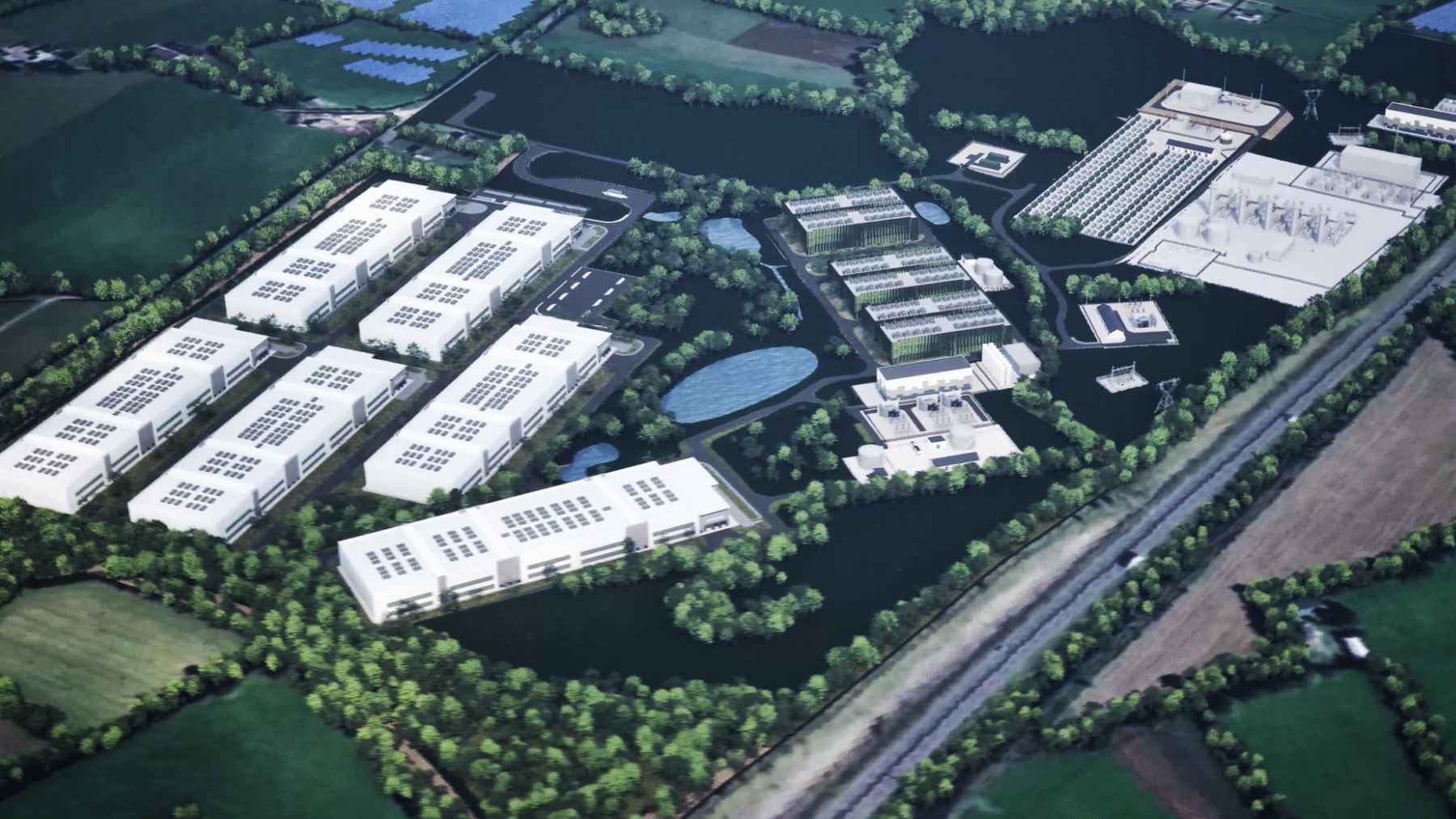
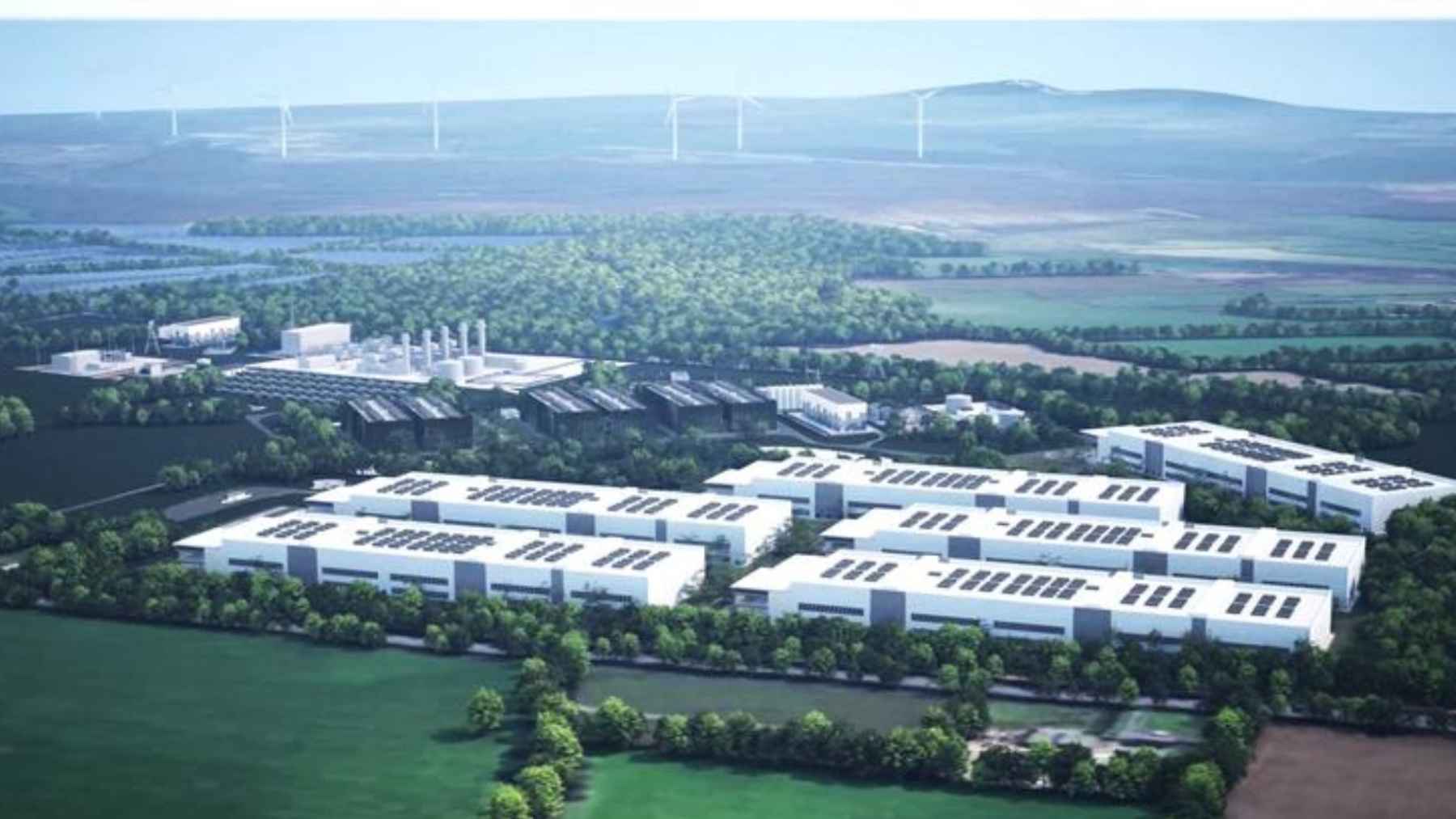
The plan calls for six two-story data center buildings on a roughly 96-acre campus about 1.2 miles southwest of Rochfortbridge. An adjoining decentralized energy resource would cover about 474 acres and combine a solar farm, battery storage, solid-oxide fuel cells, and a connection to the nearby 220-kilovolt grid substation.
At 250 megawatts, the proposed data center is a major industrial load, not a warehouse with a few server rooms. Lumcloon Energy, which owns Red Admiral, says the energy system is designed to generate, store, and manage electricity close to the campus while tracking its demand.
The company wants the site to carry more of its own power burden instead of leaning on the national grid.
That design is the project’s strongest environmental argument. It is also why the appeal matters. Solar panels and batteries may improve the energy profile, but they do not answer every question about where the complex is built.
Farmers say the site is wrong
The joint appeal from 40 local residents argues that prime agricultural land would be lost while farms and homes could face pressure from construction, drainage changes, traffic, noise, lighting, and visual intrusion. Residents have also raised concerns about private wells and flooding in a landscape where everyday life depends on reliable ground and surface water.
Willie Carey, a local cattle farmer, described a community strained by the proposal. “People who have grown up together are no longer speaking,” he said. That is not an environmental measurement, but it matters because large infrastructure projects often lose public confidence where technical plans meet daily life.
For the appellants, the issue is not whether solar power is useful. It is whether a renewable component justifies converting land they describe as high-quality tillage ground. A server campus can be redesigned, but once a rural landscape is industrialized, turning the clock back is much harder.
Renewable matching has limits
One council condition requires Red Admiral to show that electricity used by the development will be matched by new renewable generation through a corporate power purchase agreement. The council framed that condition as being “in the interests of climate action and sustainable development.”
But matching power over a reporting period is not necessarily the same as running on solar electricity every hour. Data centers operate around the clock, while solar output rises and falls with daylight and weather.
That is why batteries, fuel cells, grid imports, and the exact accounting rules behind the power agreement will be central to understanding the real environmental outcome.
The applicant has estimated that the campus could produce about 543,000 U.S. tons of carbon dioxide per year. The official appeal record also says part of the project will require an Industrial Emissions License from Ireland’s Environmental Protection Agency, making emissions oversight a separate process from planning permission.
Ireland’s grid is under pressure
The broader national numbers explain why this one site has attracted so much attention. Ireland’s Central Statistics Office reported that data centers used 23% of all metered electricity in 2025, up from 5% in 2015. Their consumption reached 7,663 gigawatt-hours and rose 10% in one year, while use by all other customers increased 2%.
That does not mean every new data center should be rejected. These facilities support cloud computing, banking, health services, remote work, and the wider digital economy. But Ireland’s own policy says grid constraints and decarbonization require planners to consider location, additional renewable supply, flexibility, employment, and community benefits.
Red Admiral’s approach tries to answer that challenge by placing generation and storage beside the servers. The trouble is that energy independence on paper does not automatically settle land use, biodiversity, water, or local acceptance. Those are different ledgers, and planners now have to read all of them.
The business case is substantial
Westmeath County Council would receive about $9.4 million in public infrastructure contributions plus a special levy of roughly $330,000. One set of application documents projected an annual economic dividend of about $133.5 million and roughly 440 operational jobs, giving the development a strong regional investment argument.
But the distribution of benefits is part of the controversy. Tax revenue, data capacity, and wider investment may be spread across the county or the national economy, while the most immediate risks fall on neighboring farms and homes. Who carries the cost when the upside and downside land in different places?
Lumcloon says it conducted “extensive consultation with the local community” and changed the project design and solar boundaries in response to feedback. The company also says it will continue engaging with residents and other stakeholders through the development process.
What planners must decide
An Coimisiún Pleanála will now review the appeals alongside the Environmental Impact Assessment Report. Its current case record lists 10 third-party appellants and says a decision is due by Oct. 27, 2026, although planning timetables can change.
The test is not whether the project is good or bad. It is whether its renewable and economic promises are specific, enforceable, and large enough to outweigh the permanent change to a 600-acre rural site. For families living beside it, details about wells, drainage, noise, lighting, and construction traffic will matter just as much as megawatts and investment totals.
This is the kind of case Ireland will face more often as digital demand grows. A solar farm can lower a data center’s power impact, but it cannot make land, water, and community concerns disappear.
The case record was published by An Coimisiún Pleanála.