Madrid’s regional government has approved the contracting process for a major northern extension of Metro Line 11, a project valued at about $1.005 billion using the European Central Bank’s July 22, 2026, reference rate.
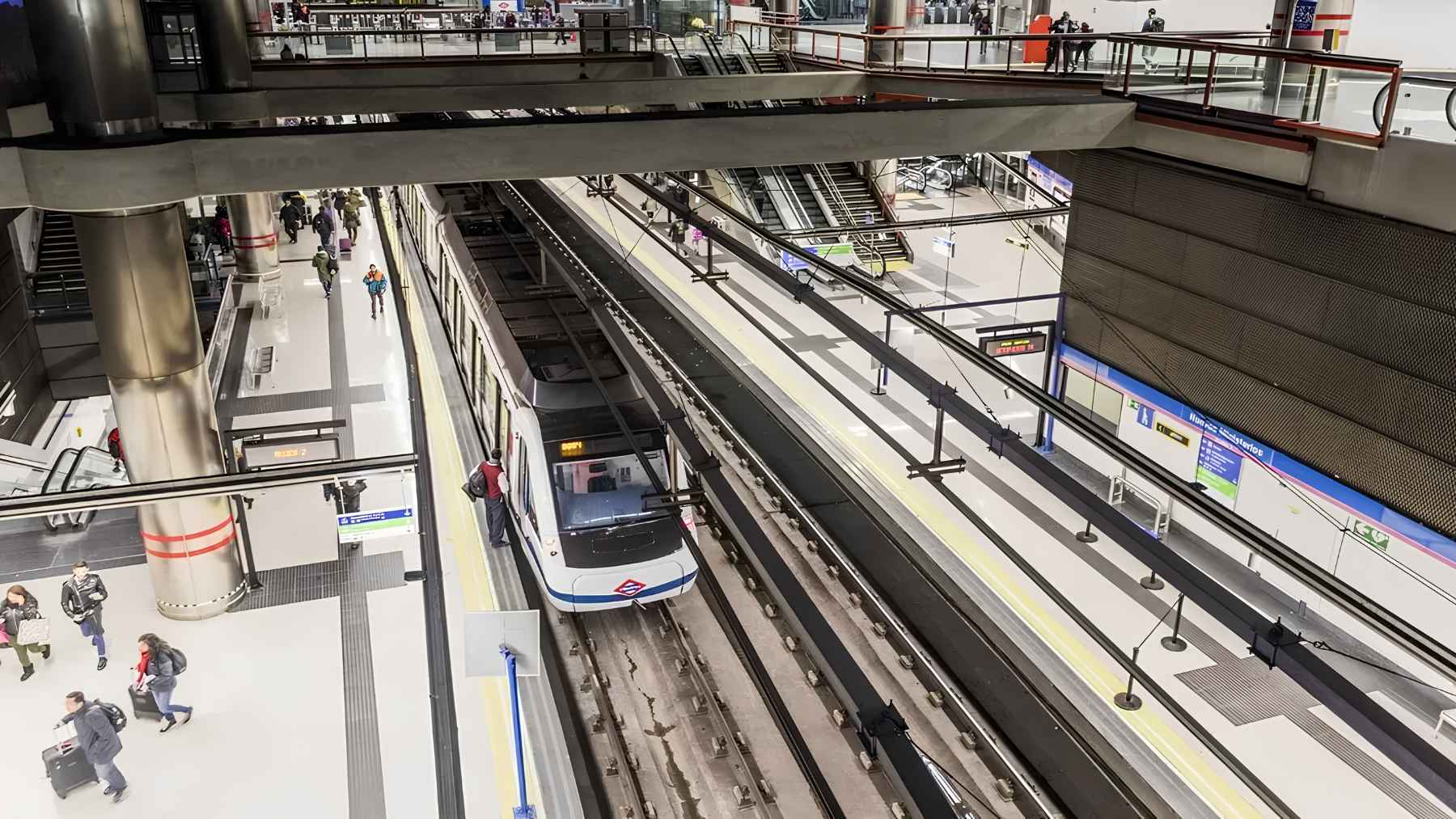
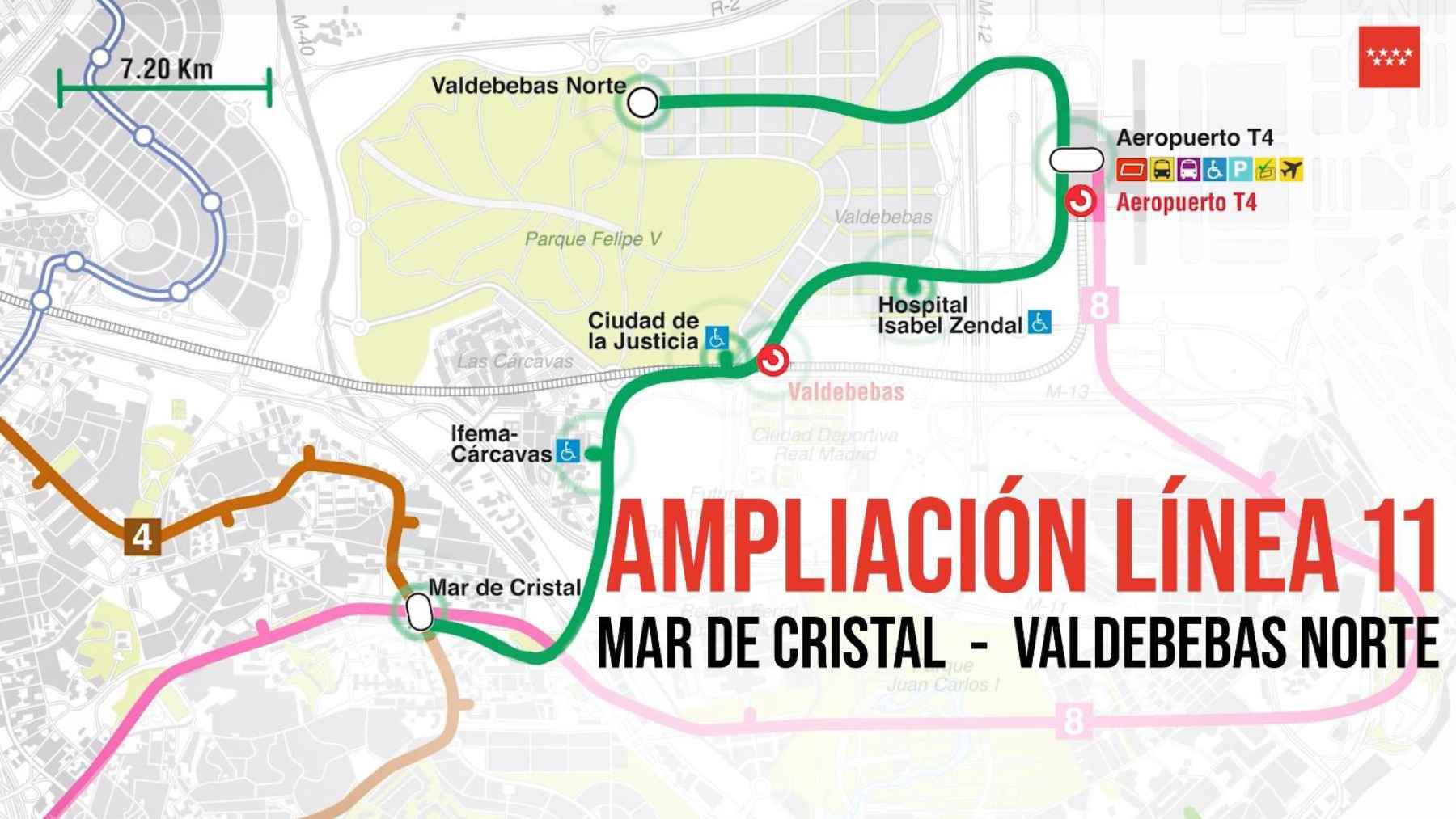
The new 4.5-mile corridor will run from Mar de Cristal to Valdebebas Norte, creating four new stations and connecting with existing services at Mar de Cristal and Airport T4.
Once the wider Line 11 plan is completed, Madrid expects a diagonal route that links southern districts, including Carabanchel, with fast-growing areas in the north without forcing every journey through the center. The environmental payoff could be meaningful, but only if construction safeguards hold and enough travelers leave their cars at home.
A new route across northeast Madrid
From Mar de Cristal, trains will serve IFEMA-Cárcavas, Ciudad de la Justicia, Hospital Enfermera Isabel Zendal, Airport T4, and Valdebebas Norte. Mar de Cristal will connect Line 11 with Lines 4 and 8, while the airport stop will offer transfers to Line 8 and the Cercanías commuter rail network.
In a translated post on X, regional president Isabel Díaz Ayuso wrote that “Madrid Metro keeps growing to make life easier for Madrid residents.” For someone heading to a hospital appointment, a flight, a trade show, or a new home in Valdebebas, that could mean fewer transfers and a more predictable trip.
Why the diagonal matters
Madrid wants Line 11 to become a cross-city spine rather than another route aimed mainly at the historic center. Regional officials say the northern extension should shorten journeys and ease pressure on Line 6, one of the network’s busiest orbital services.
Work is already underway between Plaza Elíptica and Conde de Casal, where the Mayrit tunnel boring machine has reached the future Madrid Río station. The full vision stretches roughly 20.5 miles from Cuatro Vientos to Valdebebas, with the northern works previously scheduled to begin in 2027 and finish in 2031.
A climate case with conditions
This is not a pure climate project. The line is also designed to serve an airport, an expanding convention center, the future MADRING Formula 1 circuit, a hospital, a justice complex, and one of Madrid’s largest residential growth areas.
Putting those destinations on one rail corridor gives people an alternative to driving, especially on crowded event days. The July announcement did not include a ridership forecast, an estimate of avoided car trips, or a quantified reduction in greenhouse gas emissions.
That missing data matters. Road transport generated 73% of European Union transport greenhouse gas emissions in 2023, while the European Environment Agency says public modes including metros generally use less energy or produce lower emissions per passenger-mile than cars.
A new subway can help, but the result depends on train frequency, fares, transfer times, station access, and the amount of development built around it.
The construction footprint
Madrid’s environmental authority concluded that the selected route was not expected to cause significant adverse environmental effects, provided the required preventive and corrective measures are followed. That is a conditional finding, not a blank check.
The approved framework calls for construction sites to be reviewed to minimize damage to trees and existing green areas. It also prioritizes reusing soil excavated from the project, restoring affected land, and controlling impacts on air, water, soil, wildlife, vegetation, waste, and the surrounding landscape.
An environmental monitoring program is required during the work. The project promoter must also prepare annual reports showing whether the conditions in the environmental assessment are being met, giving residents and regulators a paper trail to follow.
Trees are the political test
Tree impacts have already prompted design changes on the southern Line 11 works. In 2024, the regional government added about $19.5 million at the same ECB reference rate to reduce surface occupation and tree impacts, saying the changes cut planned removals by more than half and included the replacement of 14,000 trees over four years.
That earlier section is separate from the new Valdebebas contract, but it sets a useful benchmark. Reporting the number planted will not be enough on its own, so the real test will be where replacements are located, how many survive, and whether green cover returns where residents lost it.
Business growth meets public transit
The economic logic is easy to see. IFEMA, the airport, the future court complex, the Zendal hospital, and Valdebebas are major destinations, while the MADRING circuit is likely to create sharp travel peaks on event days.
The extension could make those growth centers less dependent on parking and road capacity. On the other hand, better access may also accelerate development, which is why Madrid should measure the line’s full effect rather than treating every new passenger as an automatic climate win.
What happens next
The government’s decision authorizes the contracting of the works, so it does not mean tunneling starts tomorrow. Procurement, final construction planning, and compliance with the environmental conditions still have to move forward before the northern section becomes a building site.
Line 11 could become a greener mobility backbone for Madrid if the region reports clear results on ridership, car use, energy consumption, excavated material, tree survival, dust, and noise. For now, the route and its environmental rulebook are approved.
The statement was published by Comunidad de Madrid.