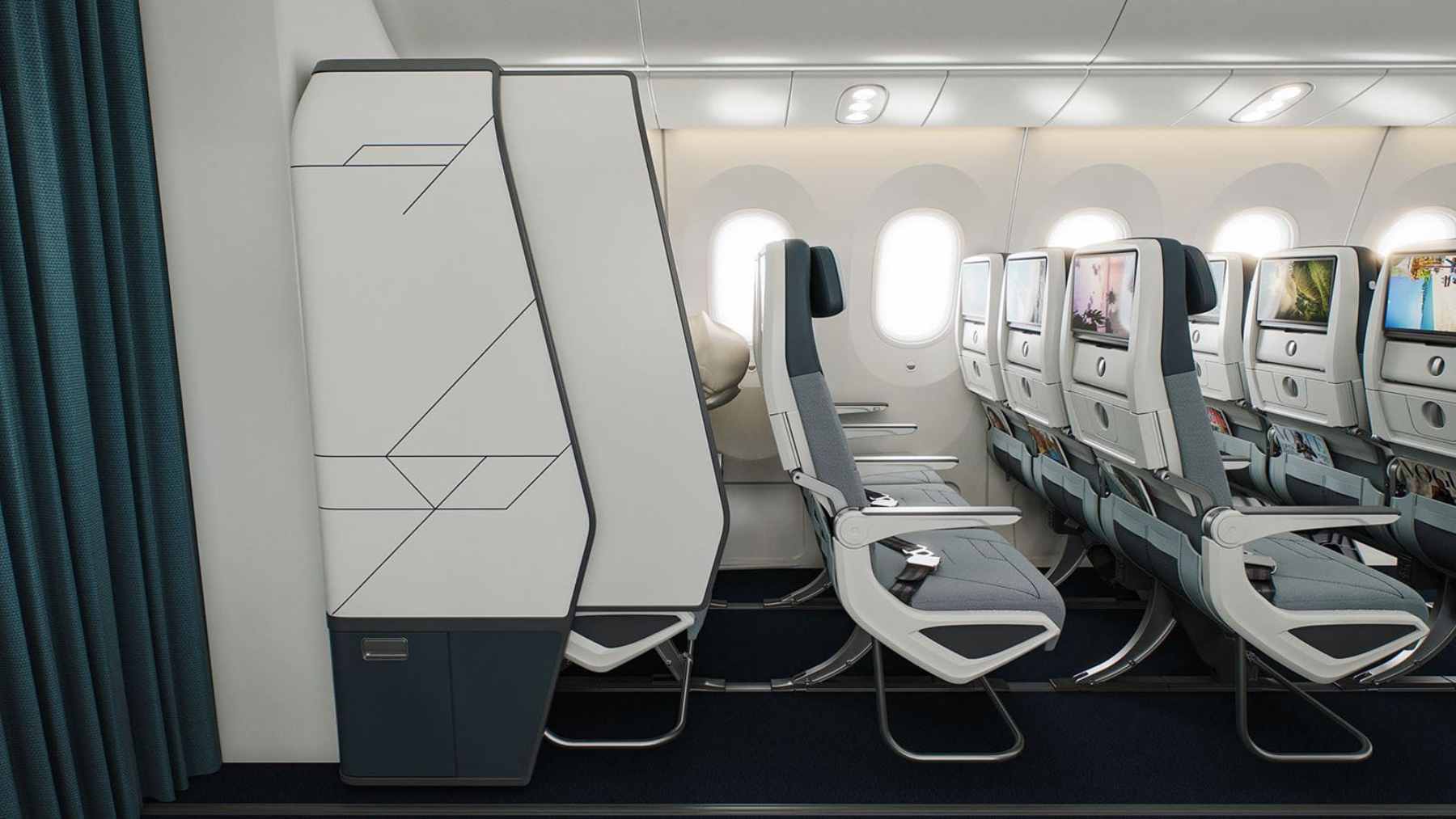
Would you ever pick the last row on purpose, right beside the bathroom line? Collins Aerospace thinks you might, if that corner of the cabin felt less like a penalty box and more like a quiet nook you can actually use.
At the 2026 Aircraft Interiors Expo in Hamburg, the RTX-owned supplier unveiled “SkyNook,” a semi-private economy concept that just took first place in the Crystal Cabin Awards Passenger Comfort category.
It’s a comfort story, but it’s also an environment story. Aviation emissions in 2023 reached over 1 billion tons of CO2, about 2.5% of global energy-related CO2 emissions, as international travel demand kept recovering. In the climate era, even a new seat layout gets pulled into the debate about growth, efficiency, and how airlines pay for cleaner flying.
How SkyNook turns dead space into usable space
SkyNook is built around a geometry problem most of us only feel when we get stuck in the back. In many twin-aisle jets, the fuselage tapers in the aft cabin and some rows by the window drop from three seats to two, leaving awkward space by the sidewall.
Collins’ concept tries to reclaim that gap and turn it into a semi-private zone instead of wasted square footage.
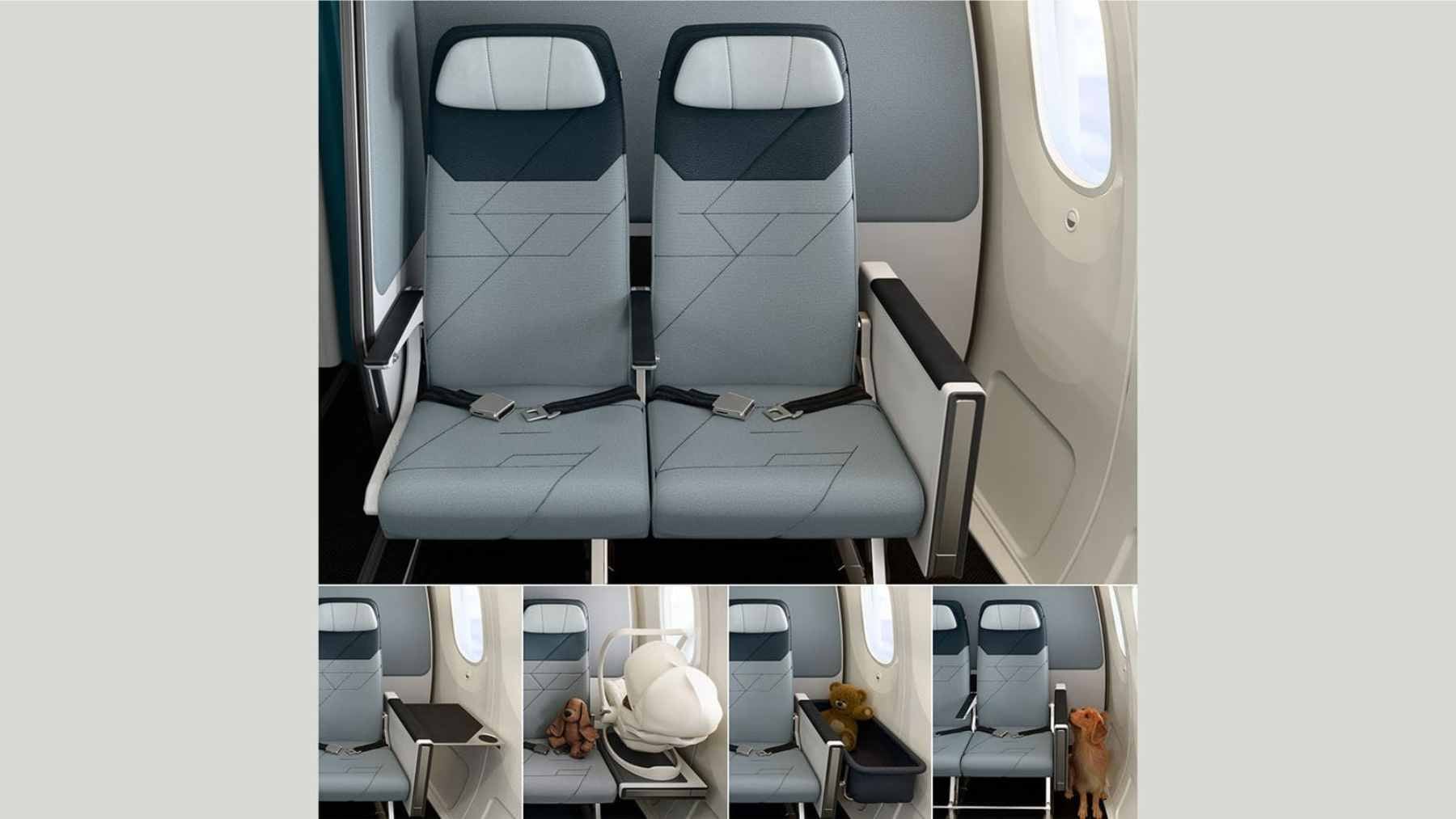
The design keeps economy-style seats, then adds a convertible console that can help secure a child seat or bassinet, hold a pet carrier, or act as a work surface. A sliding privacy divider is meant to provide a visual barrier and dampen noise from the galley and lavatory area. Collins has not said the divider can block odors, so the “bathroom line” factor may still be there.
Why airlines are suddenly selling comfort in economy
Airlines have limited levers they can pull without buying new aircraft, and the cabin is one of them. The Crystal Cabin Awards jury praised SkyNook for delivering a more spacious feel in a constrained footprint with minimal mechanical complexity, and for improving existing seat architecture while aiming to optimize weight.
Put simply, it is a comfort upgrade that is supposed to be practical for airlines to install and maintain.
There’s also a business case emerging. The award write-up calls SkyNook a value-generating area that can enhance comfort and revenue potential by turning an unpopular location into something families might seek out. Collins says the win is its 16th Crystal Cabin Award in the program’s history, which hints at how intense the cabin innovation race has become.
The climate math that does not fit in a seat pitch
A clever cabin concept can make a long flight feel less stressful, but it doesn’t change the sector’s emissions baseline. The IEA estimates aviation emissions in 2023 hit almost 950 Mt CO2, more than 90% of pre-pandemic levels, as global travel continued to rebound.
That rebound is exactly why regulators keep pushing harder, because demand growth can wipe out efficiency wins.
The industry’s biggest decarbonization bets are elsewhere, mainly sustainable aviation fuel and next-generation aircraft, and the path is not guaranteed to be smooth.
IATA member airlines committed in 2021 to reach net-zero carbon emissions by 2050, but IATA’s own tracking notes that near-term traffic growth can exceed the effects of mitigation measures. Europe’s SAF rules ramp from 2% in 2025 to 6% in 2030 and toward 70% by 2050, while airlines have warned that supply constraints are real.
The defense and aerospace link behind this “simple” seat
Collins Aerospace is not just chasing a nicer passenger experience for its own sake. It’s part of RTX, a company that spans commercial aviation and defense, and RTX reported 2025 sales of more than $88 billion.
So when Collins talks about advancing “sustainable and connected aviation” alongside “mission success,” it is speaking in a language that fits multiple customers.
That overlap matters because the same pressures show up across aviation, even when the missions differ. Weight, noise, reliability, and human factors are not only passenger comfort issues, they are design constraints across the aerospace world.
SkyNook will not decarbonize flight on its own, but it’s a reminder that many “green aviation” suppliers sit inside defense-heavy industrial groups with the scale to fund long development cycles.
What to watch before you book the last row
For now, SkyNook is a concept and an award winner, not a seat you can select on a booking page today. Collins has shown it at Aircraft Interiors Expo and described its intended use cases, but the company has not laid out a public rollout timeline in its press materials.
That’s why the next signals are basic ones, like whether airlines adopt it and how they price it.
There’s also a bigger tension worth keeping in mind if you care about the environment. Making economy travel less miserable could make flying more attractive, and aviation is already back near pre-pandemic emissions levels.
Comfort tech and climate tech are going to be judged together, because the planet doesn’t care why demand rises.
The press release was published on RTX Newsroom.