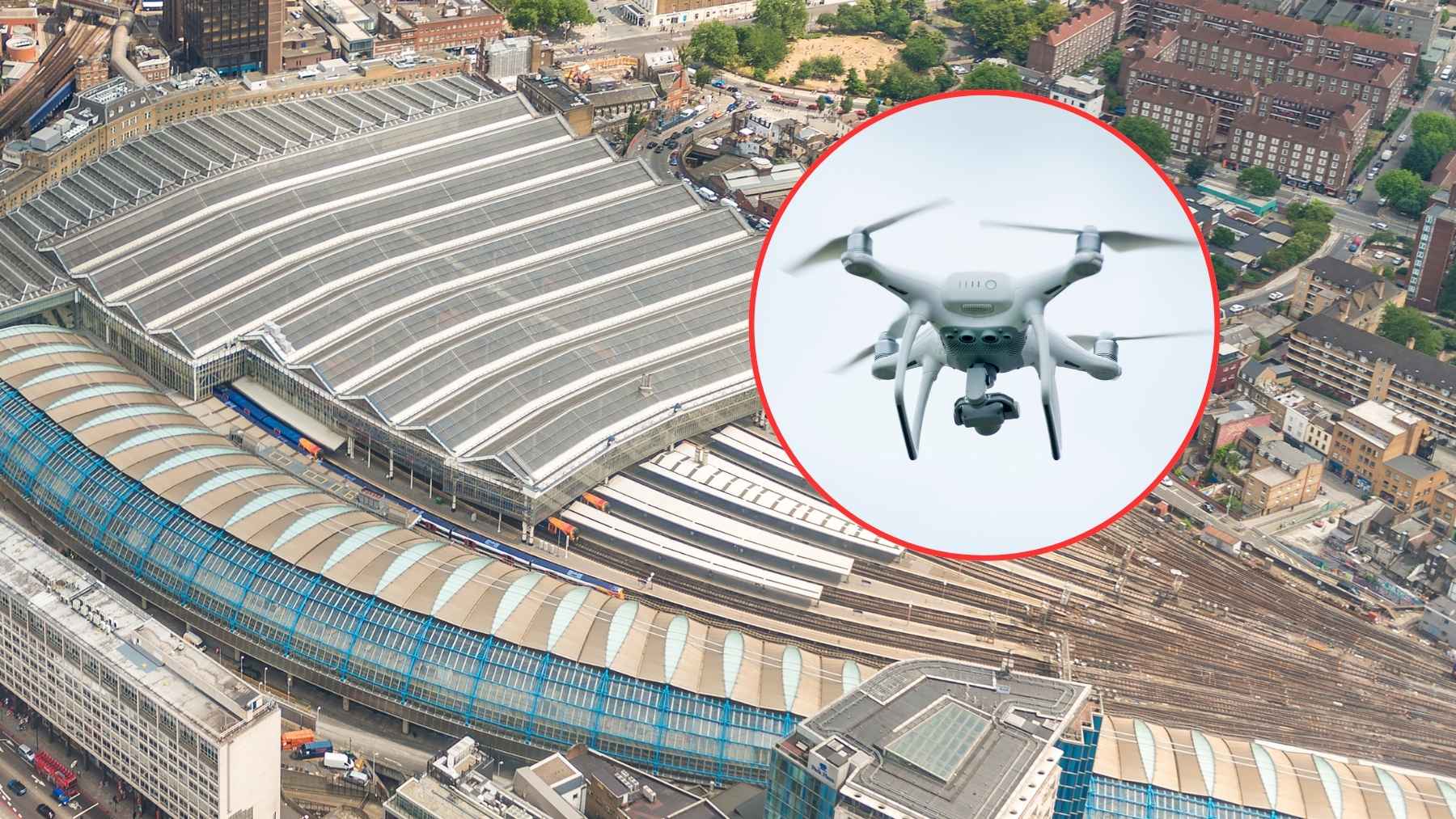
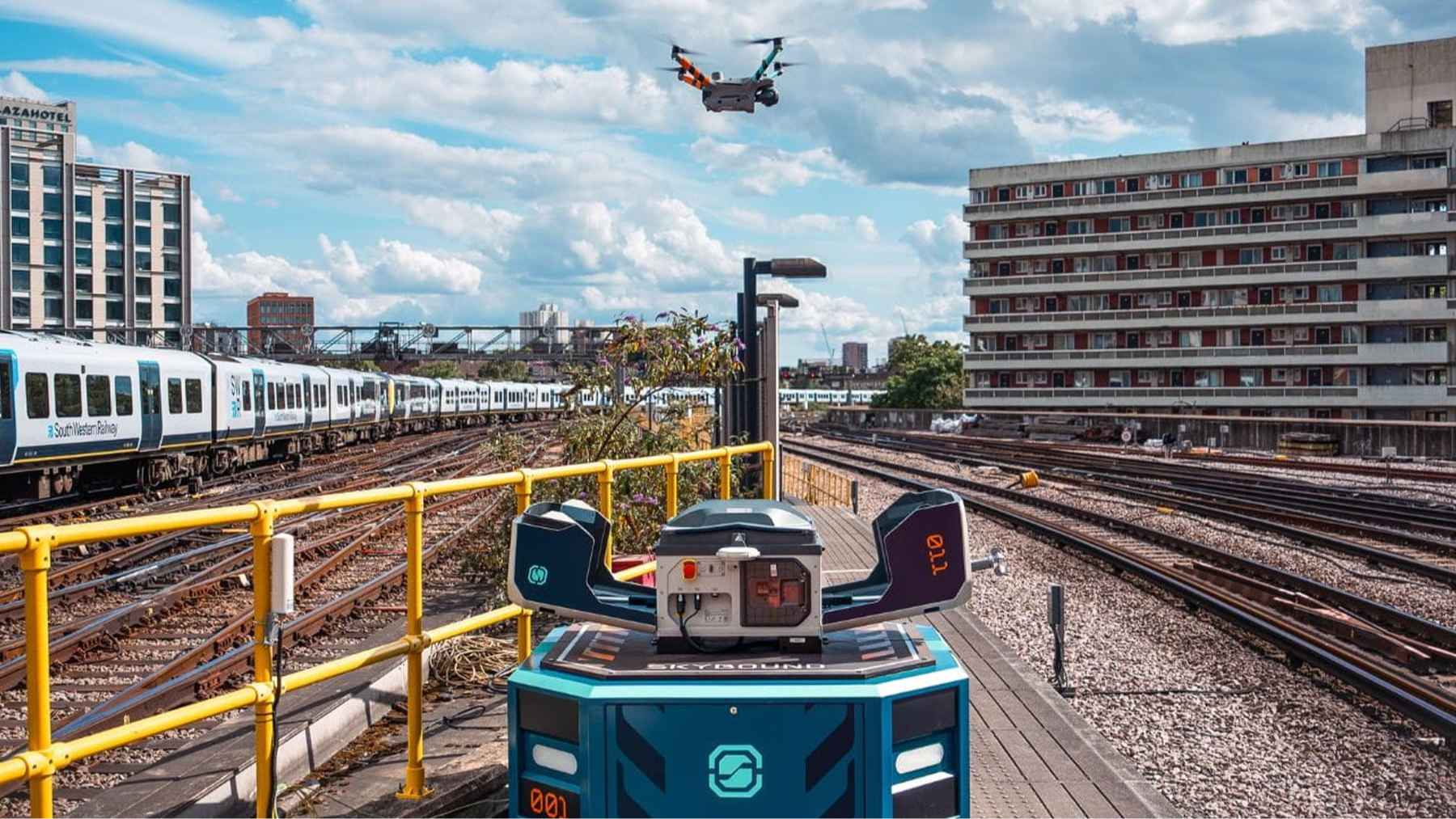
At London Waterloo, a single person on the tracks can trigger a safety shutdown that ripples far beyond one platform. South Western Railway and Network Rail Wessex have now placed a high-resolution, thermal-imaging drone at the station to give control teams a live view of incidents before ground crews arrive.
The aircraft is operated from Woolston near Southampton, almost 80 miles away. Its real target is not only the trespasser but the information gap that follows a report, when rail managers must protect lives while trying to work out exactly what is happening.
A flying camera for a complex railway
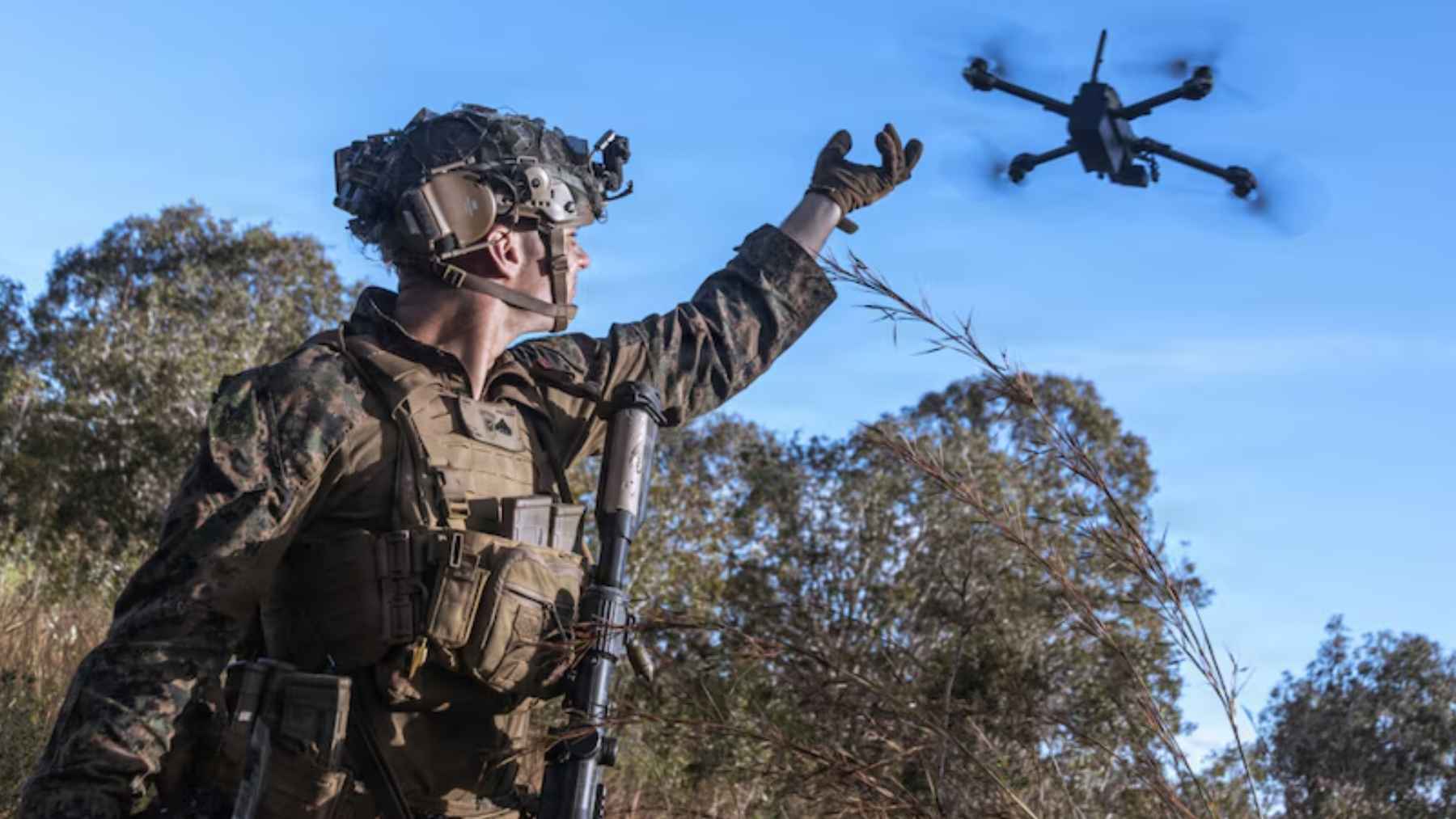
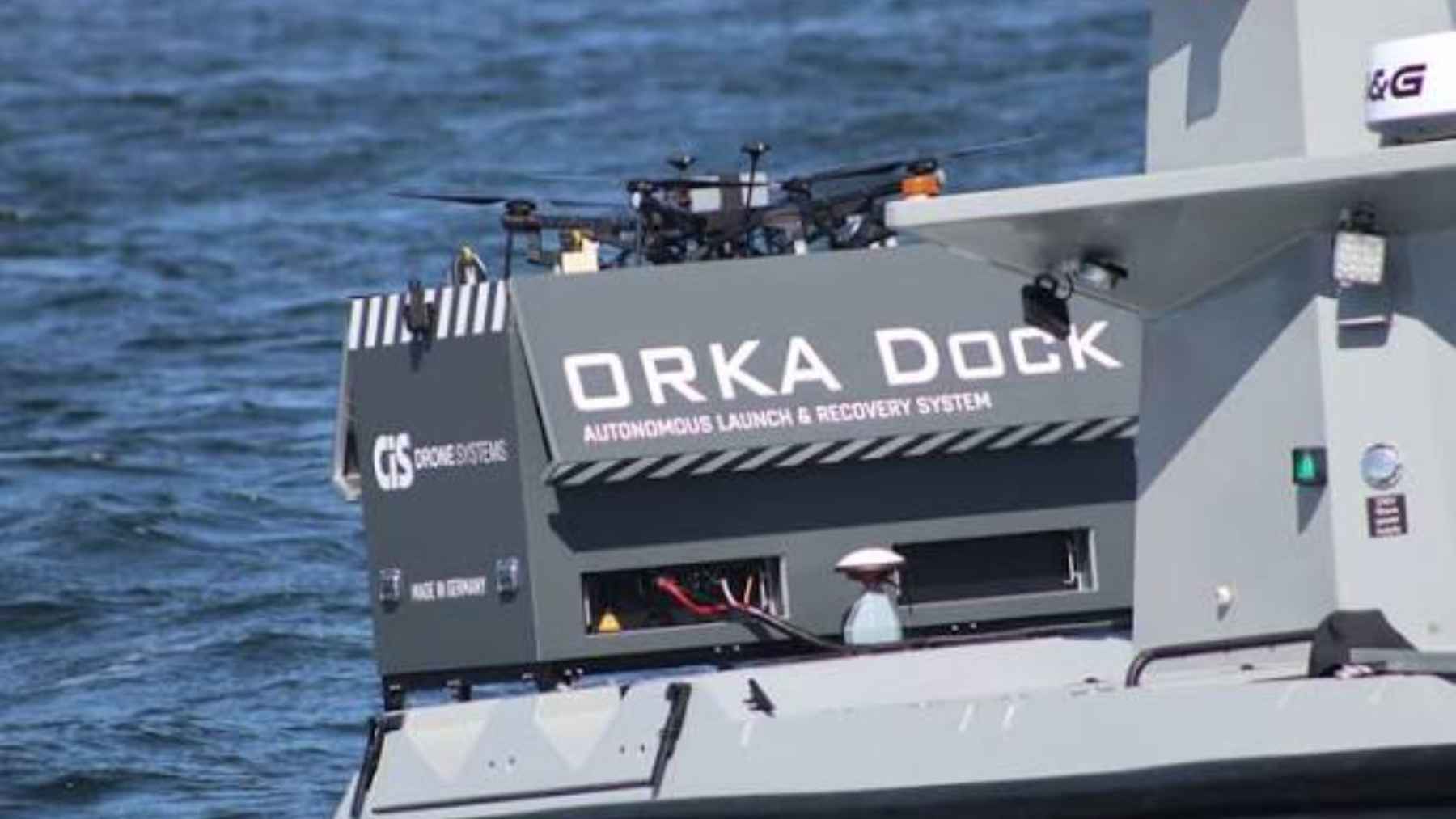
When an incident or suspected infrastructure problem is reported, SkyBound operators can launch the drone from a trackside station at Waterloo. Video is sent live to the railway operations center in Basingstoke, giving security, engineering, and emergency teams a faster look at people, equipment, and track conditions.
The system combines standard high-resolution cameras with thermal imaging, which can help locate a person or identify an abnormal heat signature when visibility is poor. The deployment is described as automated, yet the operator says it is remotely run by SkyBound staff rather than left to make unsupervised decisions.
Why one trespass can stop so many trains
The South Western network uses an “always on” third rail carrying 750 volts of direct current. When someone is reported on or near the tracks, operators may have to shut off power until the area is cleared, which protects the trespasser and responders but also prevents trains from moving.
That matters especially at Waterloo because most of South Western Railway’s roughly 1,600 daily services begin or end there. The Office of Rail and Road estimated 70.4 million entries and exits at Waterloo in 2024 to 2025, making it the second most-used station in Great Britain.
Between April 2025 and June 2026, trespass incidents and fatalities were linked to more than 200,000 minutes of delay and nearly 14% of cancellations across South Western Railway and Network Rail Wessex services.
The consequences can last much longer than the incident itself. A trespasser near Clapham Junction in September 2025 caused more than 57 hours of accumulated delay and was later sentenced to eight weeks in prison.
Nationally, Network Rail recorded 24 preventable accidental deaths in 2024 to 2025, including 19 linked to unauthorized track crossings, and said trespass created more than one million minutes of delays.
Faster certainty is the real prize
So what can a drone actually change? It cannot physically remove a trespasser, repair a broken component, or restore electrical power, but it can shorten the time between an alarm and a reliable picture.
That faster certainty allows decision-makers to direct responders more precisely and avoid sending additional staff onto dangerous track without clear information. For a passenger waiting on a platform, the difference between a quick visual check and a long search is anything but abstract.
The same aerial view can be used for infrastructure inspections, which gives the system value even when nobody has entered the railway illegally. Earlier in 2026, another camera-based project on the route, known as Hotshot, helped engineers identify a Waterloo-area fault that officials said could otherwise have produced 2,000 minutes of delay.
A test for public rail reform
South Western Railway moved into public ownership on May 25, 2025, becoming the first operator transferred under Britain’s new public ownership program. The Waterloo deployment is therefore more than a technology trial, since it also tests whether train operations, infrastructure teams, and a private drone specialist can act as one system during a fast-moving incident.
Rail Minister Lord Hendy said the wider goal is to bring “track and train together” under the planned Great British Railways structure.
Still, the strongest case for the drone will not be political language or impressive footage but measurable results such as shorter response times, fewer power shutdowns, less time spent on live track, and a sustained fall in delay minutes. That is the real test.
Safety gains need privacy safeguards
High-resolution and thermal cameras can capture information about identifiable people, even when the main purpose is railway safety. The United Kingdom’s Information Commissioner’s Office says organizations using drones are responsible for any personal data they collect and must comply with data protection law, including providing appropriate privacy information.
The railway announcement does not say that facial recognition is being used, and it does not explain how long footage will be retained or who may access it. Publishing those details would help passengers and nearby communities understand the boundaries of the system without weakening its safety purpose.
Reliable rail has wider environmental value
The drone is not presented as a climate project, and its direct effect on emissions has not been quantified. Even so, reliable service helps rail remain a practical alternative to driving, while U.K. transport estimates have found that cars emit more greenhouse gases per passenger mile than trains and coaches.
The latest rail figures also show that normalized passenger-train emissions fell 2% in the 2024 to 2025 reporting year. The connection should not be exaggerated, but keeping a lower-emission transportation option dependable has value beyond one station timetable.
Waterloo is only the first planned location in a wider chain of SkyBound drone stations. Additional units are expected at Clapham Junction, New Malden, and Walton-on-Thames, turning this deployment into a practical test of whether rapid aerial intelligence can make a crowded railway safer and more dependable.
The official statement was published on South Western Railway.