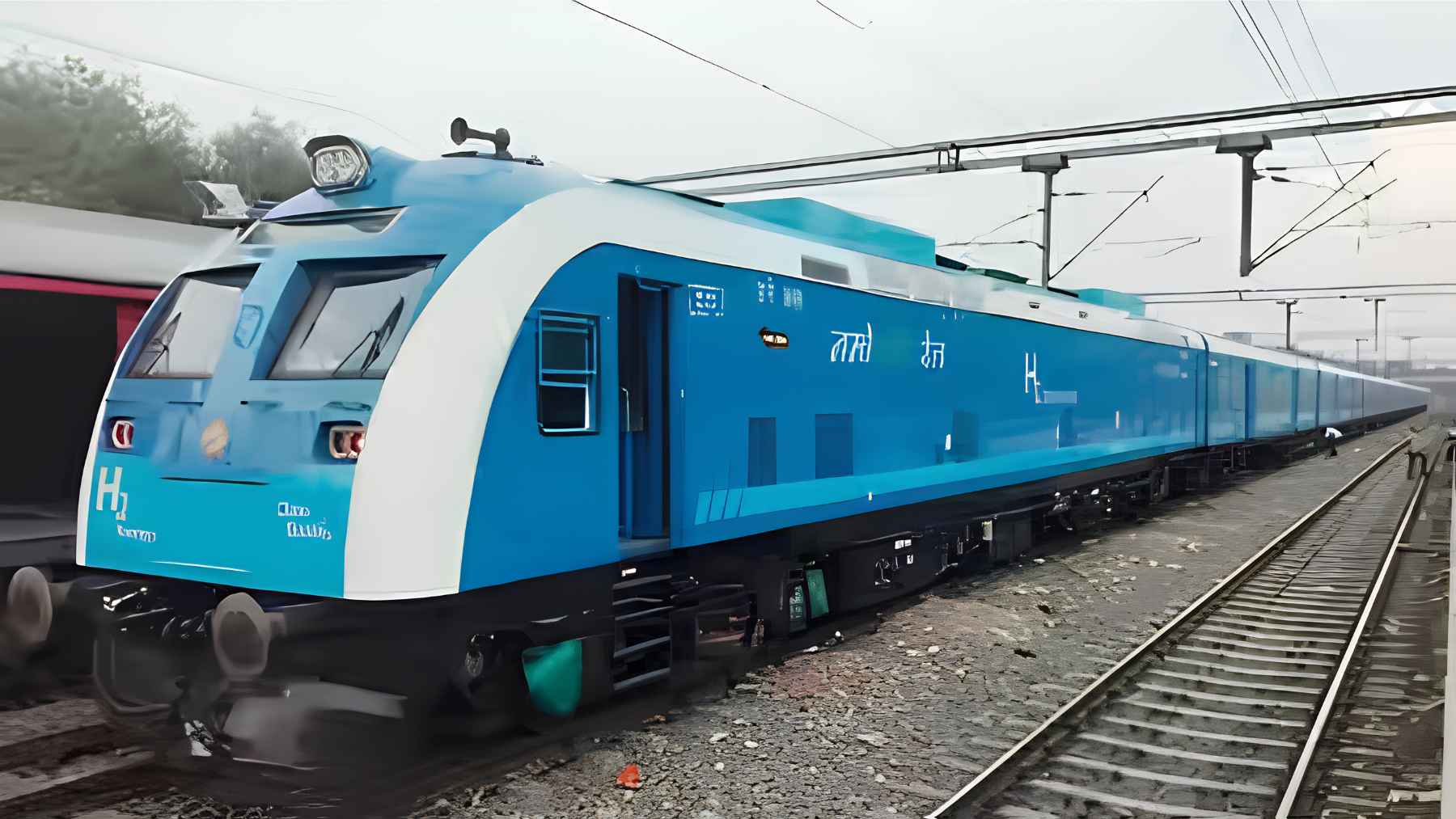
India’s first hydrogen-powered passenger train has moved well beyond its launch-day ceremony. By Aug. 3, the pilot had covered 1,548 miles of commercial service on the 55-mile route from Jind to Sonipat in Haryana, according to the latest answer from India’s Ministry of Railways.
An earlier government update said the train’s first 746 miles avoided more than 845 gallons of diesel, while its fuel-cell system produced no tailpipe carbon dioxide and released water vapor during operation.
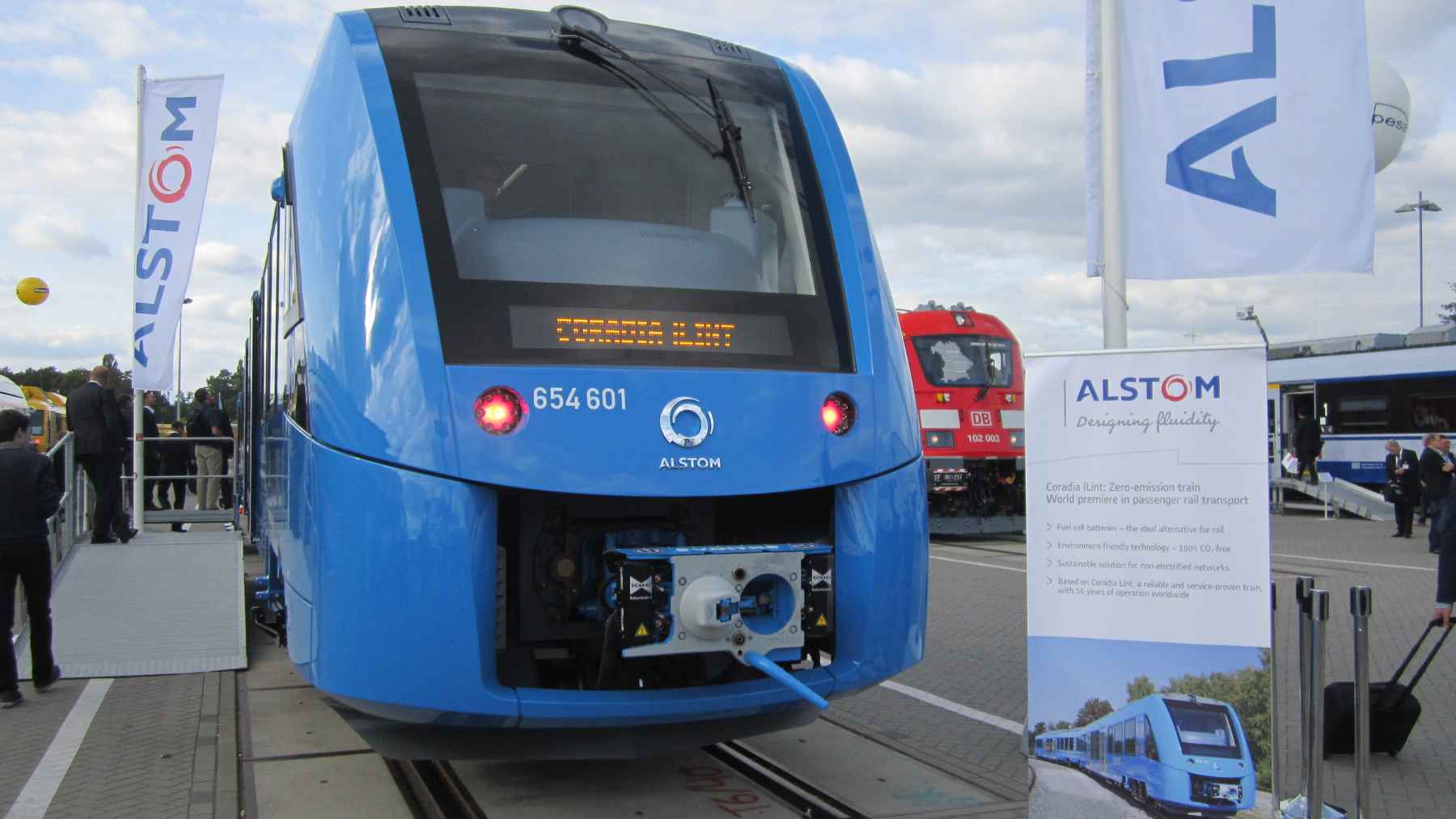
That early result is important, but the bigger story is the rail ecosystem behind it (the train, hydrogen plant, refueling station, batteries, safety systems, and maintenance plan).
From launch to working service
Prime Minister Narendra Modi flagged off the train at Jind on July 17. Initial reports focused on the 746-mile milestone, but the newer parliamentary figure shows that the train more than doubled that distance by Aug. 3, turning a technology demonstration into a real operating test under commercial service conditions.
That distinction matters. A train can look impressive at a station, but daily service asks harder questions about refueling, heat, braking, turnaround times, staff training, and maintenance. Indian Railways still calls the project a pilot, and it says any move to other routes will depend on resources and operational requirements.
How the train powers itself
Hydrogen does not burn inside a conventional locomotive engine. Proton exchange membrane fuel cells combine hydrogen with oxygen to make electricity, which feeds the traction system, while lithium iron phosphate batteries help manage changing power demands. The direct byproducts are water vapor and heat.
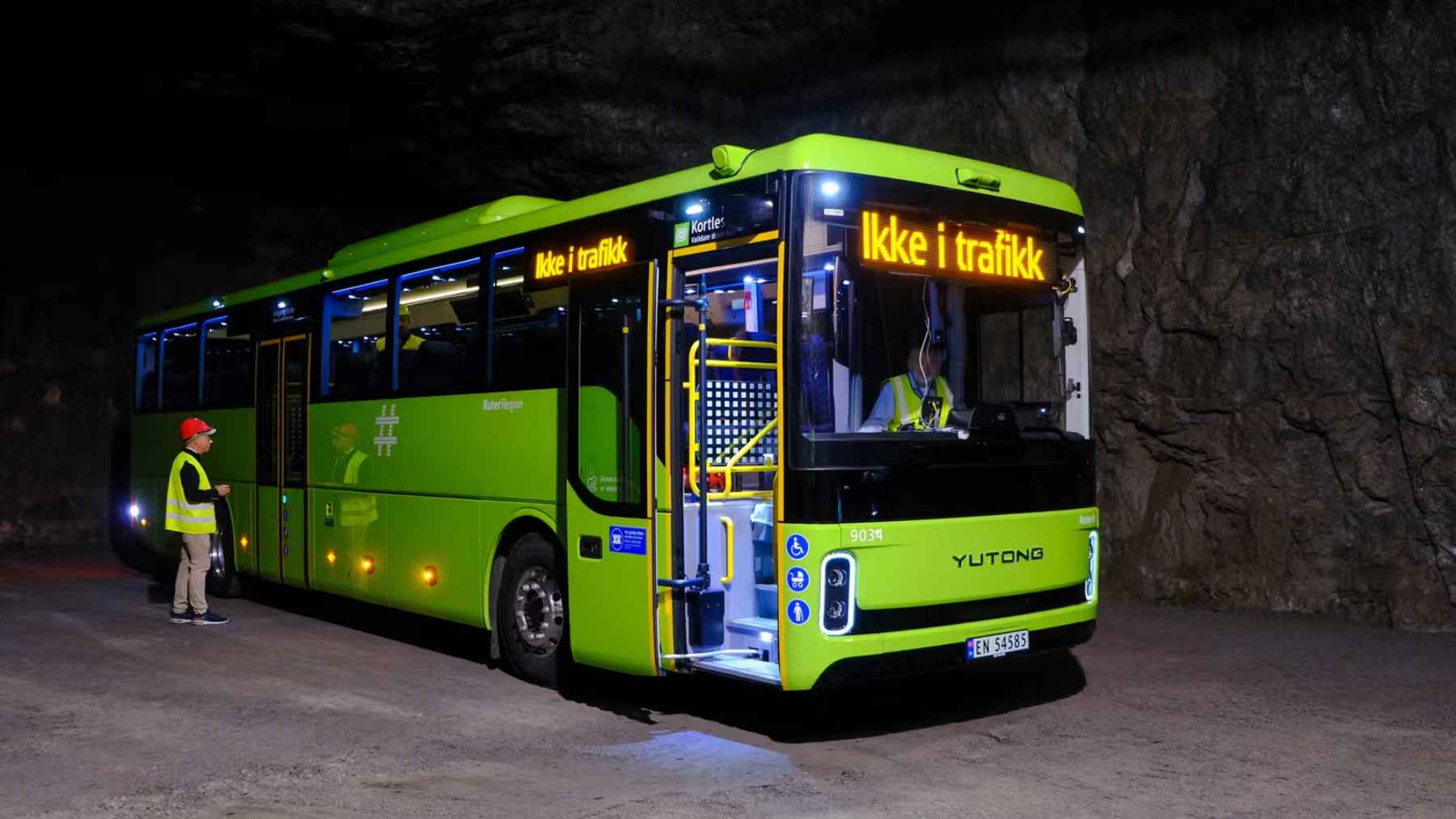
The 10-car trainset has two hydrogen driving cars and eight passenger coaches. Together, the two power cars deliver about 3,200 horsepower, while the train is approved to run at 47 mph and was designed for up to 68 mph. It can carry about 2,600 passengers, giving the pilot the scale of a real public service rather than a small laboratory vehicle.
The refueling station is the bigger test
The most consequential piece may be sitting beside the tracks in Jind. Indian Railways built an on-site electrolysis plant that produces hydrogen, compresses it to roughly 7,250 psi, and dispenses it at about 5,075 psi. Its storage system can hold nearly 6,600 pounds of hydrogen, enough to support regular train operations.
That matters because a hydrogen train is only as clean and dependable as the fuel network behind it. The ministry describes the supply as green hydrogen, but the International Energy Agency notes that emissions from electrolysis depend on the electricity used to make the hydrogen.
The zero-tailpipe-emission claim is strongest at the train itself, while full climate performance should be measured across power generation, hydrogen production, compression, and use.
Safety has several layers
Hydrogen is colorless and odorless, so leaks cannot be managed by human senses alone. The Jind system uses dedicated leak, flame, heat, and smoke detection, backed by automatic fuel shutoff and continuous ventilation. Indian Railways also says the refueling system is monitored around the clock.
The storage and dispensing site is licensed under India’s Petroleum and Explosives Safety Organisation, while the government says the design follows NFPA 2 and ISO 19880 standards. A third-party safety assessment was completed by TÜV SÜD. Still, the most persuasive safety record will come from uneventful miles, routine inspections, and transparent reporting over time.
Why hydrogen when rail is electrified
Here is the interesting twist. More than 99% of India’s broad-gauge network is already electrified, so hydrogen is unlikely to replace overhead electric power across the system. The pilot instead appears to be testing a narrower role (cutting diesel use where direct electrification is difficult or where India wants to build domestic hydrogen expertise).
A July ministry release said trials on a Delhi route would begin soon, but the August parliamentary reply set no firm expansion schedule.
The government also said the pilot and its dedicated infrastructure are too early for a fair comparison with established traction systems. That caution is sensible, because a clean technology still has to prove availability, cost, and energy efficiency before it scales.
A milestone, not a verdict
India now has something more useful than a concept drawing. It has a domestically designed hydrogen train, a working production and refueling site, and more than 1,500 miles of recorded commercial operation. The early diesel savings and quieter, smoke-free operation make the pilot worth watching.
But hydrogen has not won the rail race just yet. The next meaningful figures will be hydrogen consumed per passenger-mile, electricity used at the plant, maintenance time, service reliability, and full lifecycle emissions.
The latest official update was published in a written reply on Sansad, India’s Parliament portal.