Morocco is trying to turn one of its largest industrial dependencies into a domestic clean-energy supply chain. OCP Group’s $13 billion investment plan pairs solar and wind power with desalination and green ammonia, targeting about 1.1 million tons per year by 2027 and 3.3 million by 2032.
At the end of the day, this is not just a climate project, but industrial insurance for a fertilizer powerhouse.
Why does that matter? Morocco has vast phosphate resources, but it relies heavily on imported ammonia to make major phosphate fertilizers. Producing that missing ingredient at home could cut exposure to fuel prices and supply shocks while reducing factory emissions, although success still depends on costs, water management, and long-term buyers.
The missing link in fertilizer
OCP already controls the phosphate side of the equation. Ammonia supplies the nitrogen needed to manufacture products such as monoammonium phosphate and diammonium phosphate, which means Morocco can mine the rock at home yet still depend on an imported chemical to turn it into finished fertilizer.
That dependency is costly. The International Renewable Energy Agency reported that Morocco imported about $1.8 billion of anhydrous ammonia in 2021, making it the country’s third-largest imported product that year. In essence, green ammonia could replace a strategic import rather than create a market from scratch.
Why conventional ammonia is so dirty
Most ammonia is made by extracting hydrogen from natural gas or coal, then combining it with nitrogen from the air. The International Energy Agency estimates that conventional ammonia production releases about 496 million tons of carbon dioxide directly each year, with an average of roughly 2.4 tons of carbon dioxide for every ton of ammonia produced.
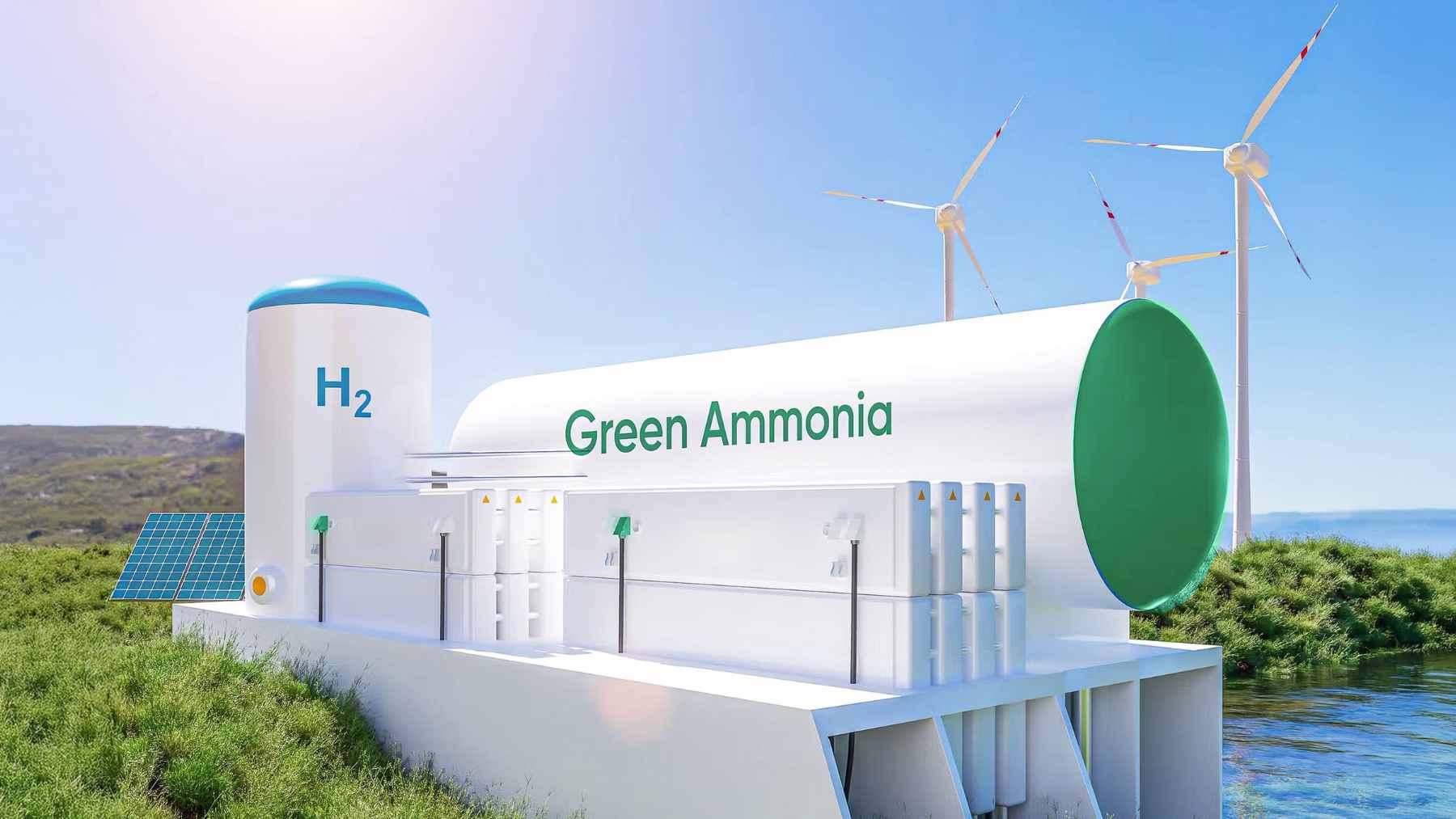
The green route changes the hydrogen source. Renewable electricity runs electrolyzers that split water, and that hydrogen is later combined with nitrogen to make ammonia. It sounds simple on paper, but it is much harder when the target is millions of tons and the power supply must stay reliable around the clock.
Sun and wind do the heavy lifting
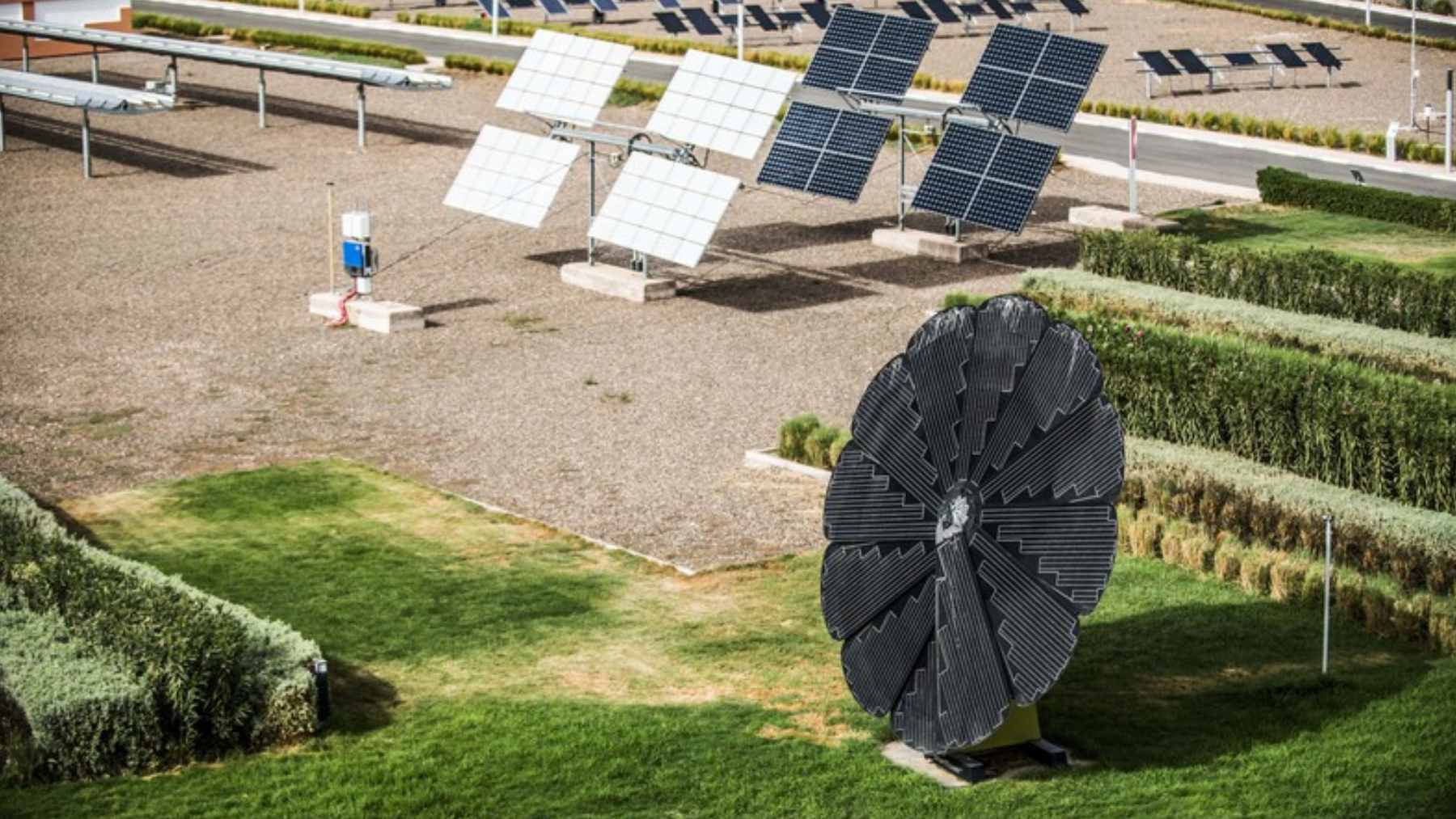
OCP says it plans to reach 5.4 gigawatts of clean-energy capacity by 2027 and 9.7 gigawatts by 2030. That power is intended to serve industrial sites, desalination systems, and hydrogen production, tying several pieces of the project together instead of treating them as separate businesses.
There is another advantage that many green-hydrogen developers do not have. OCP can be its own first customer, using the ammonia inside an existing fertilizer network with established plants, ports, and buyers. That captive demand could lower some of the market risk, even if it does not remove the financing challenge.
Water cannot be an afterthought
Electrolysis needs purified water, and Morocco has little room to put more pressure on drought-hit rivers and aquifers. The U.S. Department of Energy says electrolysis can require about 3.8 gallons of water for every 2.2 lbs. of hydrogen, so the numbers become substantial at industrial scale.
OCP’s plan includes desalination capacity equal to roughly 148 billion gallons by 2027. That approach can protect freshwater supplies, but it creates another environmental test because desalination consumes energy and leaves concentrated brine that can harm coastal ecosystems when it is poorly treated or dispersed. The water plan matters just as much as the solar panels.
A wider industrial push
OCP is not working alone. Its agreement with ENGIE covers renewable power, energy storage, electrical infrastructure, green ammonia, and desalination, while a source familiar with the deal told Reuters that the projects could draw up to $18 billion in investment. ENGIE described the partnership as a “shared vision of energy transition.”
TotalEnergies and its partners are also developing the Chbika project near Morocco’s Atlantic coast. The proposal combines 1 gigawatt of solar and wind capacity with desalinated seawater and aims to produce about 220,000 tons of green ammonia each year for Europe.
The national pipeline is even larger. In March 2025, Morocco selected five investor groups for six hydrogen projects valued at $32.5 billion, covering green ammonia, industrial fuels, and steel. By February 2026, the TAQA Morocco and Moeve consortium had signed a preliminary land reservation agreement and moved its ammonia and fuel project into feasibility studies.
The economics are still tough
Green does not automatically mean cheap. The IEA estimates that emerging near-zero-emission ammonia routes can cost between 10% and 100% more than conventional production, depending largely on energy prices and local conditions.
That is why the 2027 and 2032 targets should be read as an industrial direction, not a guaranteed finish line. OCP still needs competitively priced electricity, electrolyzers, permits, infrastructure, certification, and buyers willing to sign long contracts or pay for lower-carbon products. This is where the spreadsheet matters more than the slogan.
A cleaner factory is not the whole story
Green ammonia can sharply reduce emissions at the production stage, but it does not erase the climate impact of fertilizer use. By the IEA’s estimate, emissions released during and after nitrogen fertilizer application can account for more than 70% of the product’s total life-cycle greenhouse gas footprint.
So the next step goes beyond replacing fossil hydrogen. Better soil testing, crop-specific fertilizer blends, and more precise application can reduce wasted nitrogen and limit nitrous oxide emissions. In other words, cleaner manufacturing and smarter farming have to move together.
What to watch before 2032
The first hard test is whether OCP can approach about 1.1 million tons of annual green-ammonia output by 2027 while expanding renewable power and desalination on schedule. After that, the 2032 target of roughly 3.3 million tons will depend on whether costs fall and whether large projects advance from announcements to construction.
Morocco’s advantage is unusually practical, with abundant renewable resources, a major phosphate industry, Atlantic ports, and an immediate industrial buyer for ammonia. The plan will only count as a green success, however, if it delivers reliable output without shifting the environmental burden from carbon emissions to scarce water or coastal ecosystems.
The official investment plan was published on OCP Group.