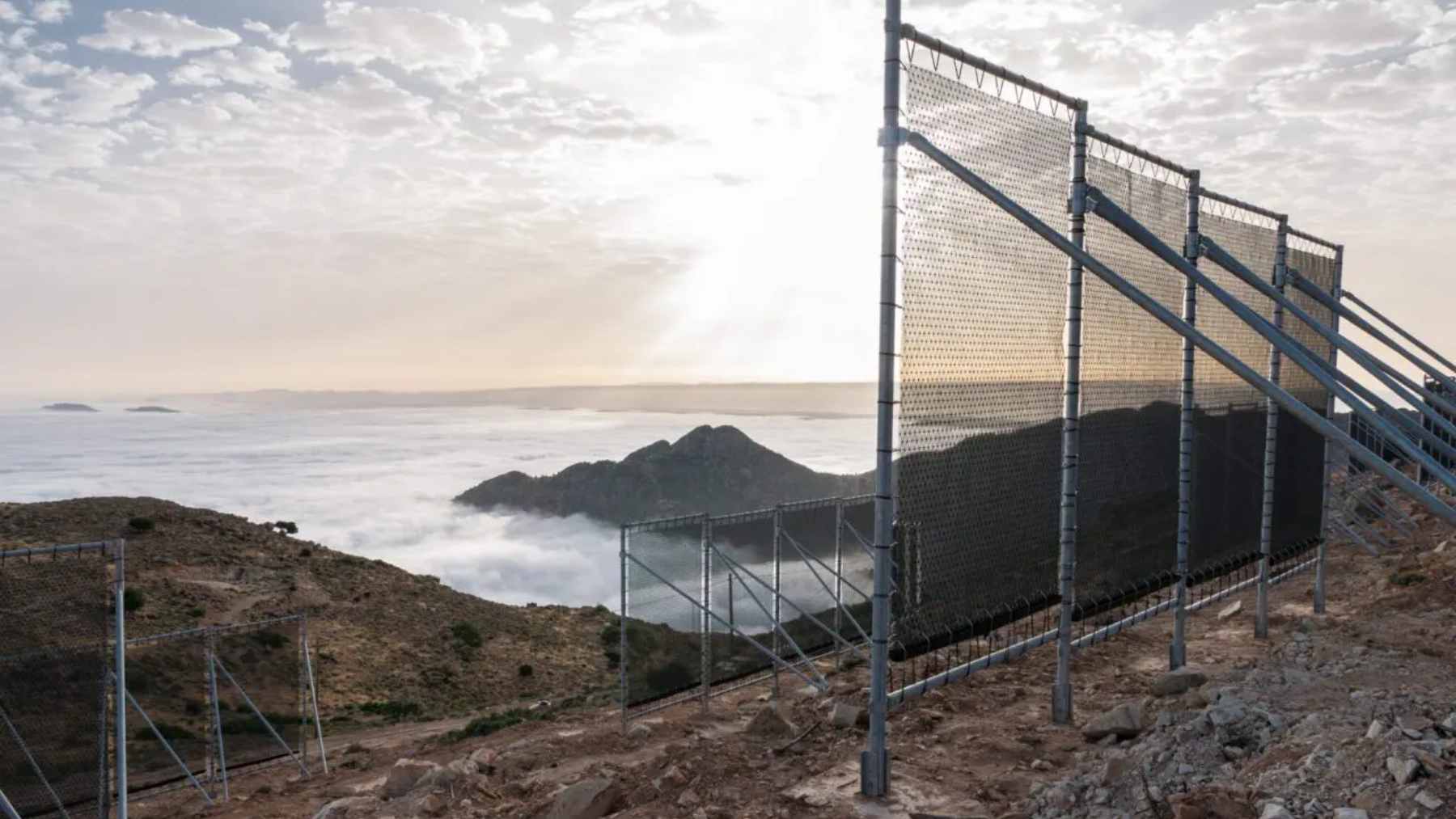
Have you ever watched fog slide down a hillside and thought it could fill a kitchen sink? In southwest Morocco, that idea is no longer strange. On Mount Boutmezguida, fog-catching nets set nearly 4,000 ft. above sea level are pulling Atlantic moisture from the air and turning it into drinking water for villages in the Aït Baamrane region.
For generations, many women in the area spent long mornings walking for water, sometimes carrying five-gallon containers weighing close to 50 lbs. when full. Now, water that once looked like a passing cloud can move through pipes to village taps, cutting a daily burden into something as ordinary as filling a glass.
Water from a mountain cloud
Dar Si Hmad, a women-led Moroccan nonprofit, designed the fog-harvesting system as a local answer to persistent water stress near the edge of the Sahara. The United Nations Framework Convention on Climate Change has described the project as a locally driven climate adaptation model that uses an environmentally friendly water source to fight desertification.
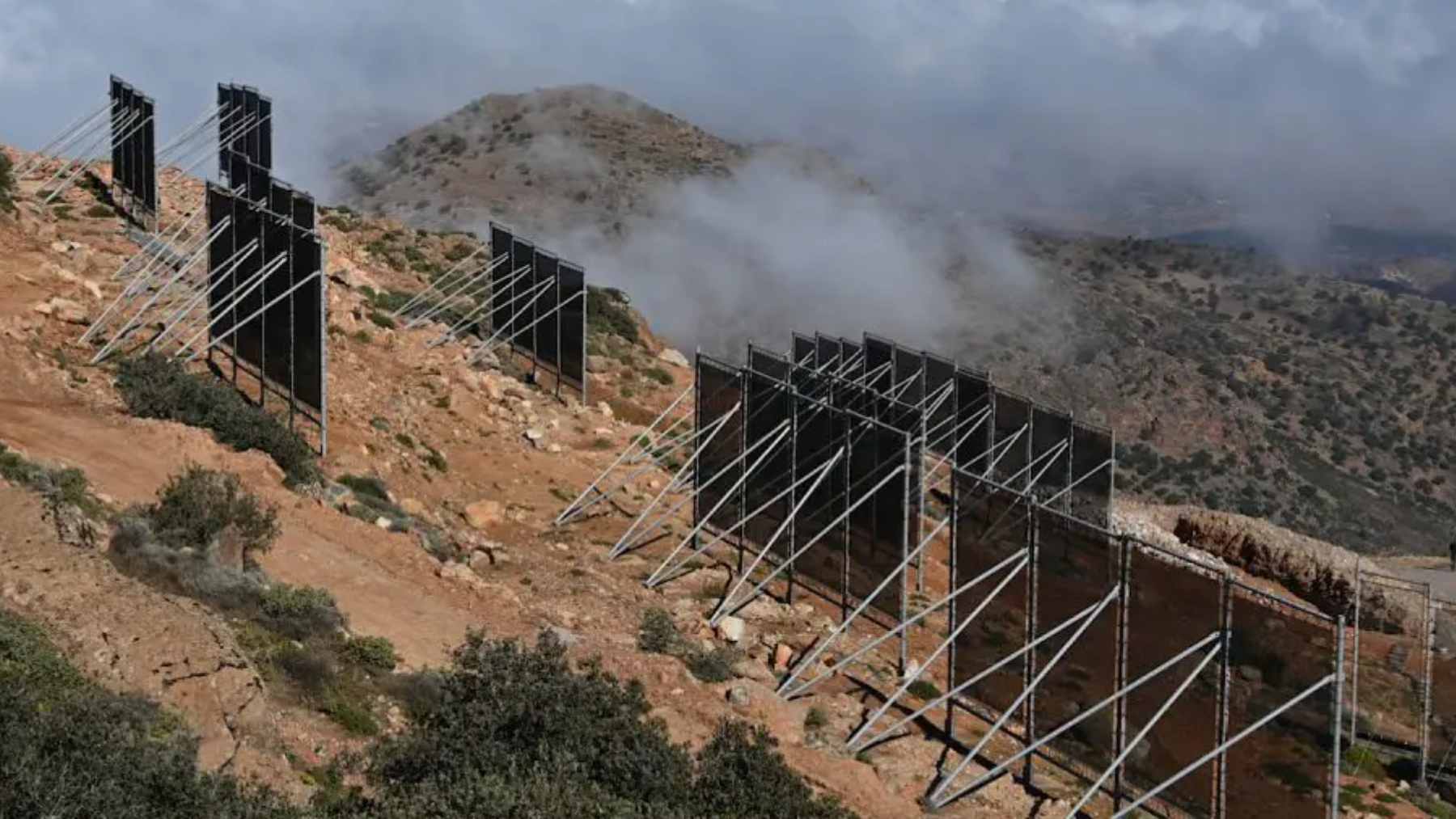
In its earlier official profile, the system included about 6,460 ft.² of nets, seven reservoirs holding roughly 142,400 gallons, six solar panels, and more than 6.2 miles of piping. That setup supplied potable water to more than 400 people in five villages, most of them women and children.
The project later grew with CloudFisher technology. WaterFoundation says the Morocco system has been operating in the Anti-Atlas Mountains since 2018 with 31 units, about 18,150 ft.² of net area, and enough output on foggy days to serve 16 villages with roughly 1,300 residents.
How the nets catch fog
The basic trick is simple. Fine mesh panels hang in a frame, wind pushes fog through them, tiny droplets cling to the fibers, and the water drips into a channel before it is stored and sent downhill.
This is not magic, but it does depend on the right mountain. Mount Boutmezguida sits where coastal humidity, fog, and wind meet dry terrain, which makes the site useful in a way a flat desert plain would not be.
Modern engineering has made the old idea much more practical. MIT researchers found that changing mesh spacing, fiber size, and surface chemistry can increase fog-collecting efficiency by about 500%, a huge difference for communities counting every gallon.
From long walks to taps
Dar Si Hmad began studying the region’s fog potential in 2006, according to the Reach Alliance case study. The organization later used the technology to bring fresh drinking water directly to individual households in the Anti-Atlas Mountains’ Aït Baamrane region.
That is the heart of the story. This is not just about pipes, tanks, and mesh, it is about time.
When water arrives at home, daily life changes in quiet but powerful ways. A girl who no longer has to walk for water may have more time for school, and a mother who is not planning her day around a distant well has more room to work, rest, or care for her family.
Trust had to be earned
Still, not everyone immediately trusted water from fog. In some villages, fog had long been seen as a nuisance, something that soaked clothes, confused animals, and seemed to block rain.
That skepticism softened only after the system worked. As one account from the project put it, “Once the water was available, it became an ally, not an enemy.”
There was another layer, too. Women had long managed household water, so bringing taps into homes changed routines, and in some cases, family authority. Dar Si Hmad responded with literacy training, water education, and mobile phones so women could continue reporting and managing system problems.
Why this matters beyond Morocco
For most people, a fog net might sound like a small piece of climate technology. It is not. UNICEF has warned that women and girls spend 200 million hours every day collecting water worldwide, while the World Bank says women and girls carry the main responsibility in nearly 80% of households without direct water access in Sub-Saharan Africa.
That is why a household tap can mean much more than convenience. In everyday life, it can mean fewer miles under the sun, fewer missed classes, and less pressure on families already dealing with drought, migration, and shrinking rural opportunities.
There is a business and technology lesson here as well. The strongest climate tools are not always the biggest machines. Sometimes they are systems that match local geography, use little energy, and can be maintained by the people who rely on them.
A climate tool with limits
Fog harvesting is not a universal fix. It needs altitude, regular fog, wind, storage, maintenance, and community trust. No net can catch moisture that never arrives.
That said, Morocco’s project shows what climate adaptation can look like when it starts with local conditions instead of a one-size-fits-all blueprint. It uses moisture already moving through the air, then relies on gravity, pipes, solar power, and local management to make that water useful.
It will not replace groundwater protection, desalination, or broader water planning. But in the right place, a mesh panel on a mountain ridge can do what dry wells and long walks could not.
The official statement was published on the UNFCCC website.