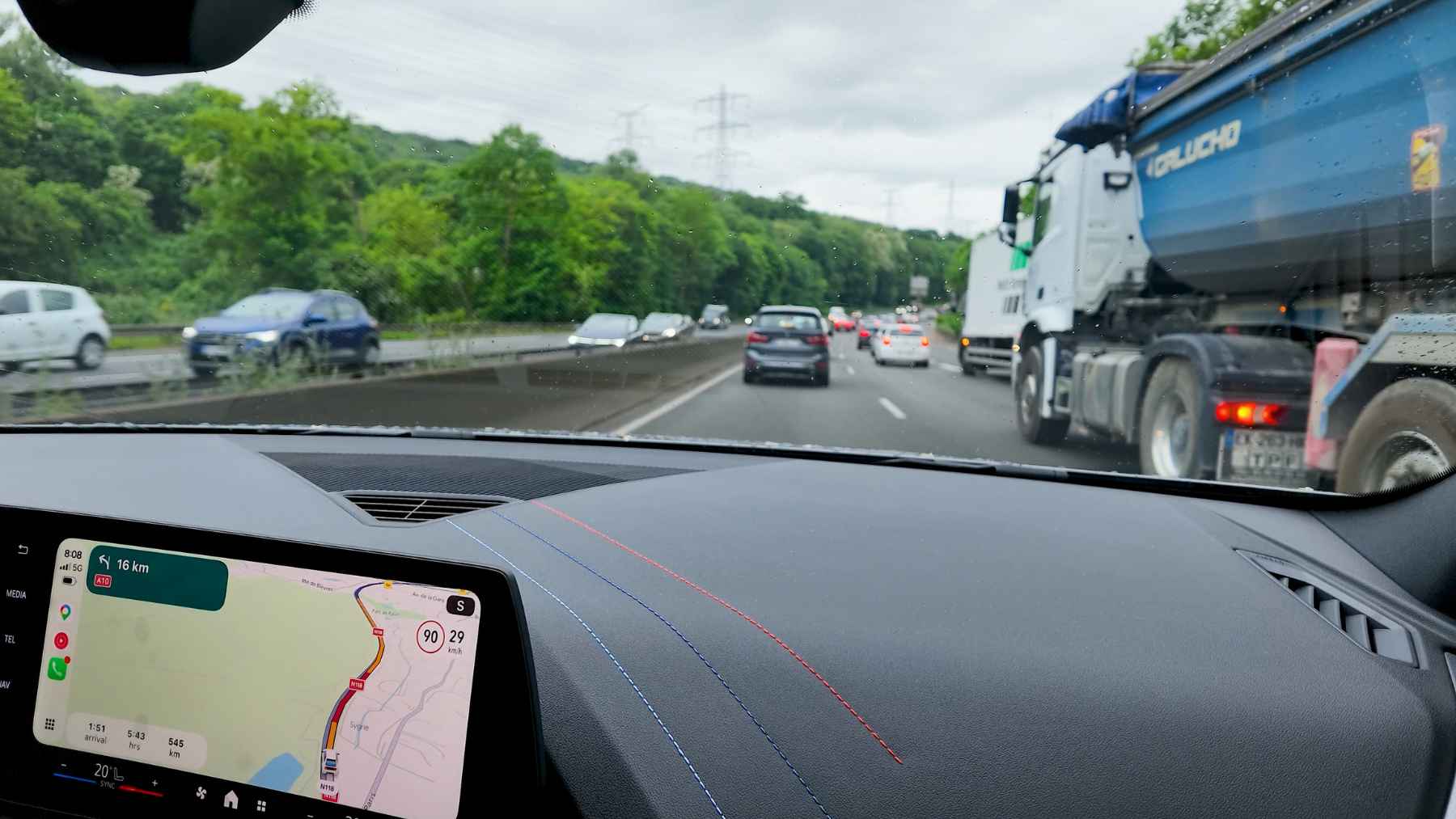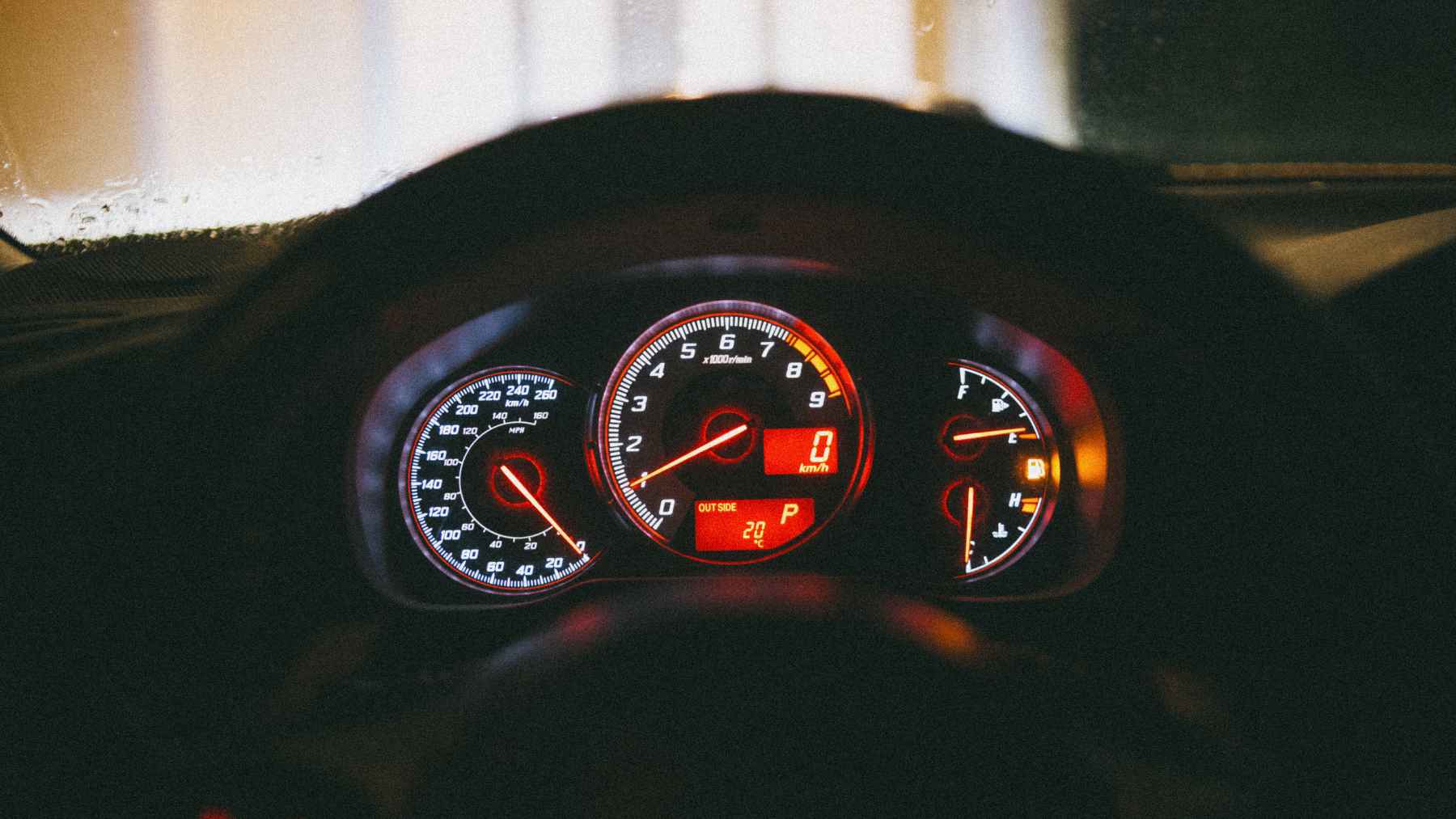
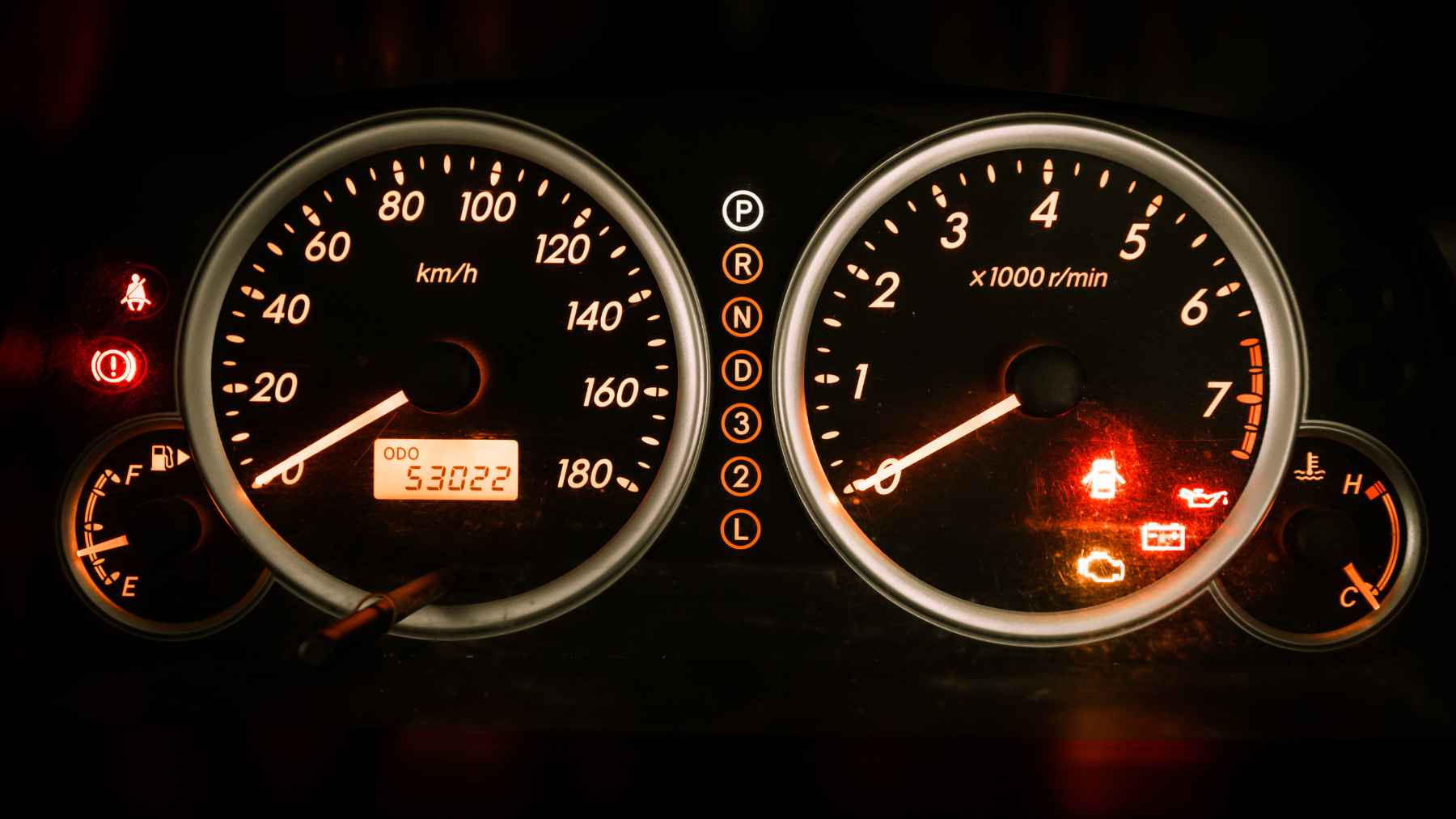
The needle is resting on “E,” the warning light is glowing, and the nearest gas station suddenly feels much farther away. Many drivers read that letter as proof that the tank has already used its final drop, but that is not how most fuel gauges are designed.
“E” does mean “Empty,” yet it usually marks the start of a small built-in buffer rather than literal zero fuel. That reserve may get you to a pump, but its size and usable range change from one vehicle to another, which is why treating it like free mileage can become an expensive habit.
What E really means
A fuel gauge is an estimate of how much gasoline remains in the tank. In a conventional system, a float moves with the fuel level and a fuel sending unit converts that movement into the reading shown on the dashboard.
When the gauge reaches E, some fuel normally remains. Ford’s online owner’s manual describes an “empty reserve” as an unspecified quantity left when the gauge indicates empty, and it warns drivers not to rely on that amount to extend a trip.
That distinction matters. E is the empty end of the scale, not a laboratory measurement proving that every usable ounce has disappeared.
The reserve is not fixed
There is no universal reserve shared by every car. Tank shape, sensor calibration, vehicle design, and the point chosen for the low-fuel warning all affect how much gasoline is left.
The difference can be significant even within one model family. Honda says the low-fuel indicator in the 2025 Accord comes on with about 2.2 U.S. gallons remaining, while the 2025 Accord Hybrid warning appears at roughly 1.6 gallons.
As a broad rule of thumb, many vehicles may have around 30 to 50 miles left after the warning appears. However, AAA guidance stresses that the real figure depends on the model, fuel economy, road conditions, weather, load, and driving behavior.
Your range display can change quickly
Modern cars often show a “miles to empty” number, which feels more precise than an old needle. It is still an estimate built from recent fuel economy, speed, acceleration, distance, and other changing inputs.
AAA testing found that these estimates can fluctuate across different driving scenarios. The organization also reported that 74% of surveyed drivers use the range display when deciding when to refuel, even though recent driving conditions can alter the calculation.
A calm highway cruise may use fuel efficiently, while speeding can drain the tank faster. Stop-and-go traffic can also hurt range, especially when the engine spends long periods idling with the air conditioning running.
Why running dry can hurt
The in-tank electric fuel pump depends on gasoline flowing through it for cooling and lubrication. Delphi Technologies warns that when fuel is gone, the pump can overheat and suffer damage, particularly when a vehicle is repeatedly allowed to run out.
That does not mean one brief dip below a quarter tank automatically destroys the pump. The bigger risk comes from making very low fuel a routine, then pushing beyond the warning until the system begins drawing air.
There can be other consequences too. Honda owner guidance warns that running out can cause engine misfires and damage the catalytic converter. In May 2026, AAA spokeswoman Megan Cooper said, “Repeatedly driving on a very low fuel level can damage the fuel pump,” with repair costs potentially reaching $1,000 or more.
The sediment story needs context
Drivers are often told that reaching E makes the pump pull contamination from the bottom of the tank. Debris can clog a pump strainer, fuel filter, lines, or injectors, but the risk depends heavily on tank condition, fuel quality, and the vehicle’s filtration system.
In practical terms, contamination is another reason not to gamble with an old or poorly maintained tank, but it is not the only concern. Overheating the pump, losing power in traffic, and needing roadside assistance are more immediate reasons to stop treating the reserve as part of the normal tank.
A smarter refueling habit
AAA recommends refueling before the gauge drops below one-quarter full. That buffer gives drivers room for a closed station, a missed exit, a weather delay, or the kind of traffic jam that turns a short commute into an hour behind brake lights.
The owner’s manual remains the best source for a specific vehicle. It may state the approximate fuel quantity that triggers the warning, explain how the range display is calculated, and describe any restart procedure after the tank has been run dry.
There is also a modest sustainability benefit. Avoiding a preventable fuel-pump replacement means fewer discarded components, less repair work, and one less tow truck journey. Small choices add up.
Treat E as a warning
The letter is not a secret code for “Emergency,” and it does not guarantee a fixed number of miles. It simply marks the empty side of the gauge, with a model-specific reserve that manufacturers expect drivers to use for reaching fuel, not postponing it again.
So, can the car keep moving after the needle touches E? Usually, yes. But the safest answer is to head for the nearest suitable station and let the remaining fuel stay what it was designed to be, a last margin rather than a daily target.
The latest official statement cited here was published on AAA’s newsroom.