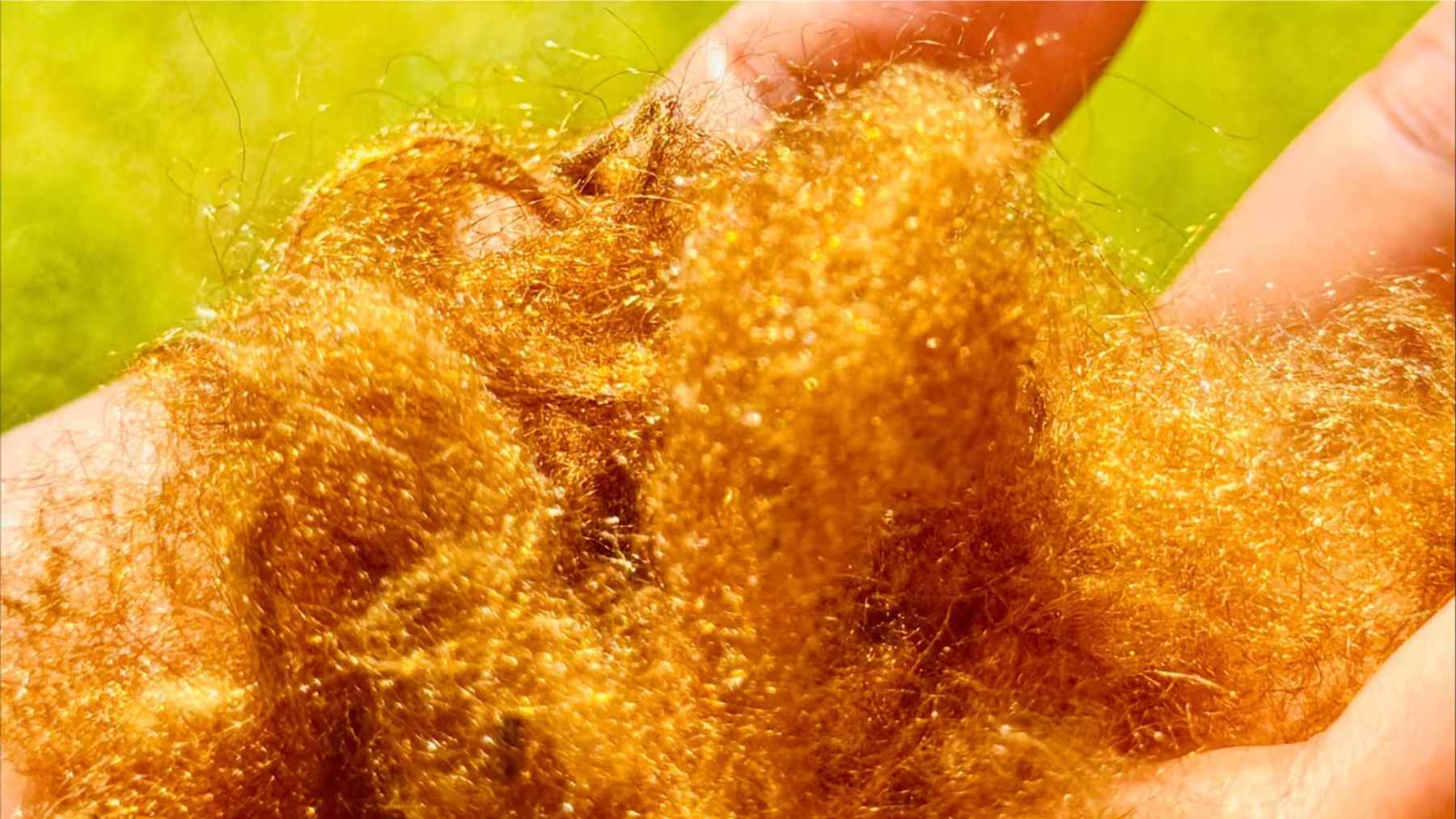
For centuries, sea silk sounded almost too strange to be real–a golden thread pulled from the sea, light enough to feel unreal, rare enough to be linked with emperors, popes, and sacred relics. Now, researchers in South Korea say they have recreated a golden fiber similar to ancient sea silk using the pen shell (Atrina pectinata), a shellfish cultivated in Korean coastal waters.
The bigger story is not just that a legendary material is back. It is that its color comes from the structure of the fiber itself, not from dyes, pigments, or metals. In a fashion world still wrestling with pollution, water use, and waste, that detail could matter far beyond museum cases and luxury history.
A rare fabric returns
Sea silk has often been called the “golden fiber of the sea,” and for good reason. Traditionally, it was made from the byssus threads of Pinna nobilis, a large Mediterranean clam that uses those fibers to anchor itself to rocks.
The material became famous for its warm golden shine, low weight, and durability. One of the best-known objects linked to it is the Holy Face of Manoppello, a religious relic preserved in Italy for centuries and believed by some to be made from sea silk.
There is a problem, however. Pinna nobilis is now endangered, and the European Union has banned its harvesting. That means authentic sea silk has become extremely rare, produced only in tiny amounts by a small number of artisans. The thread survived, but barely.
The Korean pen shell
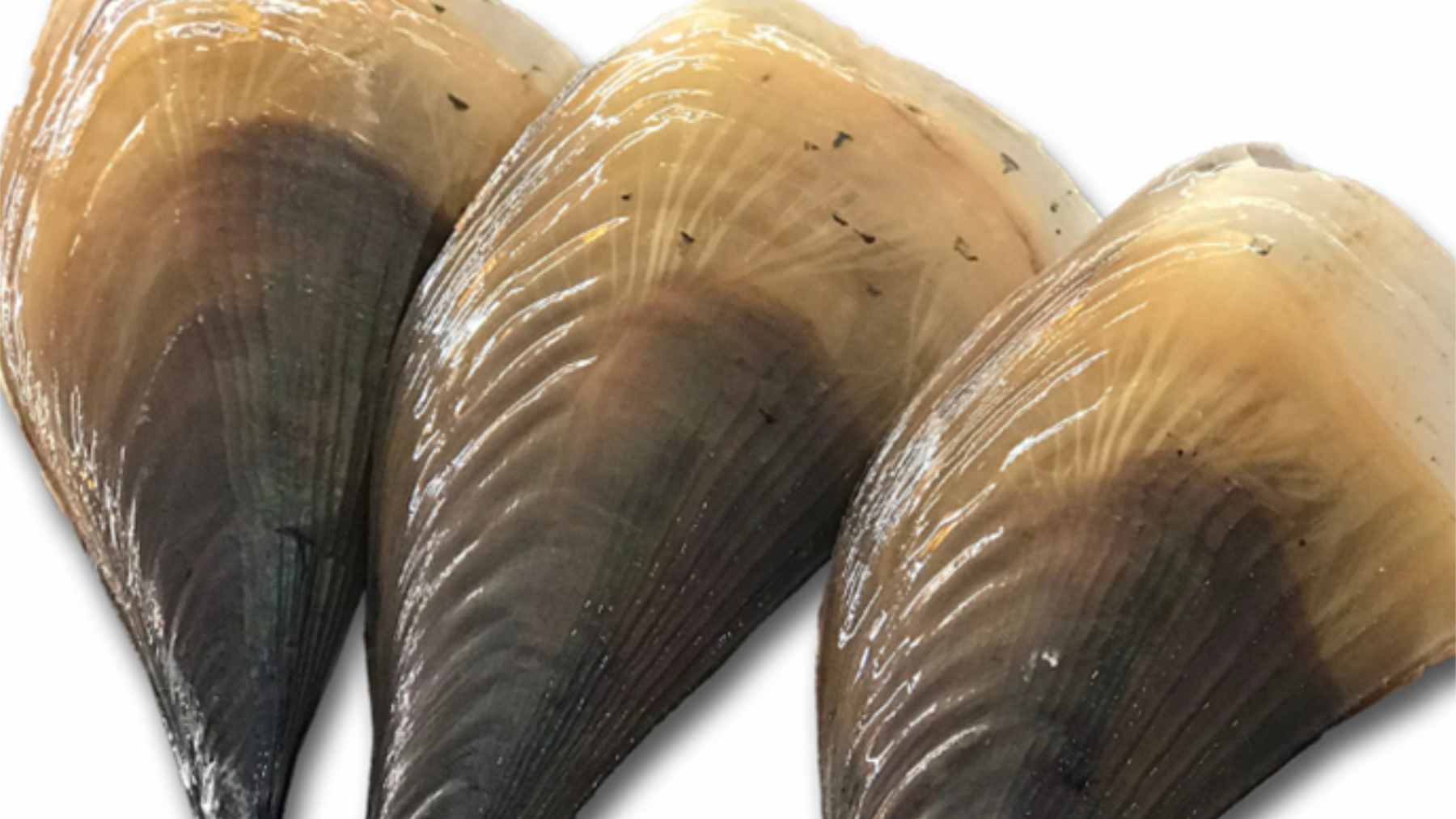
The POSTECH team, led by Professor Dong Soo Hwang and Professor Jimin Choi, looked for another path. Instead of turning to the endangered Mediterranean clam, they studied Atrina pectinata, a pen shell already cultivated for food in Korean coastal waters.
Like Pinna nobilis, this shellfish produces byssus threads. Those fibers help it stick to surfaces, but in the food system they have usually been treated as waste. That is where the discovery takes on a practical edge.
The researchers found that the pen shell fibers closely resemble traditional sea silk in both physical and chemical ways. By processing that discarded byssus, they recreated a golden fiber with the look of the ancient material, without needing to harvest an endangered species.
Why the gold stays gold
So what gives sea silk its glow? Not dye, not paint, and not a coating that washes out after enough wear.
The POSTECH team found that the golden color comes from structural coloration, a phenomenon in which tiny internal structures reflect and manipulate light. The researchers identified spherical protein structures called “photonin,” arranged in layers that help create the fiber’s distinctive shine.
Think of a soap bubble or a butterfly wing. The color seems vivid, but it is not simply sitting on the surface like ink on paper. In sea silk, the glow is built into the fiber, which helps explain why the material can keep its color for centuries, and by the study’s findings, possibly far longer.
Why fashion should care
This is where an ancient thread starts to sound surprisingly modern. Textile production is estimated to be responsible for about 20% of global clean water pollution, mainly from dyeing and finishing, according to the European Parliament.
UNEP has also warned that fashion and textiles account for 2% to 8% of global greenhouse gas emissions, while using vast amounts of water and carrying a sizeable chemical footprint.
That does not mean one revived fiber will clean up the industry overnight. Still, a material that gets its color without dyes or metals points toward a different way of thinking.
In short, that means color could become part of the material’s architecture, not something added later through chemical-heavy processing. For luxury brands, advanced materials companies, and sustainable fashion labs, that is an intriguing business signal.
Waste becomes value
There is also a quieter environmental point here. The pen shell byssus used by the researchers was previously discarded as waste, according to POSTECH. Turning that material into a high-value textile creates a small but meaningful example of upcycling from the sea.
At the end of the day, sustainability is not only about inventing brand-new materials from scratch. Sometimes it is about noticing what is already being thrown away. A fiber that once ended up as seafood waste could become a source of durable color, cultural value, and new design ideas.
Professor Dong Soo Hwang summed up the promise carefully, saying, “Structurally colored textiles are inherently resistant to fading.” The team says that approach could open new possibilities for sustainable fashion and advanced materials without relying on dyes or metals.
Not every shirt tomorrow
It is worth keeping the caveats in view. This research does not mean golden sea silk is about to replace cotton T-shirts or polyester jackets in stores next season. Scaling a biological material, checking its environmental footprint, and building a reliable supply chain are all complicated steps.
There are also ethical and ecological questions to answer. Even when a shellfish is farmed for food, researchers and companies still need to consider sourcing, processing, animal impact, and whether the final product is truly better than existing alternatives.
Still, the direction is important. The study shows that a rare historical textile can be recreated using a more sustainable source, while also revealing a natural design principle that engineers may be able to adapt for pigments, fabrics, coatings, or other advanced materials.
An old thread for a new problem
Sea silk’s return feels poetic, but the science is very practical. A material once linked to ancient prestige is now being studied as a possible clue for cleaner, longer-lasting color.
That is the twist–the past is not just being restored for nostalgia. It may be offering a small compass for the future of textiles, where beauty does not have to fade quickly, and color does not always have to come with a chemical cost.
The study was published in Advanced Materials, and the press release was published on ScienceDaily.