A solar farm is usually judged by one number first: the electricity it can send to the grid. But in Minnesota, two solar sites built on retired farmland have been telling a quieter story under the panels, where native plants and insects began returning in surprising numbers.
The finding matters because one of the biggest worries about utility-scale solar is land. If clean power needs millions of acres, does that mean more empty, fenced-off fields with less room for wildlife? A five-year study suggests the answer can be more hopeful, but only when solar developers treat the ground as habitat, not leftover space.
A hidden prairie
Researchers from Argonne National Laboratory and the National Renewable Energy Laboratory studied two solar sites in southern Minnesota operated by Enel Green Power North America. Both were built on retired agricultural land, which matters because disturbed farmland can be very different from untouched habitat.
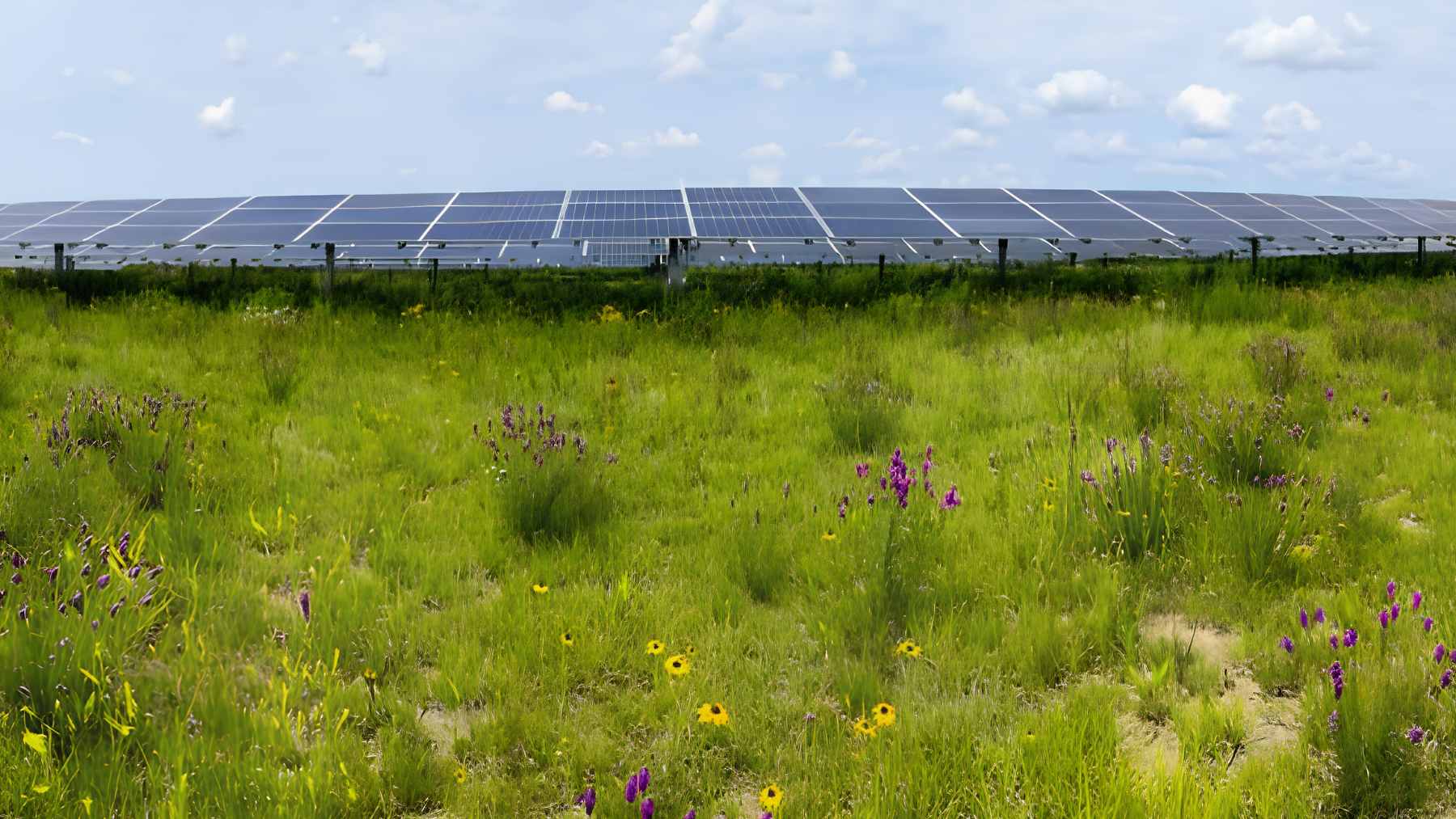
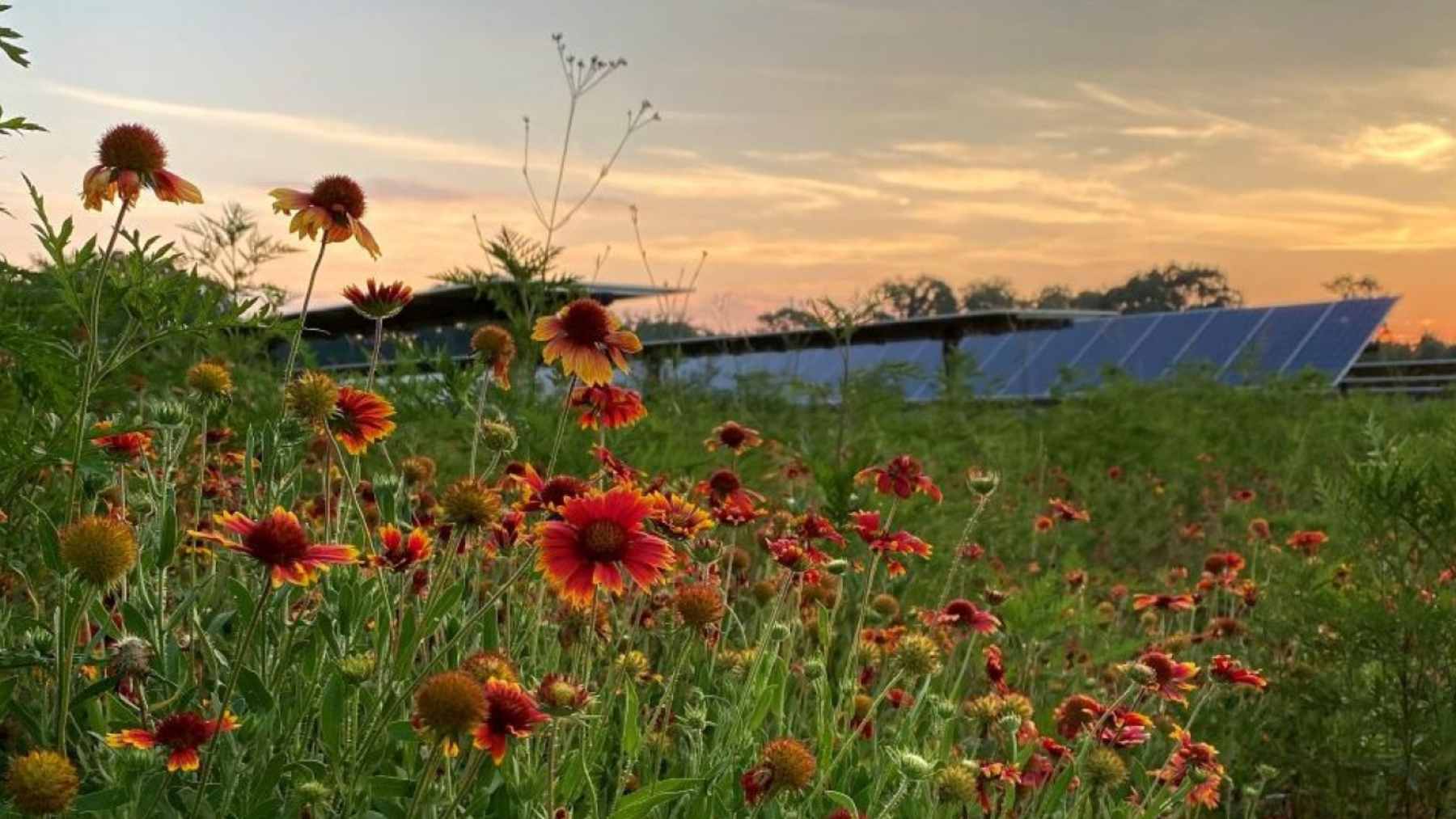
Instead of covering the ground with gravel or keeping it shaved down like a golf course, the sites were planted with native grasses and flowering plants in early 2018. The panels were raised enough to leave room for vegetation to grow around and beneath the rows.
In practical terms, the solar farm became a working power plant with a small prairie tucked inside it.
That may sound simple, but it is not. Developers often move fast, and vegetation can seem like a detail compared with transformers, panels, permits, and cables. But here, that small design choice changed what the land could become.
The insect count climbed
From August 2018 through August 2022, researchers conducted 358 observational surveys of flowering vegetation and insect communities. Each visit helped them track whether the new habitat was actually taking hold, or whether the idea looked better on paper than in the field.
By the end of the field campaign, total insect abundance had tripled. Native bees showed an even sharper change, increasing 20-fold, while beetles, flies, and moths were among the most commonly observed insect groups.
That does not mean every solar farm will automatically become a buzzing wildlife refuge. The study only looked at two carefully managed sites in one region. Still, the result is hard to ignore because it shows how quickly insects can respond when food, shelter, and native plants come back.
Why bees matter here
Bees are not just charming visitors to wildflowers. They help support ecosystems and agriculture, and many native species have been hit by habitat loss, pesticides, climate pressure, and the disappearance of flowering landscapes.
That is why the Minnesota results feel bigger than a local success story. The researchers found that pollinators from the solar sites also visited soybean flowers in nearby fields, which means the restored habitat may have supported pollination beyond the fence line.
Think of it like a small grocery store opening in a neighborhood that had become a food desert for insects. Once the flowers arrived, the bees did not just stay neatly between the panels, they moved through the landscape.
The land debate
The land question is not going away. According to Argonne’s summary of the DOE Solar Futures Study, about 10 million acres in the U.S. may be needed for large-scale solar development by 2050 to meet grid decarbonization and climate goals.
That is why design choices matter so much. A solar site can be built as a sterile energy island, or it can be planned as a place where power generation and habitat restoration share the same ground. The panels do the electrical work above, while the soil below supports roots, insects, and water retention.
There is a catch, of course: location still matters. Restoring habitat on former agricultural land is not the same as placing panels on fragile desert ecosystems, wetlands, or other sensitive landscapes. The lesson is not to build anywhere and call it green, but to build smarter where solar already makes sense.
The business case
For developers, pollinator-friendly solar is not only an environmental talking point. Native vegetation can reduce mowing and long-term maintenance, especially compared with short turfgrass that needs frequent cutting. Environment America notes that this can help offset costs tied to raised panels and habitat-friendly design.
Johanna Neumann, senior director of Environment America Research and Policy Center’s Campaign for 100% Renewable Energy, called native pollinator support an “obvious solution” at a time when bees are struggling and clean energy is expanding quickly.
That is the kind of detail that could change boardroom conversations. If a project can lower maintenance pressure, reduce local opposition, and help restore pollinators, the wildlife option no longer looks like a luxury. It starts to look like risk management.
Not all solar is the same
The Minnesota study also pushes back against a common shortcut in the energy debate. Solar farms are often discussed as if every project has the same ecological footprint. They do not.
A site covered in gravel, a site planted with turf, and a site seeded with native flowers can produce similar electricity while creating very different outcomes for the land. Same panels, different world underneath.
The researchers themselves were cautious. They said more research is needed to understand how habitat-friendly solar works across different regions and ecological goals. That nuance matters because a prairie seed mix that works in Minnesota may not be the right fit for Arizona, Georgia, or Texas.
A better blueprint
At the end of the day, the discovery in Minnesota is not that solar panels magically save bees. It is that the space under and around them can be designed with life in mind.
For communities worried about farmland, wildlife, and the pace of clean energy construction, that is a useful shift. A solar farm does not have to be a blank spot on the map. Built carefully, it can become a power plant, a pollinator stopover, and a test case for how infrastructure might work with nature instead of simply pushing it aside.
The study was published on Environmental Research Letters.