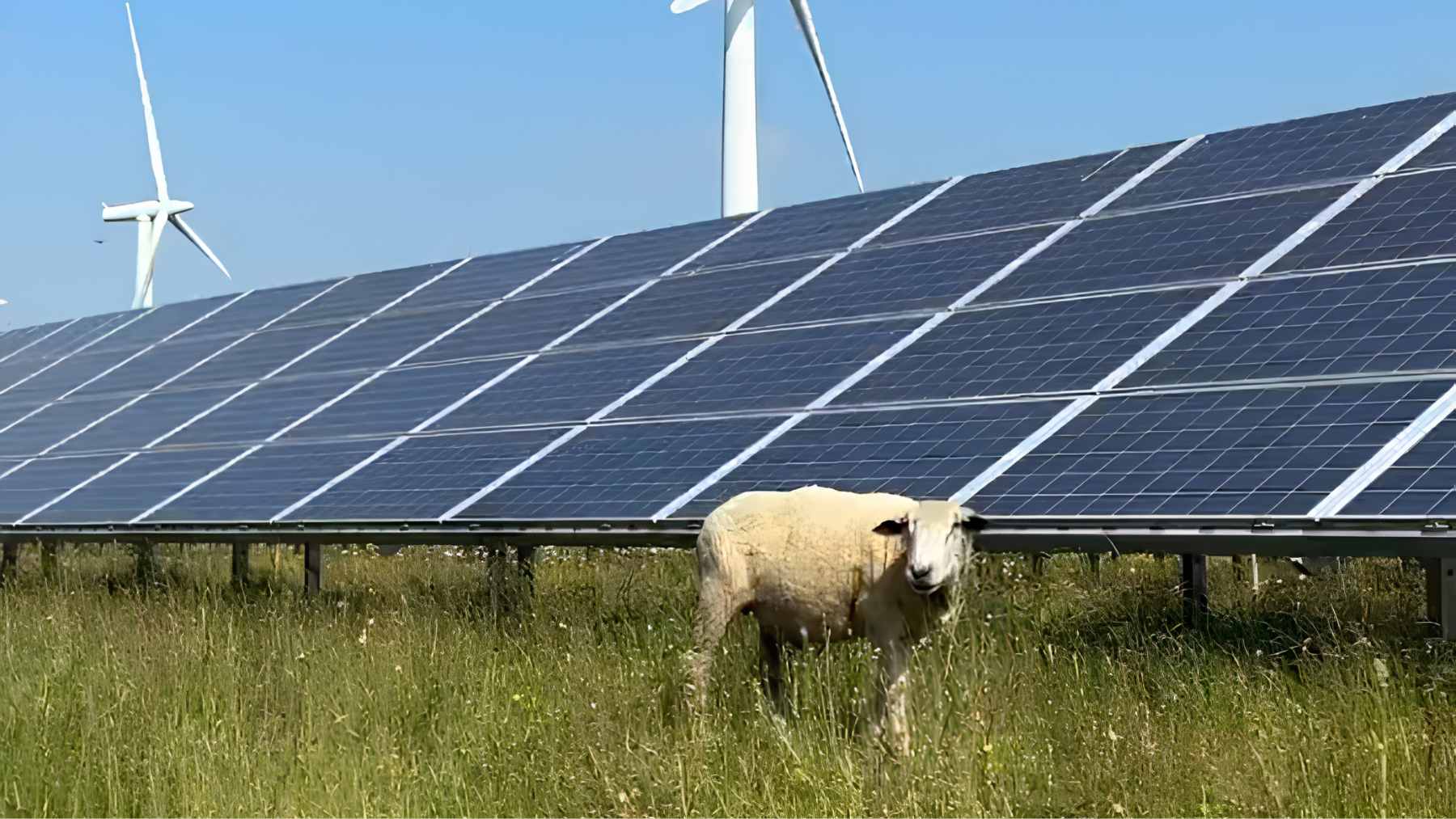
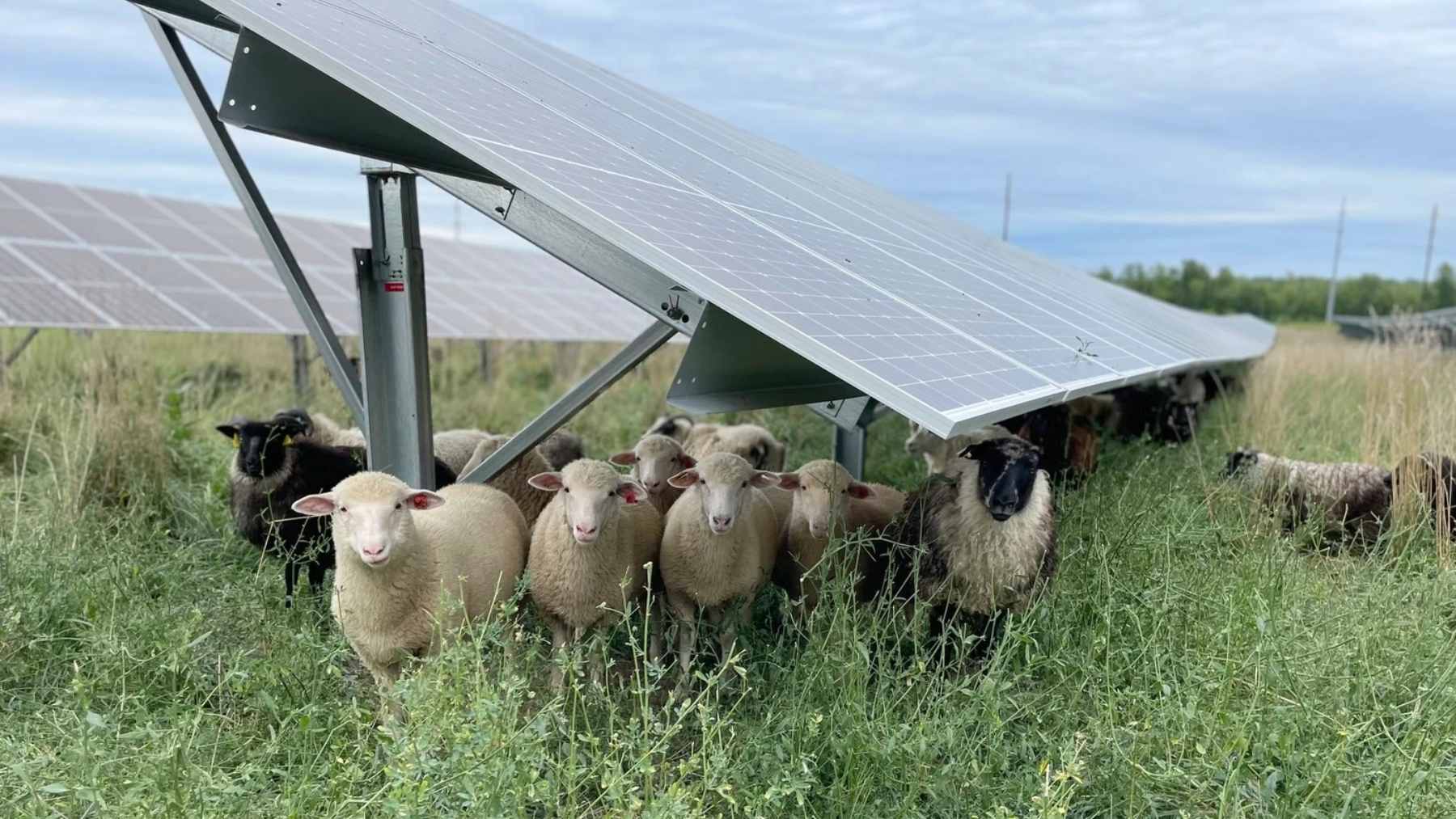
A flock of about 40 sheep has become part of the clean energy story at Westmill Solar, a community-owned solar farm on the Oxfordshire and Wiltshire border in southern England. This is not just a cute image for a visitor brochure.
The sheep are helping manage vegetation, protect wildflowers, support insects, and show how renewable energy sites can be designed as living landscapes rather than fenced-off industrial spaces.
The bigger lesson is simple: solar power does not have to mean choosing between electricity and ecology. At Westmill, more than 20,000 solar panels generate about 4.5 gigawatt-hours of electricity a year, enough on average to power roughly 1,600 homes, while the site says it saved more than 4.2 million lbs. of carbon dioxide emissions in 2025 when displacing gas generation.
Why the sheep matter
Most solar farms need some kind of vegetation control. Grass and fast-growing plants can block access, create maintenance headaches, or shade equipment at the wrong time. At Westmill, the answer was not heavier mowing or chemical treatment, but a herd of native Cotswold and Lincoln sheep chosen for low-impact grazing.
That sounds almost too simple, but the trick is timing. Westmill says the sheep graze during the winter so they do not disturb nesting birds, and so pollinator-friendly plants are not being eaten during their flowering season.
The ecological idea behind it is known as “intermediate disturbance.” In everyday terms, the sheep keep one aggressive plant from taking over the whole field. A little nibbling, done carefully, can leave more room for a richer mix of wildflowers, insects, soil life, and birds.
A solar farm with roots
Westmill Solar is not a typical corporate project dropped into the countryside. The co-op says it was commissioned in July 2011 and later acquired by Westmill Solar Co-operative in 2012, with more than 1,500 members helping fund the purchase.
That community ownership matters because local people have a direct stake in the land and its success. At the end of the day, a solar farm that residents visit, study, and help govern feels different from one they only see through a fence.
It also changes the business story. Renewable energy is not just about panels and power prices anymore. For the most part, the stronger model is one that stacks benefits, meaning electricity, farm income, habitat recovery, education, and public trust all working on the same patch of land.
The design lesson
Westmill says its panels were specifically chosen with sheep grazing in mind. That means the land between the panels can support the flock without major concerns about the animals damaging the equipment.
Simply put, biology helped shape the engineering. The solar farm needed enough clearance and durability for animals to move, graze, and shelter underneath the panels. That may sound small, but for maintenance crews and energy operators, resilient design often starts with small decisions like that.
The sheep seem to benefit, too. Westmill says shepherdess Vera Hoenen found that the animals use the panels as shelter from the weather, while the variety of plants on the site helps them gain weight more effectively.
More than a lawnmower
Calling the sheep “living lawnmowers” misses the point. They are part of a management system that reduces the need for more disruptive methods while feeding nutrients back into the ground naturally.
There is also a human side here. In a recent Westmill Energy post, Vera described the round-the-clock commitment of caring for the flock. “There are no days off, not even Christmas Day,” she said.
That detail matters. Clean technology can sometimes feel distant and shiny–all graphs and grid connections. Here, the energy transition has muddy boots, winter mornings, and animals that need checking even when everyone else is off work.
What it means for farmland
The debate over solar farms and farmland is not going away. Farmers, planners, and rural communities are right to ask where projects should go, what soil is being used, and whether food production is being pushed aside.
Still, the land numbers are smaller than many people assume. Solar Energy UK says solar farms currently occupy less than 0.1% of UK land, and reaching the country’s longer-term solar targets would mean solar farms accounting for about 0.6% of UK land at most.
That does not make every project automatically good. Site choice, soil quality, biodiversity planning, grid access, and community support still matter a lot. But Westmill points to a more nuanced answer, where land can produce clean electricity and still remain biologically active.
Researchers are watching
Westmill has also become a useful outdoor classroom. The site says researchers have studied solar farms and pollinators, land use management, community energy, wind, microclimates, vegetation, and even farmland birds using the solar park.
That matters because the science of solar ecology is still developing. Experts are trying to understand which designs actually help wildlife and which claims sound better than they perform. The trouble is, the energy transition is moving fast, and the evidence needs to keep up.
For now, Westmill’s sheep offer a practical clue. Forty animals will not solve the climate crisis by themselves. But they show that cleaner power can work better when engineers, farmers, ecologists, and local communities design the land together.
The official biodiversity summary was published on Westmill Energy.