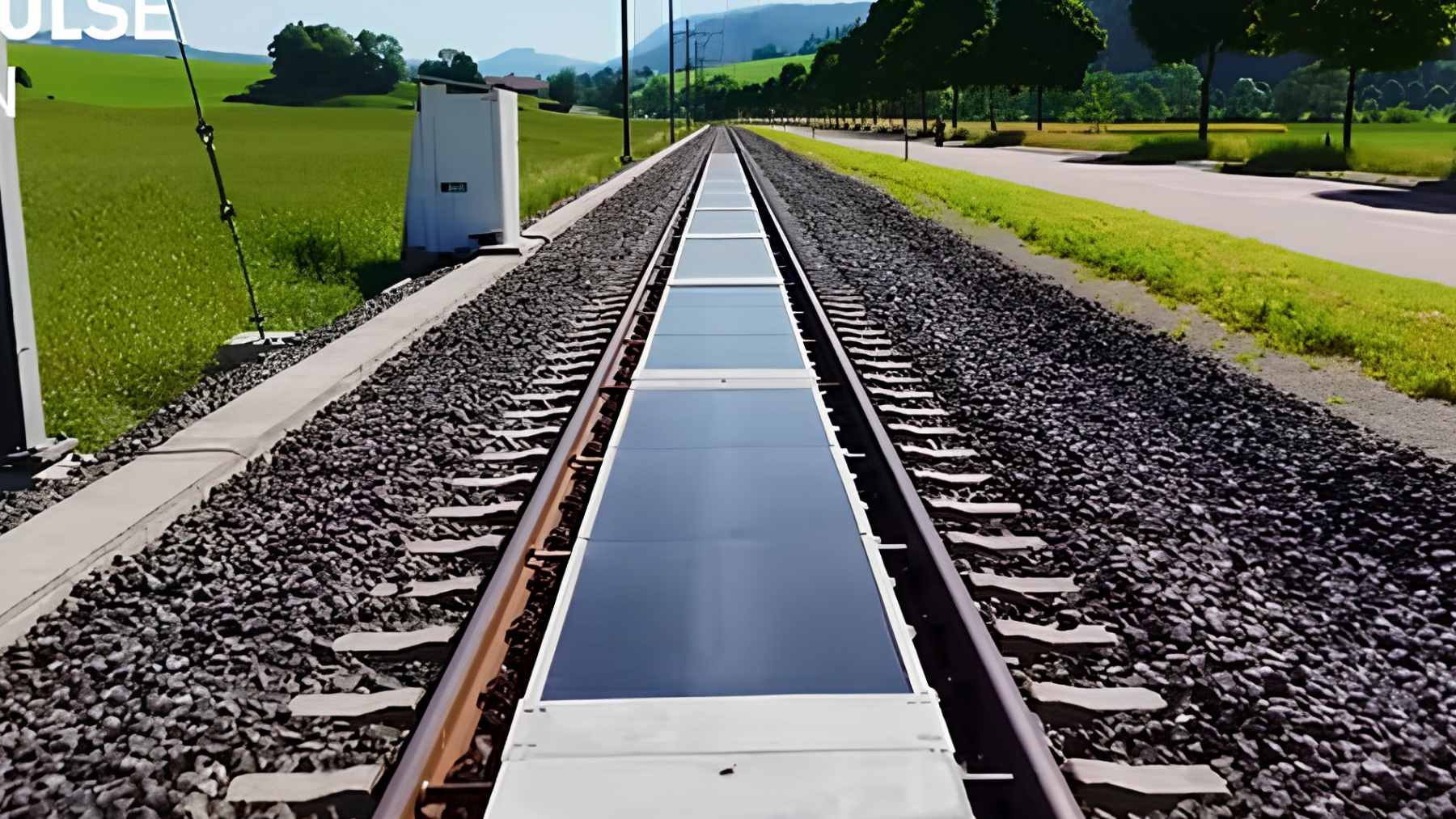
Switzerland has just given the clean-energy world a very unusual test case. In Buttes, a village in the canton of Neuchâtel, more than 11,000 trains have now passed over removable solar panels installed between active railway tracks, and Sun-Ways founder Joseph Scuderi says the pilot has met its goals for both safety and electricity production.
The plant is still small, covering 328 ft. of railway, but that is exactly why it matters. Since May 20, 2025, it has produced more than 16,000 kilowatt-hours of electricity, roughly enough for the average yearly use of three to four homes, while feeding that power into the local grid.
Solar without new land
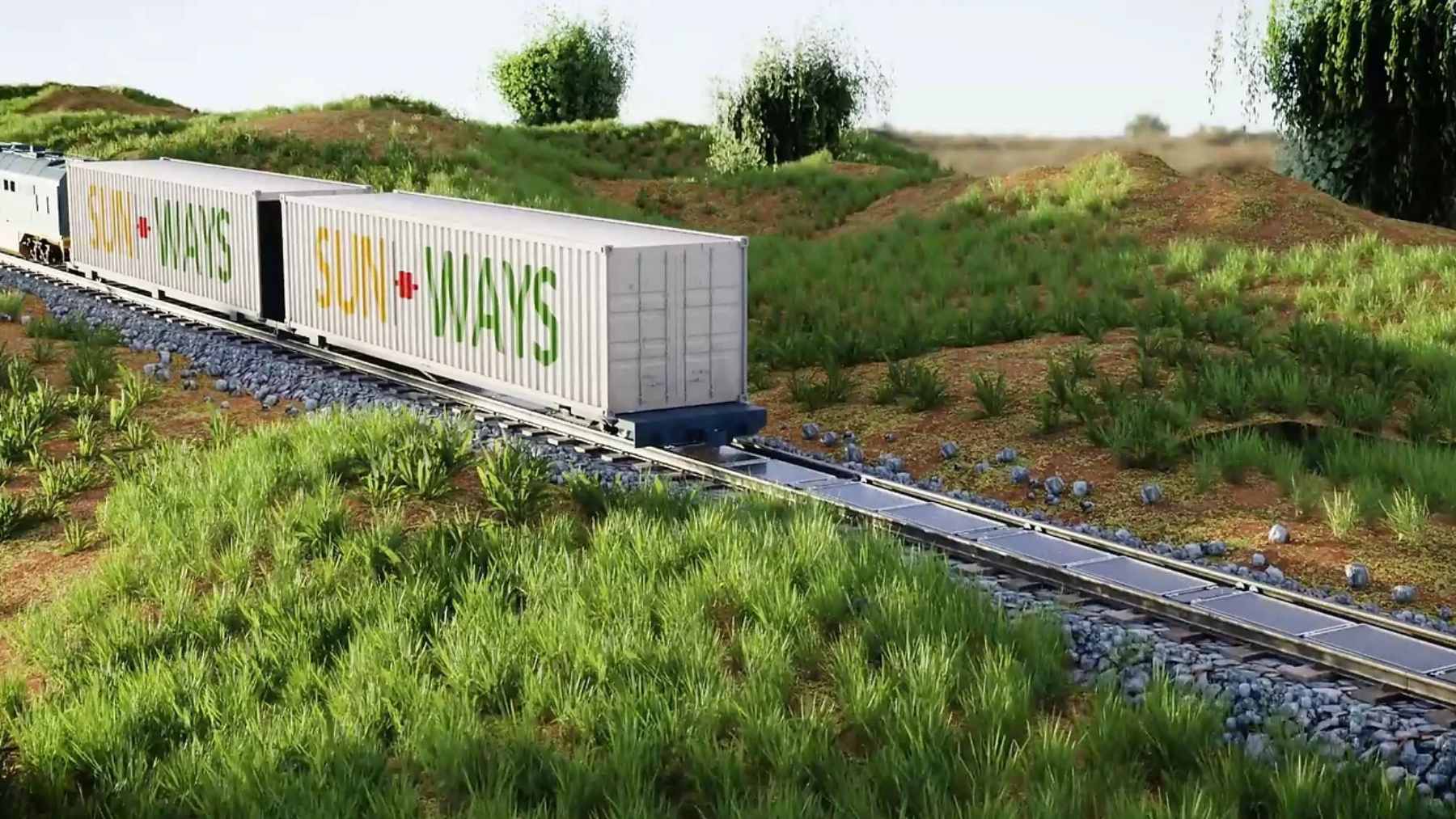
The idea sounds simple at first. Instead of covering fields, rooftops, or parking lots, Sun-Ways places photovoltaic panels in the unused strip between two rails, right on top of the sleepers that support the track. The company describes it as a “world first” removable solar power plant placed between rails.
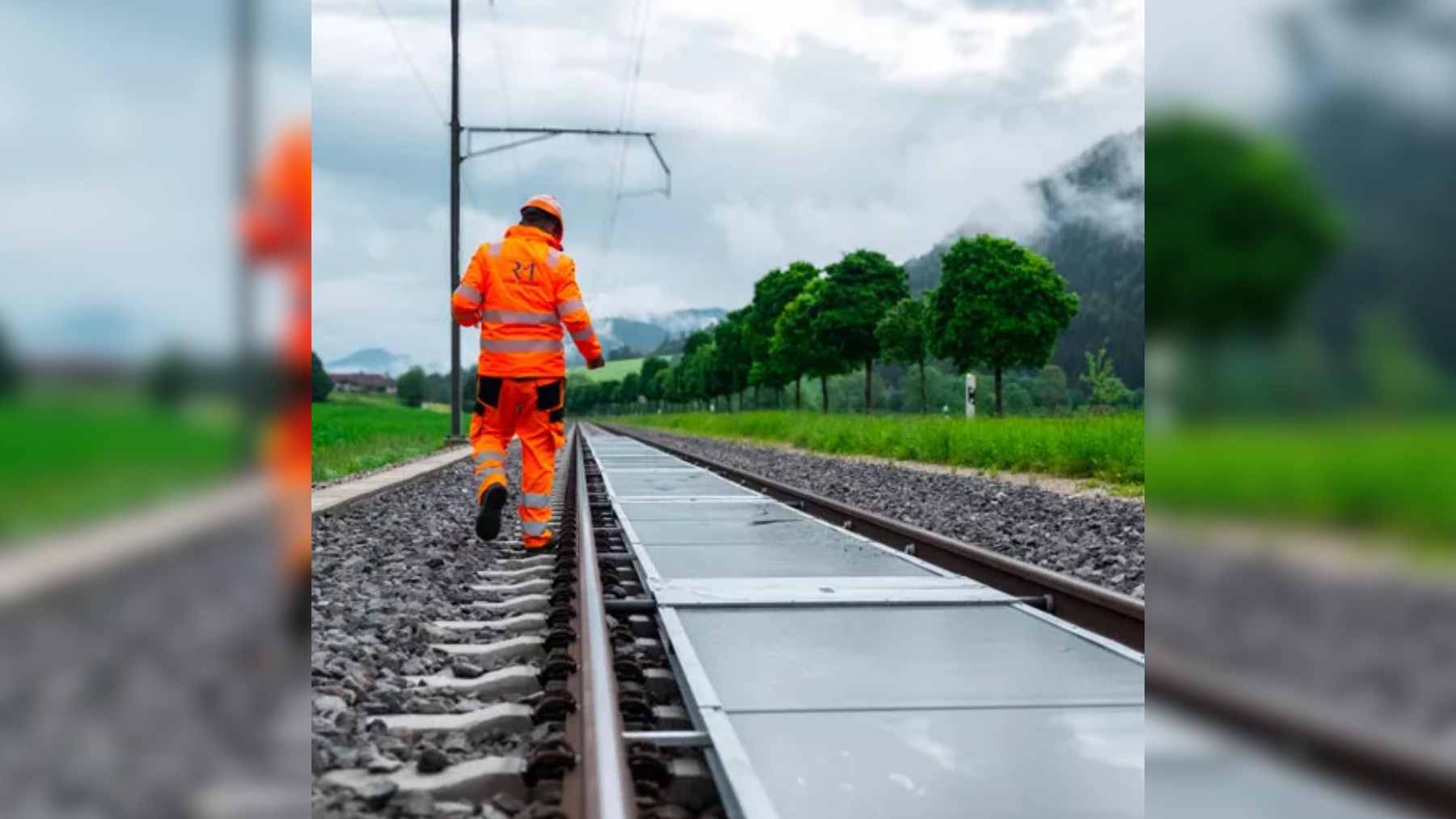
The panels are not meant to become permanent obstacles for rail crews. They can be taken out when workers need to inspect, weld, or repair the line, which is a crucial point in a sector where safety rules leave little room for improvisation.
The pilot was launched on April 24, 2025, with 48 solar panels rated at 380 watts each, giving the installation 18 kWp of capacity. Small? Absolutely, but the real question is not whether this short stretch can power a city. It is whether rail corridors can become clean-energy corridors without taking more land.
Trains became the test
The most striking result so far is not the electricity figure. It is the fact that thousands of trains have rolled over the installation without reported disruption. Scuderi told Swissinfo that the system had proved “perfectly stable and safe” during train passages.
There was also a surprise on cleaning. Sun-Ways had first imagined using a cylindrical brush mounted to the back of a train to sweep dust from the panels, but Scuderi said passing trains create enough airflow to carry the dust away. On that section, trains reach up to about 55 mph.
Maintenance was another concern. According to Scuderi, a module made of three panels about 20 ft. long can be detached from the track and disconnected from the grid in about 10 minutes with dedicated tools. That matters when crews need access quickly, not after a long shutdown.
No clash with rail service
TransN, the public transport operator for the Buttes section, has also reported no conflict with everyday railway operations. Spokesperson Aline Odot told Swissinfo that there had been no issues with infrastructure, maintenance, or train traffic.
One concern often raised around solar near transport corridors is glare. So far, TransN says it has received no reports from its staff about glare affecting drivers, though that does not end the need for longer monitoring.
This is where the pilot gets interesting. A solar farm can look successful on paper, but railways are rough places, full of vibration, snow, dust, tight schedules, and strict maintenance needs. The trouble is, renewable energy has to work in the real world, not just on a drawing board.
Why France is watching
France’s SNCF Group is now following the project closely. In February 2026, the French railway company said it was joining forces with Sun-Ways to study movable solar equipment between rails on working passenger lines, with the Buttes pilot expected to run through 2028.
SNCF says its teams are looking at panel installation, glare, track inspection, maintenance impacts, power output, and dirt buildup. That is not a casual checklist. It is the kind of test rail operators need before letting any new equipment sit inside a live transport system.
The potential prize is large. Swissinfo reports that SNCF is responsible for about 17,400 miles of railway lines and plans to cover 20% of its energy consumption with photovoltaics by 2030. If the Swiss pilot keeps performing, the idea could move from curiosity to infrastructure strategy.
A bigger rail network question
Sun-Ways estimates that Switzerland’s rail network, about 3,300 miles when tunnels and poorly sunlit areas are excluded, could generate up to one billion kilowatt-hours of solar energy per year. That would equal the use of about 300,000 homes, or roughly 2% of Switzerland’s electricity consumption.
That estimate should be read carefully. Not every track has the right sunlight, spacing, speed profile, or maintenance setup. Still, the scale is hard to ignore because the land is already there, already connected to communities, and already part of daily life.
Italy, South Korea, and Indonesia are also showing interest, according to Swissinfo. South Korea approved a pilot near Osong station in September 2025, while Indonesia’s Mutitron Automa has said the technology still needs more field testing before anyone can judge its wider feasibility.
The hard part is electricity
There is still a major technical obstacle. Julien Pouget, an associate professor at the University of Applied Sciences of Valais, has warned that longer stretches need a specific electrical architecture because existing technology is not suitable beyond 1,640 ft.
The challenge is not only making power. It is moving that power efficiently over distance and raising it to a voltage level that makes sense for wider use. That is where a clever solar idea becomes a grid-engineering problem.
A scientific paper on a possible solution is expected to be presented in Paris in August at a meeting of the International Council on Large Electric Systems. Until then, the Buttes pilot remains promising, but not yet a finished blueprint for every railway.
What happens next
For now, Sun-Ways wants to shorten the three-year pilot period set by Switzerland’s Federal Office of Transport and obtain final approval more quickly. Scuderi argues that the project has already shown the solar plant between the rails is safe.
Regulators may not move as fast as startups would like. But that caution is part of the story, especially when panels are sitting in a place where passengers, power systems, and steel wheels all meet.
At the end of the day, the Swiss pilot is not about one small track in Buttes. It is about whether the blank spaces inside existing infrastructure can help carry the energy transition without turning every clean-energy project into a land-use fight.
The official statement on the railway solar partnership was published on SNCF Group.