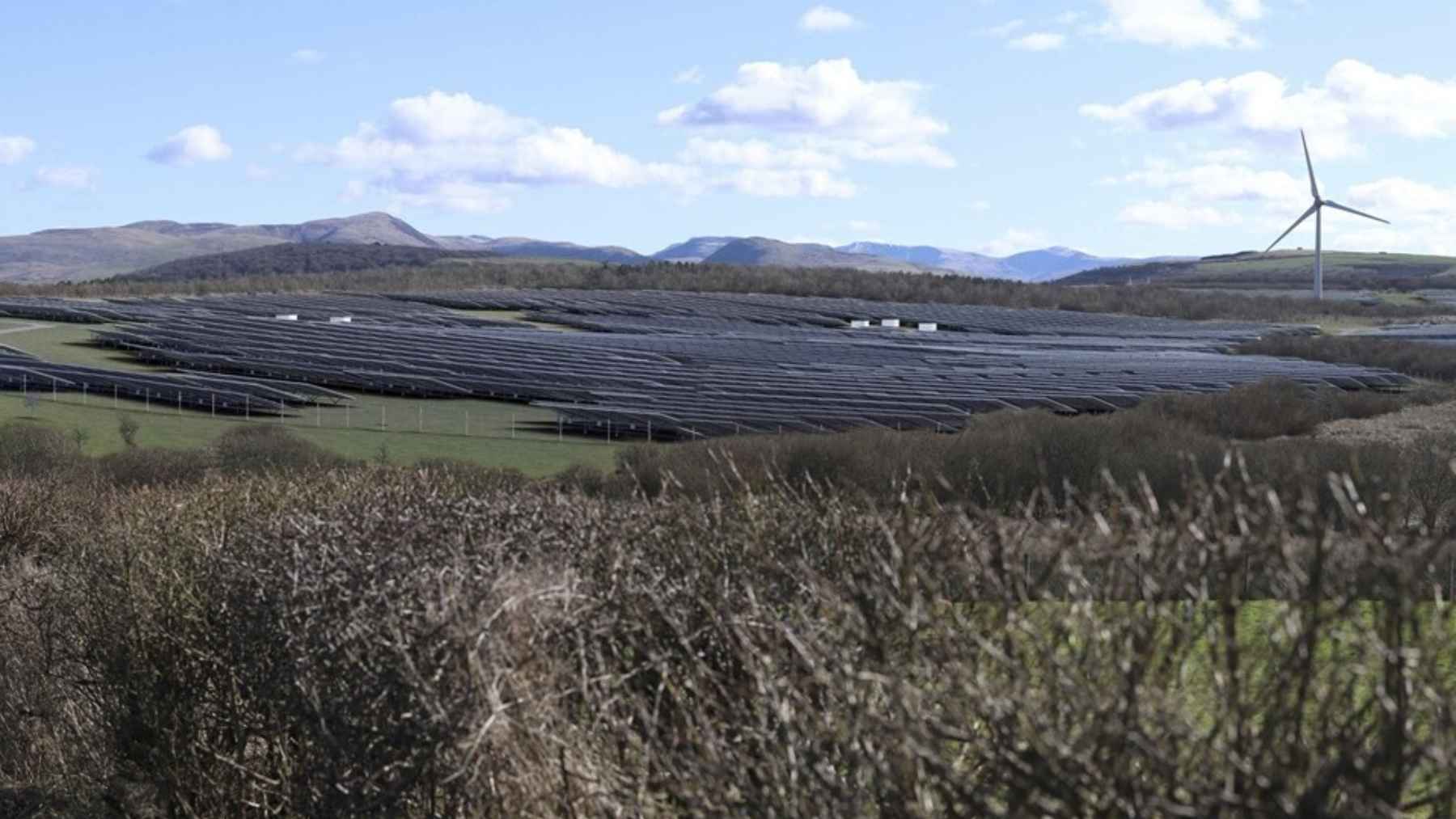
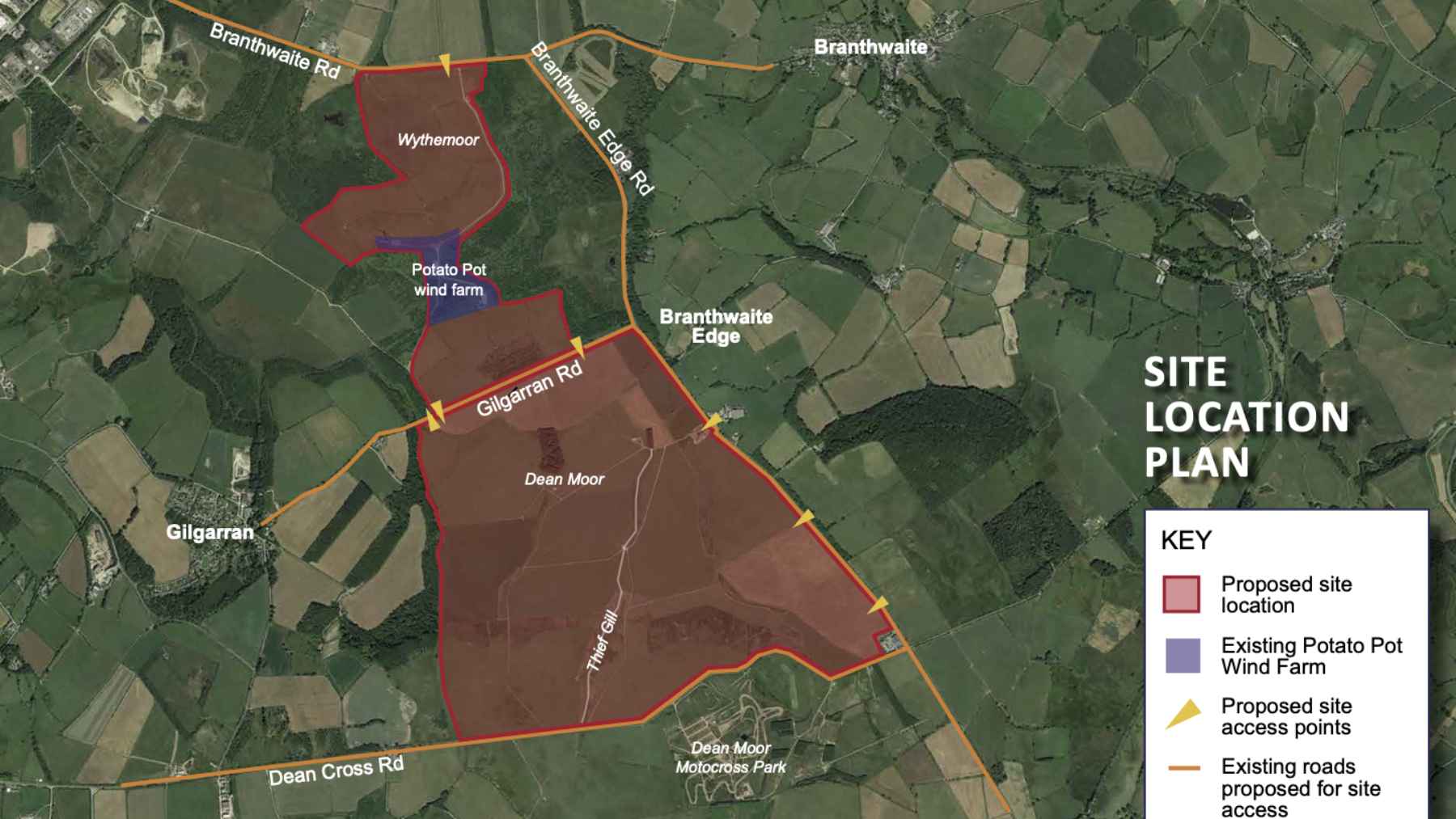
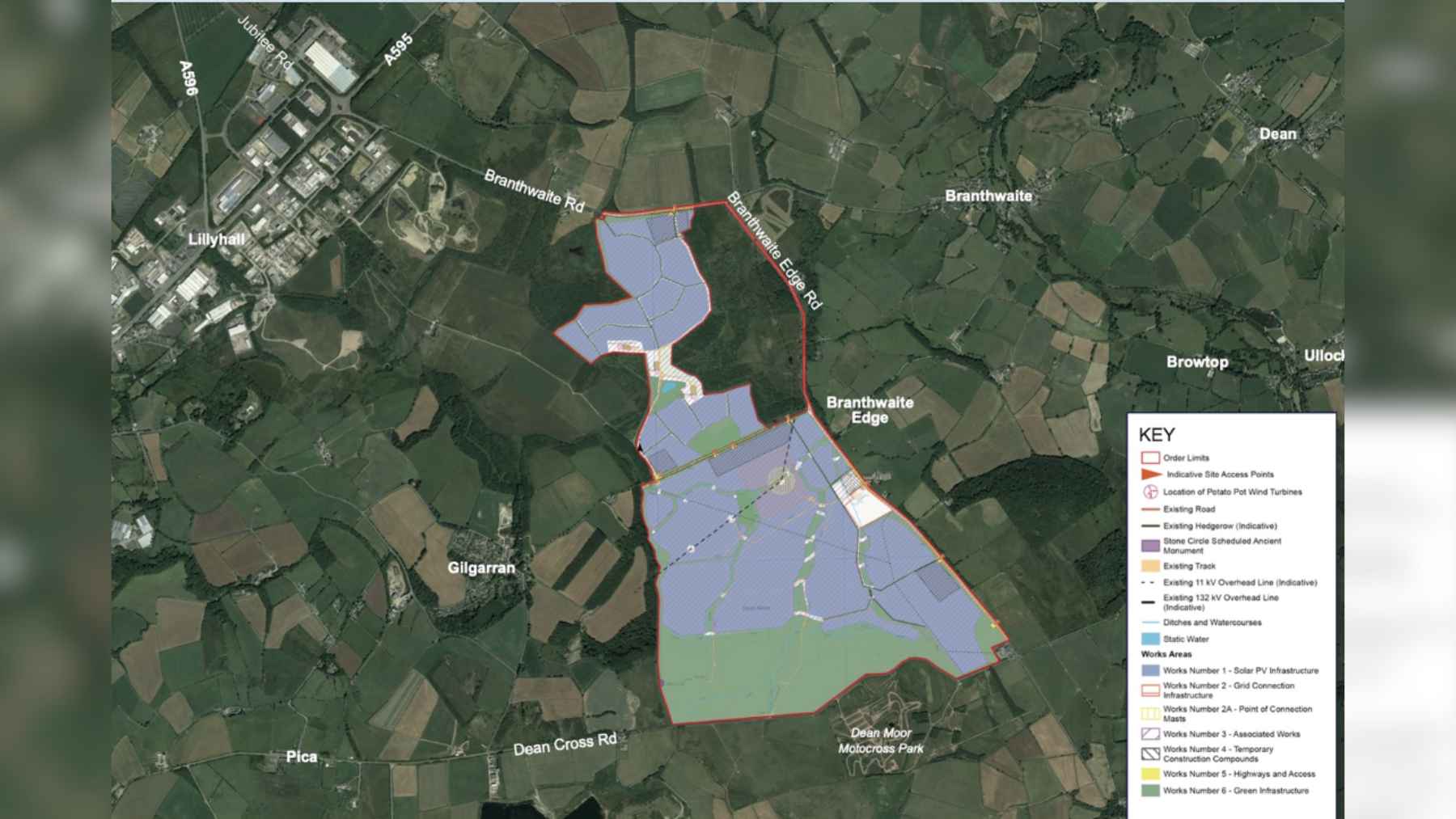
The UK government has approved Dean Moor Solar Farm, a 150-megawatt development planned across 683 acres of West Cumbria. Located between Gilgarran and Branthwaite near Workington, the project could generate up to 134 gigawatt-hours a year and enough electricity for roughly 50,000 homes, according to the government and developer.
The real story is not simply how many panels will be installed. The final consent makes the site’s ecological promises unusually concrete, requiring minimum net gains of 60% for area habitat units, 20% for hedgerow units, and 5% for watercourse units.
Dean Moor will now test whether a utility-scale solar farm can produce power, keep land in low-intensity agriculture, and leave measurable room for nature.
A major planning decision
The Department for Energy Security and Net Zero granted the Development Consent Order on July 2, 2026, after a six-month examination by the Planning Inspectorate. FVS Dean Moor Limited, a joint venture backed by solar developer ib vogt and Firma Energy, can now move toward delivery once legal and pre-construction requirements are met.
Daniel Kiremidjian, head of UK and Nordics at ib vogt, called the approval “a significant milestone for ib vogt in the UK.” It is the first ib vogt UK project to secure this type of national infrastructure consent, moving Dean Moor beyond the development pipeline and closer to construction.
Still, approval does not mean construction crews arrive the next morning. The order is scheduled to come into force on July 24, while detailed landscape, ecological, soil, traffic, and construction plans must be approved before the relevant work begins.
What the power figures mean
Dean Moor is designed around a 150-megawatt export connection to Electricity North West’s distribution network. Electricity would move through an on-site connection to an existing 132-kilovolt overhead line linked to the Harker substation near Carlisle, meaning the project does not require a new cable route outside the site.
Here is the practical difference. The 150-megawatt figure describes maximum export capacity, while the government’s estimate of up to 134 gigawatt-hours describes potential energy production over a full year. The claim about powering 50,000 homes is a comparison based on average household use, not a promise that those homes will receive a dedicated supply.
Construction is expected to take about 18 months to two years, although the timing will depend partly on the grid schedule and possible supply chain constraints. That matters because a consented project only starts contributing electricity after the panels, inverters, transformers, and connection equipment are installed and commissioned.
Solar panels and sheep
The project covers a large area, but panels and electrical equipment will not occupy every corner. Parts of the site are used for sheep grazing, while northern areas include restored opencast mine workings and the existing Potato Pot Wind Farm.
Picture the arrangement as two uses sharing the same field. Panels collect daylight above the grass, while low-intensity sheep grazing is expected to continue beneath and between the arrays where practical. The developer also argues that reducing grazing pressure can give soils time to recover, although the outcome will depend heavily on day-to-day land management.
The solar farm is assessed for an operating life of up to 40 years, followed by decommissioning and restoration requirements. In other words, the land is not being permanently converted into an industrial estate, but four decades is still a long time for nearby residents, farmers, and wildlife. Good monitoring will matter.
Wildlife targets get teeth
Earlier project material promised a biodiversity net gain above 10%, supported by new trees and hedgerows, wildflower meadow, improved grassland, protected watercourses, and boxes for birds, bats, and invertebrates. The final order goes further by locking in separate minimum gains for area habitats, hedgerows, and watercourses.
Those percentages can sound confusing. A 60% gain in area habitat units does not mean 60% more land. It means the calculated biodiversity value after development must be at least 60% higher than the baseline for that category, using a metric that considers factors including habitat type, size, condition, and location.
The government also acknowledged an important uncertainty. Creating “other neutral grassland” beneath solar panels remains an emerging and debated ecological issue, so the plans include regular monitoring, annual reporting, and remedial measures if the intended habitat fails to establish. That is the difference between a glossy promise and a target that can be checked.
The trade-offs remain
The government did not treat Dean Moor as impact-free. Its decision gave moderate negative weight to landscape and visual effects, including effects from a small number of sensitive viewpoints, and moderate negative weight to cultural heritage. It found, however, that mitigation would prevent significant adverse residual effects on the Lake District National Park as a whole.
This is the harder side of the energy transition. Large solar farms can reduce reliance on fossil-fueled generation, but they also change familiar rural views and introduce fencing, access tracks, substations, and rows of electrical equipment. For people who pass these fields every day, that change is not abstract.
At the end of the day, the government’s conclusion was a balancing judgment. National energy and climate benefits outweighed the identified harm, provided the approved landscape, ecology, traffic, construction, and decommissioning measures are followed.
What happens next
Dean Moor now moves from planning debate to delivery risk. The developers must finalize construction arrangements, satisfy the consent requirements, coordinate with Electricity North West, and keep community commitments visible as work progresses. The project team has suggested construction could begin in 2026, but the exact date is not guaranteed.
The most important number to watch may not be 150 megawatts. It may be whether the promised habitat units appear on the ground, whether hedgerows mature, whether watercourses improve, and whether sheep grazing remains workable once the site is operating. Solar output can be read on a meter, but ecological success takes longer.
Dean Moor could become a model for combining power generation, farming, and habitat enhancement on the same land, or it could show how difficult that balance is in practice. The answer will come through years of measurements, maintenance, and local scrutiny.
The official decision was published on GOV.UK.