Spanish philosopher and writer Fernando Savater has compressed a complicated argument about wealth into one memorable line. “My dream is Picasso’s, to have a lot of money so I can live peacefully like the poor,” he said, drawing on a saying attributed to artist Pablo Picasso.
The remark sounds contradictory on purpose. It suggests that money matters most when it removes constant worry and creates room for a simple life, not when it becomes a scoreboard for luxury, status, or endless accumulation.
A paradox about real wealth
A paradox places two clashing ideas side by side to reveal a deeper point. Here, great wealth is paired with modest living, while financial abundance is treated as a path toward calm than display.
The phrase should not be read as a literal claim that poverty is peaceful. Financial hardship often brings rent pressure, unpaid bills, food insecurity, and the fear that one broken car or medical expense could upset an entire household.
Data from the Consumer Financial Protection Bureau makes that distinction hard to ignore. Among people in its very lowest financial well-being range, only five percent were certain they could raise two thousand dollars for an emergency, and 96% found it difficult to make ends meet.
Money can buy breathing room
The philosopher is really asking for enough money to stop money from dominating every decision, from the grocery list and the electric bill to whether a person can take time off to care for someone they love.
Modern research partly supports that intuition, although it does not turn the quote into a scientific rule. A 2023 collaboration involving the University of Pennsylvania and Princeton University, led by Matthew A. Killingsworth, Daniel Kahneman, and Barbara Mellers, found that higher income was associated with greater happiness for most people, while gains leveled off near one hundred thousand dollars a year for the least happy group.
The finding does not prove that cash alone causes a good life, and the lead researcher summed up the nuance by saying, “Money is not the secret to happiness, but it can probably help a bit.”
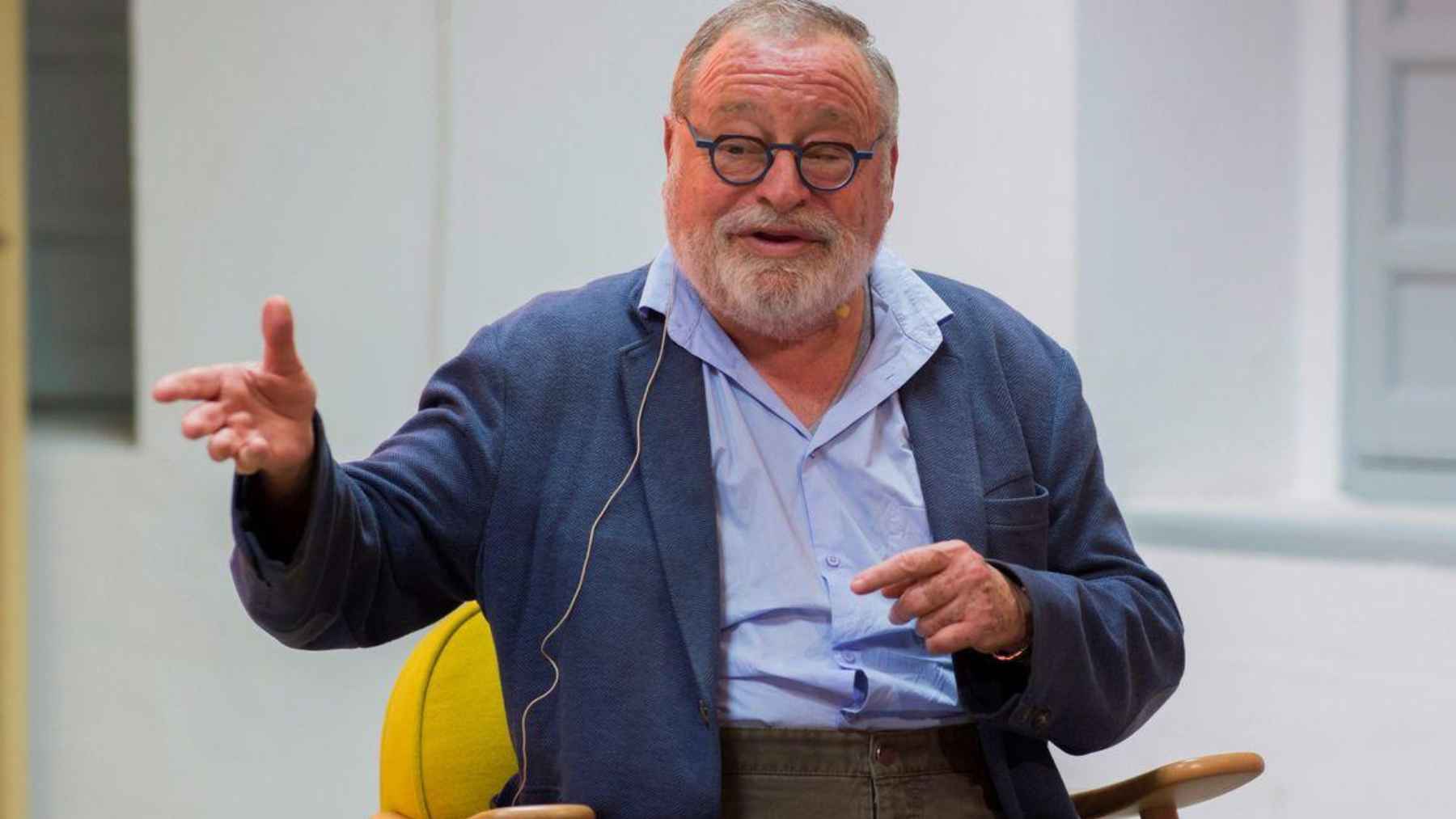
Fernando Savater speaks during an event while reflecting on wealth, freedom and the value of living a simpler life without chasing status.
Simple living is not poverty
The sharpest part of the quote is also its biggest risk. It can sound as though people with little money naturally enjoy a carefree life. The earlier financial data shows why that picture is misleading.
A better reading separates chosen simplicity from forced scarcity. Someone with secure housing, savings, and control over their time can decide to live modestly, while someone without those protections may have no real choice at all.
That is why the line works best as a criticism of ostentation, not a romantic portrait of deprivation. The dream is not to lack resources. It is to possess resources without letting them take over the way life is lived.
Philosophy for everyday life
Born in San Sebastián in 1947, the writer built a career as an essayist, novelist, playwright, journalist, and professor. Planeta’s official author profile lists more than fifty works, and records show that he held an ethics chair at the University of the Basque Country before serving as a professor at Complutense University of Madrid from 1994 to 2008.
Books including Ethics for Amador, The Task of the Hero, and Invitation to Ethics helped bring questions about freedom, responsibility, education, and personal choice to a broad audience. Editorial Ariel describes Ethics for Amador not as a list of ready-made answers, but as an invitation to reflect on the direction people give their lives.
That accessible method helps explain why the money remark travels so easily. Instead of beginning with abstract theory, it starts with something everyone recognizes, the wish to pay the bills and still have enough freedom left to enjoy an ordinary afternoon.
Freedom rather than display
To a large extent, the quote treats wealth as a tool. Money can create options, but the value lies in what those options protect, such as time, independence, privacy, and relief from constant financial pressure.
It also turns the usual picture of success upside down. The richest person is not necessarily the one with the most visible possessions, but perhaps the one who can ignore the race to impress others and choose a quieter pace.
Would more income make that possible, or would it simply produce more expensive desires? The remark offers no final answer. That uncertainty is part of its force.
What the quote leaves open
There is no universal number that guarantees serenity. Housing costs, health needs, family duties, debt, and local prices can make the same income feel comfortable to one person and precarious to another.
Science can measure patterns between income and reported well-being, but it cannot decide what a person should value. That is where the philosophical question returns, asking whether prosperity is being used to widen freedom or merely to keep the cycle of wanting in motion.
The line lasts because it does not reject money or worship it. It gives money a narrower job, to help create a life in which money no longer needs to be the main subject.
The related study on income and emotional well-being was published in the Proceedings of the National Academy of Sciences.