You are walking through a busy block, thinking about work or the next bill, when a friendly dog looks up. Suddenly, your hand is halfway toward its fur. That impulse can expose more about your emotional life than you realize.
Research suggests the moment can reflect a desire for connection and may briefly lower stress, especially when touch is welcome. But no study shows that petting an unfamiliar dog works like a psychological scan. At most, it offers a small clue to how someone seeks comfort, responds to animals, and behaves in a social situation.
Why touch can calm the body
Anthrozoology is the field that studies relationships between humans and other animals. A calm dog offers warm, predictable sensory contact in a setting that might otherwise feel rushed or noisy. That kind of touch may engage brain systems involved in reward, attention, and social bonding.
The clearest evidence comes from a randomized trial. Among 249 college students, those assigned to spend 10 minutes petting shelter cats and dogs had lower salivary cortisol afterward than students who watched others, viewed pictures, or waited. Cortisol helps the body respond to stress, so a short-term drop can signal that the body is settling down.
Why dogs are hard to ignore
Part of the pull may begin with the “baby schema,” a term introduced by ethologist Konrad Lorenz. It describes features such as large eyes, rounded faces, and a relatively small nose that can draw attention and encourage caregiving.
A 2014 experiment led by Marta Borgi at the Italian National Institute of Health found that children ages 3 to 6 rated faces with stronger infant-like features as cuter, including dog and cat faces.
Eye contact may add another layer. A 2015 study led by Miho Nagasawa at Azabu University found that longer gazes between dogs and their owners were linked with increases in oxytocin, a hormone involved in social bonding. Still, those were established dog-owner pairs, not strangers meeting on a sidewalk, so the finding cannot explain every urge to reach out.

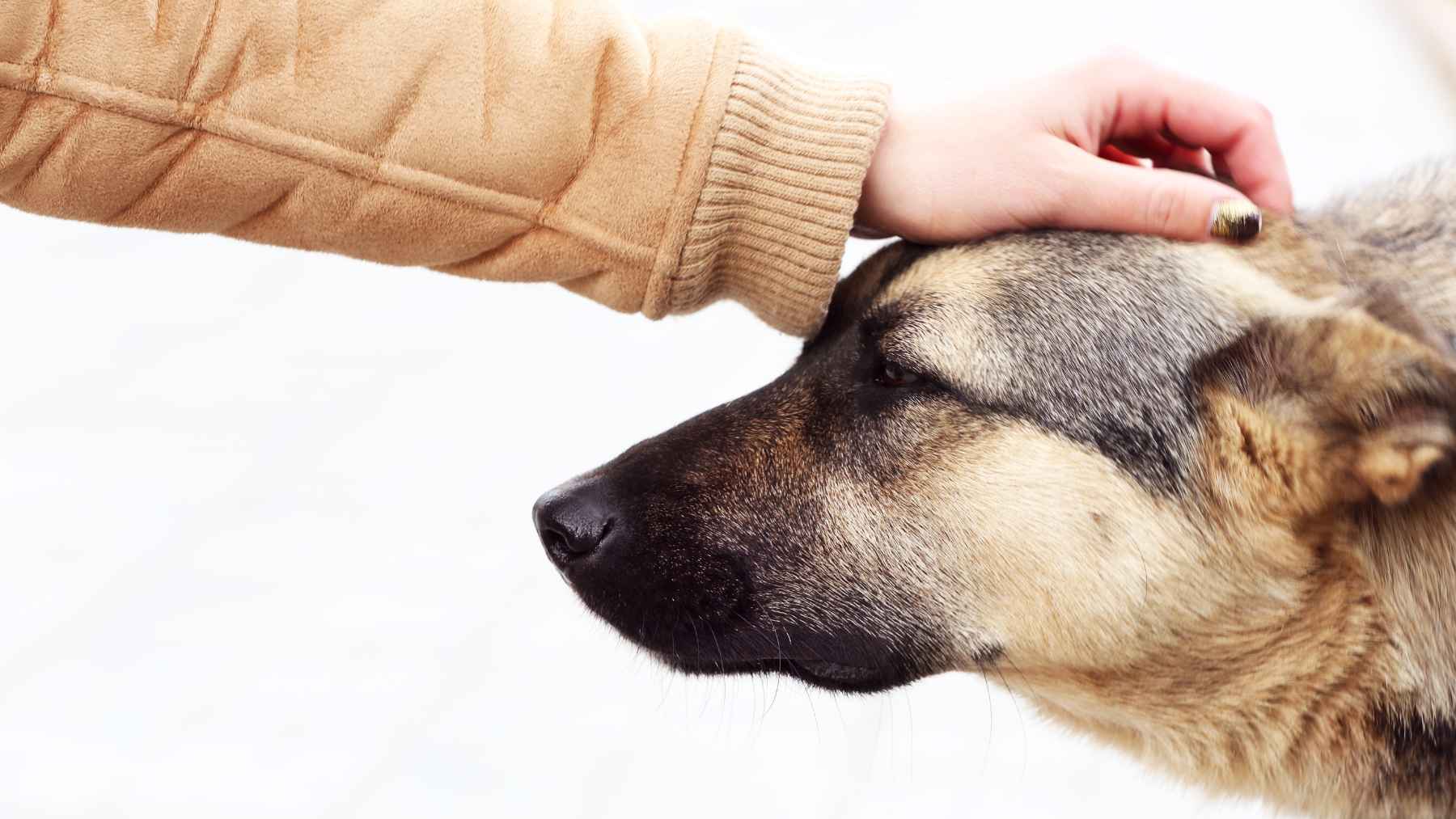
A stray dog rests quietly, illustrating how brief encounters with animals can create a sense of comfort and emotional connection.
What personality research shows
In a study of 4,565 people led by Samuel Gosling at the University of Texas at Austin, participants completed a Big Five personality measure and described themselves as dog people, cat people, both, or neither.
The model covers openness, conscientiousness, extraversion, agreeableness, and neuroticism, which describes sensitivity to negative emotions. Dog people scored somewhat higher in agreeableness, extraversion, and conscientiousness than cat people.
But preference is not behavior, and a street greeting is not a personality inventory.
A 2024 study led by Deborah Wells at Queen’s University Belfast surveyed 938 dog and cat owners and linked stronger attachment to one’s own pet mainly with conscientiousness and neuroticism, not one neat “friendly” profile. Because the survey was cross-sectional, it could not show cause and effect.
A brief anchor in a noisy day
For someone who already likes dogs, a short and welcome interaction may work as emotional self-regulation. That means using an action to bring stress or agitation down. After traffic jams, deadlines, or a tense phone call, the encounter can feel like a small reset.
But the effect is not universal. Fear of dogs, allergies, cultural experience, past bites, and the animal’s behavior can change the response, while studies of heart rate and blood pressure have produced mixed results. A dog may be a comforting anchor for one person and a source of tension for another.
The dog gets a choice
Before touching an unfamiliar dog, ask the owner and then let the animal approach. Safety guidance from the American Veterinary Medical Association advises people to move slowly, stay calm, and avoid looming over a dog. Permission from the person holding the leash is only the first step.
Watch the dog’s answer. Yawning, lip licking, turning the head away, a tucked tail, or a stiff body can signal discomfort, according to an official body-language guide. If the dog stays relaxed, pet the side, chest, or shoulder instead of reaching over the head, and stop if it moves away.
The impulse to pet a dog may say that a person is seeking warmth, connection, or a quick pause from stress, but it is not a diagnosis. Respecting the animal’s choice is a stronger sign of empathy than the impulse alone.
The main stress study appeared in AERA Open.