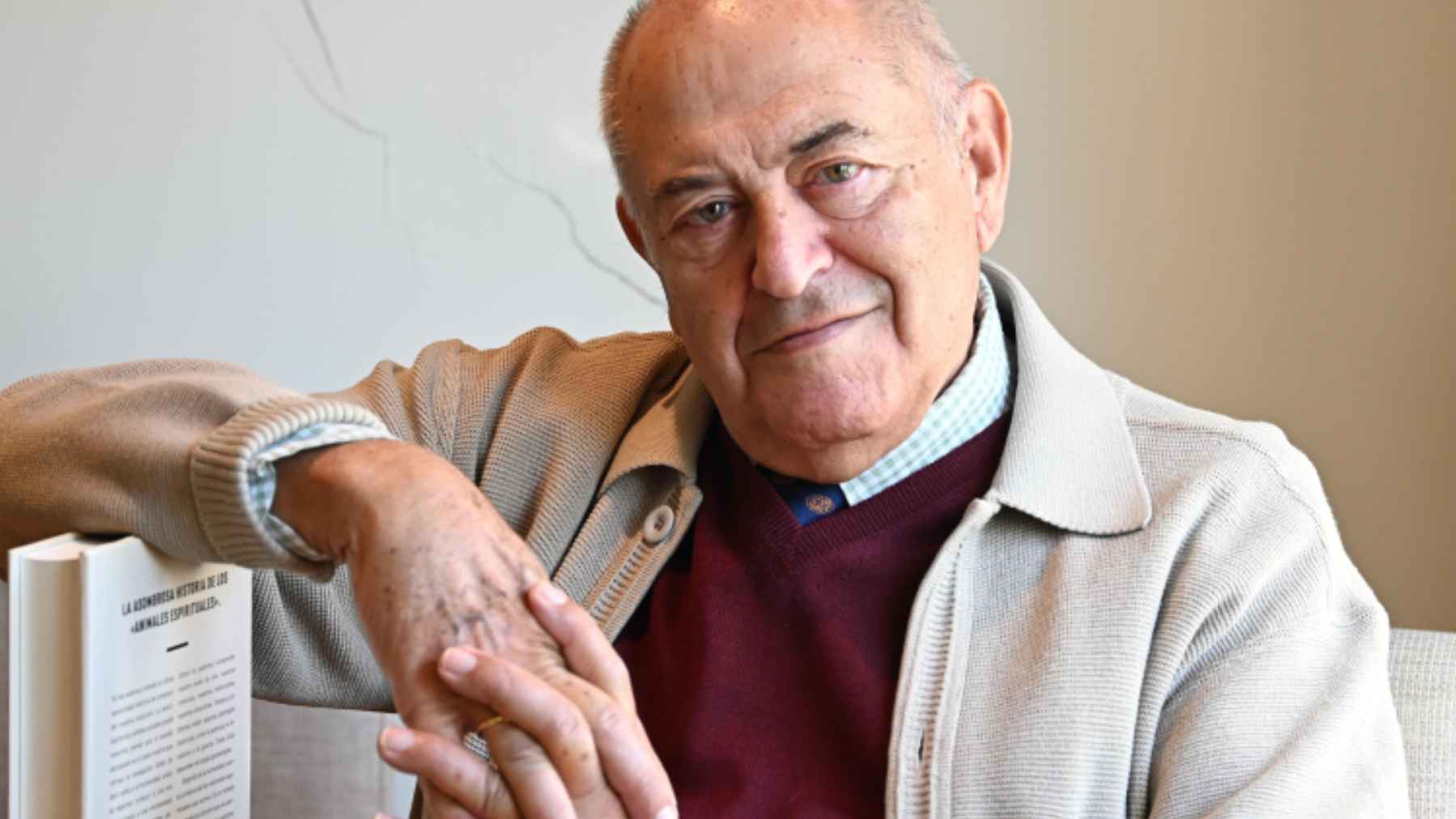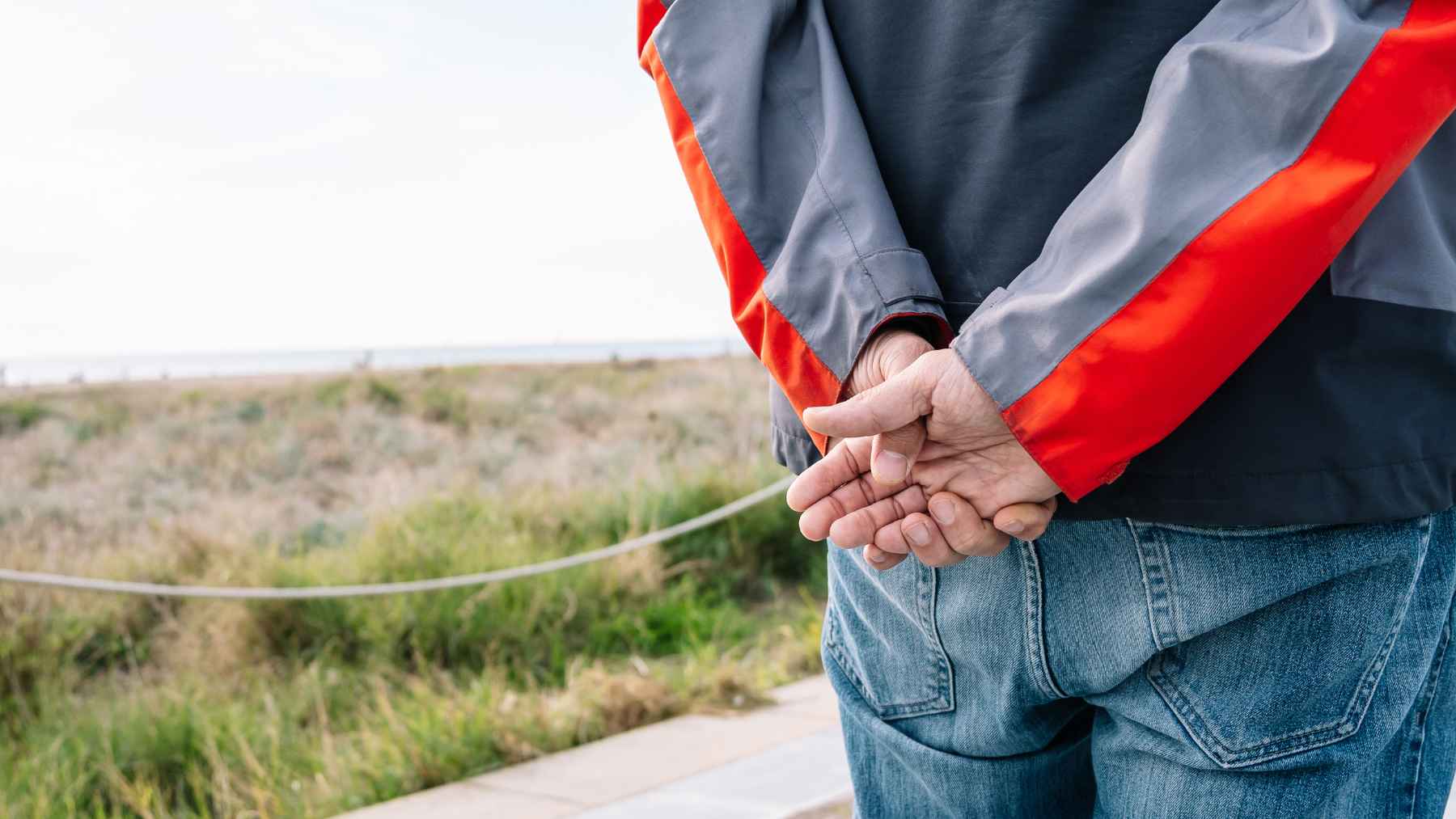
Have you ever seen someone walking with their hands together behind their back, moving as if there is nowhere urgent to be? The posture often appears during quiet walks, museum visits, or moments when a person seems to be clearly thinking about something.
The usual explanation says that walking with the hands behind the back means reflection, calm, and concentration. That may be true in some cases, but science gives a more careful answer. One pose cannot really tell you what is someone’s personality, mood, or intentions are without seeing everything else is going on around them.
A posture that quiets movement
When your hands go behind your back, you can not really see them anymore, so youfisget less and point less. For example, that alone can make a walk feel slower and calmer.
Researchers have actually studied this exact hand position, though not as a way to read personality. Helge Gillmeister and Bettina Forster at the University of Essex measured brain responses while blindfolded participants held their hands close together or far apart behind their backs. How the arms were placed changed how fast the brain noticed touch happening behind the body.
The brain always keeps track of where your arms and legs are, something called proprioception. This shows that where hands are placed,t can affect attention, but it does not prove that clasped hands make someone calm or thoughtful.
Walking helps ideas move
The strongest proof here might have less to do with the hands and more to do with the walking itself. Four studies with 176 college students and other adults found that people came up with about 60 percent more creative ideas while walking than while sitting.
This happened whether people walked indoors on a treadmill indoors or outside on a path. Walking helped people come up with lots of different ideas, but it didn´t help with tasks that only had one right answer.
Marily Oppezzo, who conducted the work with Daniel Schwartz at Stanford University, put it simply: “We’re not saying walking can turn you into Michelangelo.”
That difference matters. A slow walk can really help someone brainstorm, work through a hard problem, or to see it from a different perspective, kind of like pacing around the kitchen before a hard phone call. It is not a guaranteed solution, but moving around does seem to help ideas flow.
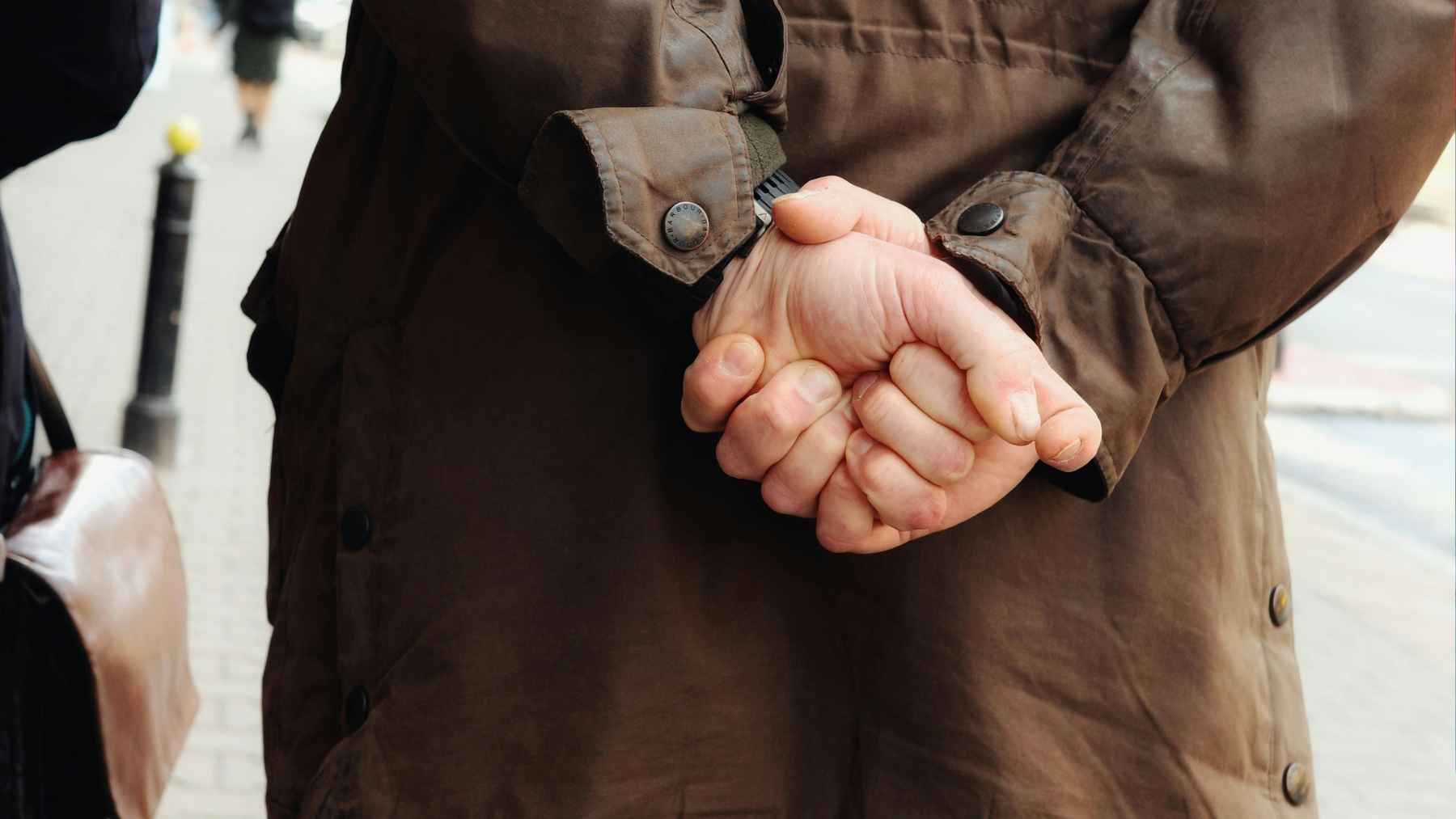
Hands clasped behind the back can appear calm or reflective, but the gesture can have different meanings depending on context.
Why the pose can look powerful
People do not read only the hands. They look at posture, speed, facial expression, gaze, and everything around a person all at once to figure out what someone is feeling. Studies of emotional body movement show how much all these things together shape the way we see each other.
Standing tall, holding your head up, relaxed shoulders and walking at a steady pace tend to look calm or in charge. But that same hands-behind-the-back position can look completely different when compared with hunched shoulders, a lowered gaze, or tense fingers.
Lotte Veenstra and colleagues at Vrije Universiteit Amsterdam ran two studies, one with 229 people and one with 122. People with a hunched posture had a harder time feeling better after a bad mood, and had more negative thoughts, than people who stood straight or neutral.
This doesn’t prove that walking with your hands behind your back makes someone calm. But it does suggest posture plays some part in how we feel.
One gesture can mean several things
Walking with your hands behind your back could mean someone’s thinking hard. It could also be a habit, a way to stretch, a learned workplace posture, or a way to stop restless hands from reaching for a phone. In a crowded workplace, it may just be a way to keep your arms out of the way.
Small details change how we read this. Someone looking down while they walk might feel uncertain, tired, or lost in thought, or they could just be watching where they step. And someone gripping their own wrist tightly might be tense, but that alone does not prove they are stressed.
Even walking speed is easy to oversimplify. Emotions can change how we move, but anxiety doesn´t always make people move faster. Some research actually found the opposite: slower, shorter, and fewer steps per minute in people dealing with anxiety, which goes against a pretty common myth.
Body language is not a secret code
Miles L. Patterson, Alan J. Fridlund, and Carlos Crivelli looked at all the research in 2023 and said the idea that body language can be “decoded” just isn’t true. Their pont was not that body language means nothing. It is that gestures do not work like words in a dictionary, each with one fixed meaning.
So, what should you actually look at? Look at the whole scene:is the posture relaxed or tense, is it normal for that person, and what’s going on around them. Culture, age, comfort, and workplace habits all can change what a gesture means.
When someone is walking slowly, standing tall, looking relaxed, and loosely holding their hands behind their back, thinking something over is a reasonable possibility. But at the end of the day, it remains a possibility rather than a verdict, and the pose may mean little more than comfort for someone else.
The main research discussed here has been published in Experimental Brain Research.