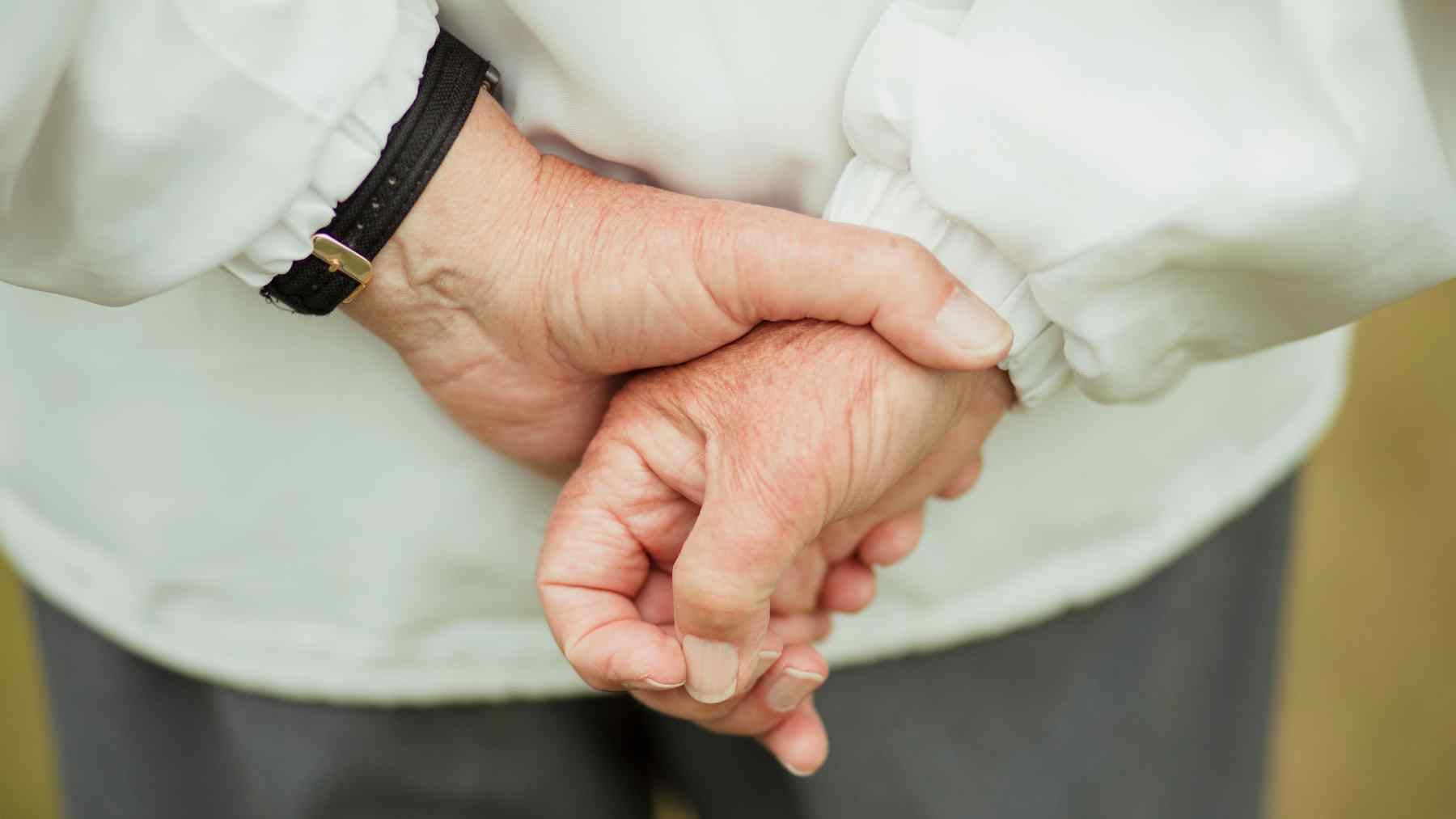
Have you ever caught yourself walking slowly with your hands clasped behind your back, as if your body decided to think before you did? It is a familiar scene in school hallways, museum galleries, neighborhood sidewalks, and quiet parks, where people seem to drift into this posture when the noise of the day finally drops.
The best psychological reading is careful, not dramatic. This posture does not expose a hidden personality, but it can signal reflection, self-control, or a wish to slow mental traffic, especially when it appears during a calm walk rather than a tense conversation.
The background report provided for this story frames the habit as linked to introspection, mental clarity, and emotional calm, while psychology sources define body language as the expression of thoughts and feelings through posture, movement, and gesture.
A small pose with a thoughtful feel
Walking with hands behind the back often pulls the hands out of the usual workspace of the eyes. For many people, that means less fidgeting, fewer quick gestures, and a slower rhythm. Anyone who has paced the kitchen before making a hard phone call knows the feeling.
That does not make the pose magic. It simply gives the body a quieter arrangement, and the mind may follow. The hands are not grabbing a phone, pointing, tapping, or cutting through the air. They are, for the moment, parked.
The gesture can also look like calm authority. Teachers, scientists, museum guards, and older walkers often use it while observing something carefully. But the same stance can feel stiff or guarded in a tense room, which is why context matters from the start.
Walking helps ideas move
The strongest science here may not be about the hands themselves, but about walking. A Stanford study found that walking boosted creative output by an average of 60 percent compared with sitting, and the researchers tested participants indoors and outdoors. The act of walking itself, not just the scenery, seemed to play a major role.
The peer-reviewed paper involved four experiments and found that walking increased performance on divergent thinking tasks, the kind of thinking used to generate many possible ideas. In one experiment, 81 percent of participants became more creative on the alternate uses task while walking, compared with 23 percent on a convergent thinking task.
So, what does that have to do with clasped hands? It suggests that a slow walk can create a mental state where ideas loosen a little. Put the hands behind the back, remove the usual visual noise of moving fingers, and the whole posture can become a walking pause button.
Posture can affect mood
Body position is also tied to emotion, though not in a simple one-gesture, one-feeling way. Research from VU Amsterdam reported that stooped posture was linked with less recovery from negative mood and more negative thoughts when compared with straight or control postures. The study included one experiment with 229 participants and another with 122 participants.
That finding does not prove that standing tall fixes stress. It does suggest, to a large extent, that posture can participate in mood regulation. On a bad day, the difference between shuffling with clenched fists and taking a slower, more open walk may be small, but small things sometimes matter.
The hands-behind-the-back walk often goes with a straighter torso and slower pace. For the most part, that can read as composure. It may also help some people feel a bit more grounded, like turning down the volume before answering a difficult question.
The brain notices where the hands are
There is even research on the exact position of the hands behind the back, though it is more about attention than personality. A 2012 study in Experimental Brain Research tested how arm posture affected tactile attention in the space behind the body. Researchers found that attention changed depending on whether the hands were held close together or far apart behind the back.
That study did not claim that clasped hands reveal calmness, wisdom, or confidence. But it does show something important. The brain tracks the body’s position, and where the hands are placed can influence attention.
In everyday terms, the body is not just carrying the mind around like a backpack. It is part of the thinking system. That is why a quiet walk can feel different from sitting at a desk with ten tabs open and a phone buzzing beside you.
Not a secret code
Here is the big caution. A 2023 article in Perspectives on Psychological Science warned against the popular idea that people communicate through easily decodable “body language.” The authors listed that belief as one of several persistent misconceptions in nonverbal communication research.
That matters because one posture can mean several things. Hands behind the back may suggest reflection, but they can also mean a person is cold, stretching their shoulders, following military or workplace habit, trying not to fidget, or simply walking in the way that feels comfortable.
So, read the whole scene, not just the hands. Pace, facial expression, setting, relationship, culture, and timing all change the meaning. A grandparent strolling through a park, a principal watching a hallway, and a nervous person waiting outside an office may share the same arm position for very different reasons.
How to use the habit
Next time your thoughts feel scattered, try a short, slow walk with your hands loosely behind your back. No forced pose. No need to perform calmness. Just notice whether the posture changes your pace, breathing, or ability to think.
For some people, letting the arms rest behind the body may reduce nervous hand movement and make the walk feel more deliberate. For others, a natural arm swing will feel better. If you have shoulder pain, stiffness, or balance issues, comfort should come first.
At the end of the day, this familiar walking habit is not a diagnosis. It is a clue, and a modest one. Sometimes the smallest gesture simply says the mind is looking for space.
The scientific paper on hands-behind-the-back posture and tactile attention was published in Experimental Brain Research, with its official abstract listed on PubMed.