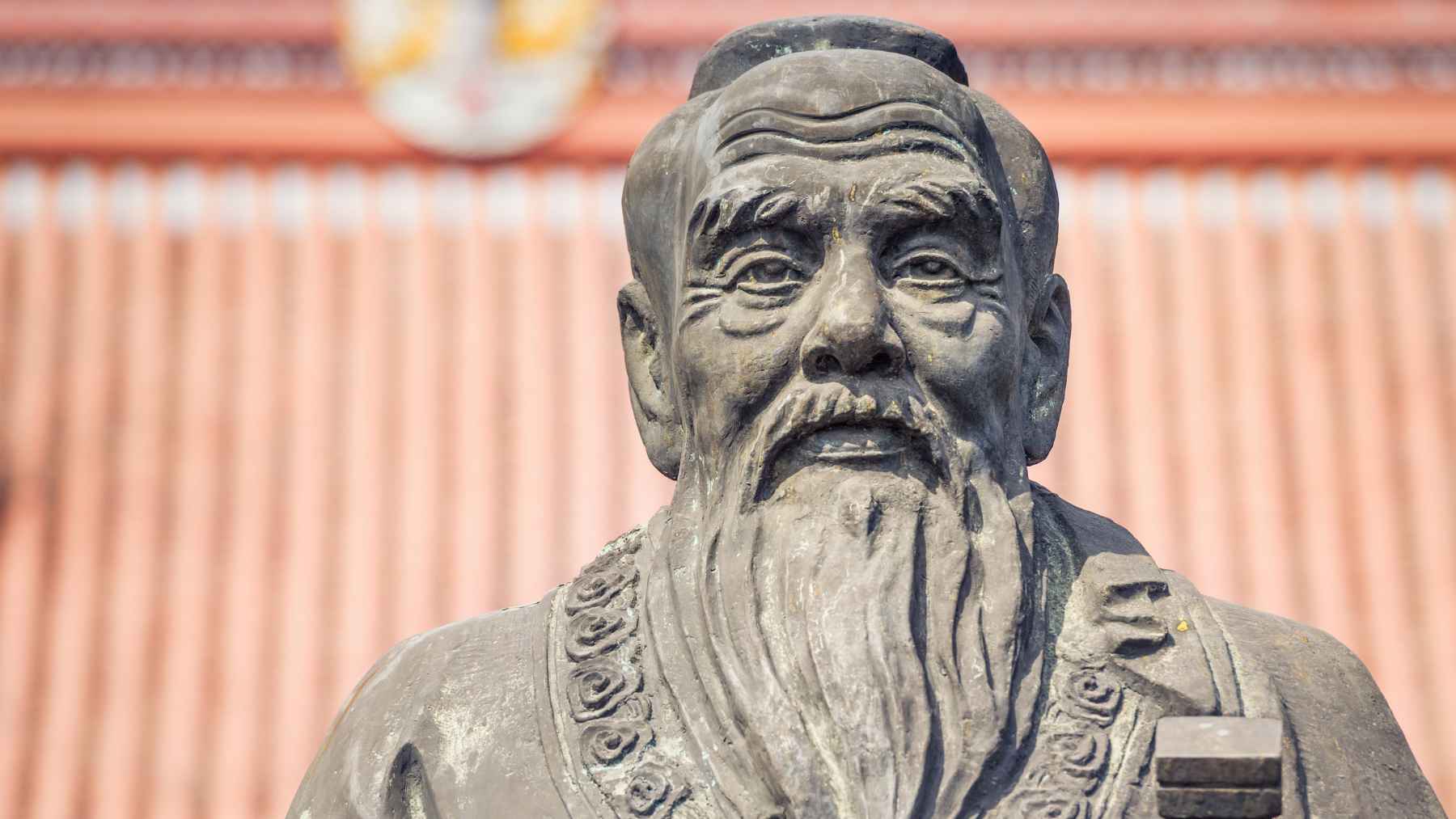
Around 2,500 years ago, a sentence associated with Confucius offered a simple but demanding idea about learning. “If I walk with two other people, each can be my teacher. I will follow what is good in one and correct in myself what is bad in the other.”
The wording changes across English translations, but the passage appears in Book 7 of The Analects.
The proverb does not tell us to copy everyone or accept every opinion we hear. It asks us to turn each human encounter into an exercise in self-examination, using another person’s strengths as a model and another person’s weaknesses as a warning.
Modern scholarship has also connected this attitude with intellectual humility, meaning an honest awareness that our own knowledge and judgment have limits.
The lesson hidden in the quote
The most important word in the saying may be “myself.” When someone acts with patience, honesty, discipline, or courage, the learner pays attention and tries to build that quality into his or her own conduct.
The same process works in reverse. When another person is careless, cruel, boastful, or unwilling to listen, the first question should not be “What is wrong with them?” It should be “Can I find any trace of that behavior in me?”
That creates a kind of moral symmetry. Virtue teaches through attraction, while a flaw teaches through contrast. Either way, the lesson points inward.
It is not blind imitation
Confucius was not saying that every action is equally valuable. The learner must observe, compare, and choose what deserves to be followed, which means the proverb depends on judgment rather than obedience.
It also requires humility. A talented person can show us what to do, but someone making a poor decision can reveal what to avoid. Neither person needs an impressive title, a classroom, or permission to become part of the lesson.
There is a trap, however. Noticing another person’s weakness can quickly turn into gossip or self-righteousness. The saying closes that escape route by redirecting attention to our own habits.
Learning becomes a daily practice
In the Confucian tradition, learning is not limited to collecting facts or passing an exam. It is closely tied to “self-cultivation,” a simple term for gradually shaping character through reflection, practice, and better choices.
Columbia University’s educational materials describe this tradition as a continuous process of learning and self-improvement.
That process can happen almost anywhere. A classroom, a family meal, a crowded commute, or a tense workplace meeting may reveal patience, generosity, poor preparation, or the cost of refusing to listen. Everyday life becomes the textbook.
This is why the proverb is harder than it first sounds. Admiring a good quality is easy, and criticizing a bad one can feel even easier. Changing your own behavior is the demanding part.
Who Confucius was
Confucius traditionally lived from 551 to 479 BCE and was born in the state of Lu, in what is now China’s Shandong Province. He became known as a teacher, advisor, and public official, while early sources also connect his career with practical work involving grain accounts and livestock.
He was known as Kong Qiu, while the familiar name “Confucius” is a Latinized form of Kong Fuzi, meaning “Master Kong.” His teachings later helped shape moral, educational, and political thought across much of East Asia.
The Analects was not a book he personally sat down to write. It was compiled and transmitted by followers over generations, which is why scholars treat some biographical details and exact wording with care.
Why the saying still feels modern
Today, the proverb can apply at school, at work, on a sports team, or online. We constantly see polished successes and very public mistakes, sometimes while scrolling on a phone before breakfast. The real question is whether we merely react to them or learn from them.
A well-prepared coworker may teach the value of planning. A chaotic meeting may expose the damage caused by poor listening. Even an angry argument on social media can become a mirror for impatience in others and, perhaps uncomfortably, in ourselves.
The deepest message is not that everyone is wise. It is that everyone can become part of our education when we observe honestly, choose carefully, and correct ourselves. The world becomes a classroom only when the ego stops acting like a locked door.
The original passage is preserved in Book 7 of The Analects, available through the Chinese Text Project.