
Chronic stress does not just make a person feel tense, distracted, or tired. It can push the brain into a defensive state where learning, memory, and flexible thinking are no longer the top priority.
That idea sits at the center of recent comments by neuroscientist Gustavo Deco. In a Spanish-language interview, he put it plainly: “A stressed brain is in survival mode.
A happy one is in learning mode.” The line is short, but it points to something many people recognize after a week of deadlines, alerts, and too little sleep.
Survival mode takes over
Stress is not always harmful. A brief burst of pressure can help a person react quickly, remember an emotional event, or focus on something urgent.
The problem begins when the body keeps acting as if the emergency never ended. Under chronic stress, the brain spends more energy looking for threats and less energy exploring new ideas.
A review available through the National Center for Biotechnical Information (NCBI) Bookshelf reports that long-term exposure to stress hormones can impair learning and memory, especially in brain systems tied to the hippocampus.
The hippocampus is a memory hub, and when it is under strain, new information has a harder time sticking.
Why happiness helps
Deco’s point is not that people should pretend to be happy all the time. It is that safety, curiosity, and emotional balance give the brain more room to connect ideas.
That fits with a major idea in psychology known as the broaden-and-build theory. Barbara Fredrickson described how positive emotions can widen the range of thoughts and actions people consider, which is useful for learning because the mind is no longer locked onto one threat.
In everyday terms, a calm student is more likely to ask a question. A worried student may spend the same lesson thinking about a bad grade, a family problem, or the next notification.
The map behind the claim
Gustavo Deco is a research professor at the Catalan Institution for Research and Advanced Studies (ICREA) and a professor at Pompeu Fabra University, where he leads the Computational Neuroscience group and directs the Center for Brain and Cognition.
His work looks at the brain less like a fixed machine and more like a living network that keeps rearranging itself.
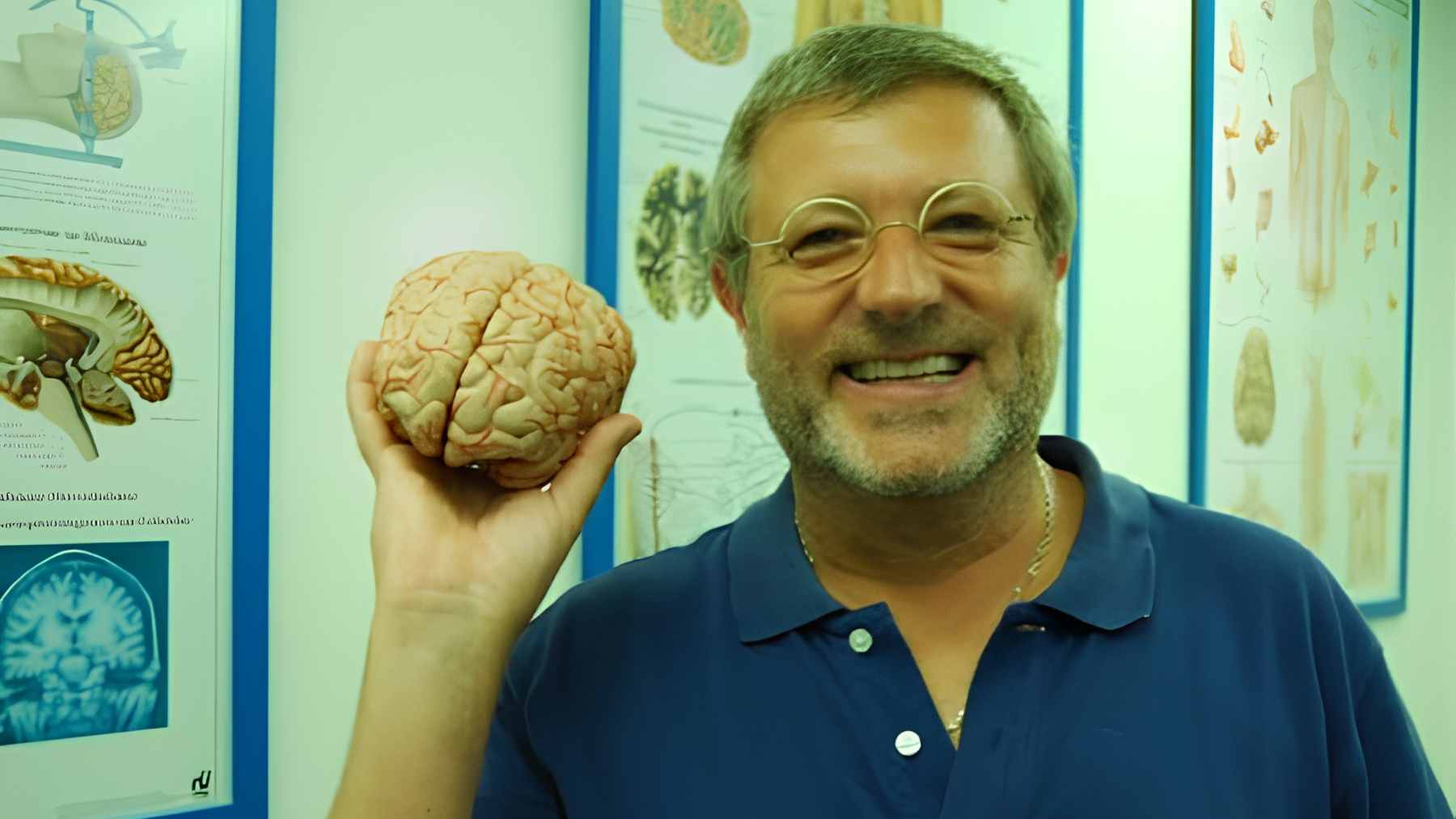
That is where “whole-brain modeling” comes in. The phrase means building computer models that help scientists study how different brain regions communicate over time.
This does not give teachers a magic scan that tells them exactly how to teach each child. It does support a practical idea: learning works better when the environment helps the brain organize attention, meaning, memory, and curiosity together.
For students, pressure has a cost
In classrooms, stress can look like silence, distraction, defiance, or a student who says “I don’t know” before trying. What looks like laziness may sometimes be a nervous system running on defense.
That does not mean schools should drop standards or turn every lesson into entertainment. It means routines, movement, enough rest, collaboration, and meaningful challenges can make learning feel safer and more worthwhile.
A brain under pressure may still memorize for a test. The deeper goal is different, helping students build understanding they can carry beyond Friday afternoon.
Workplaces face the same problem
The same logic reaches beyond school. In the American Psychological Association’s 2025 Stress in America survey, more than 3,000 U.S. adults were surveyed and 62% said societal division was a significant source of stress in their lives.
That kind of strain follows people into Monday morning, along with traffic jams, unanswered messages, and the electric bill. A team that is always bracing for the next crisis may finish tasks, but it may struggle to learn from mistakes.
For employers, the lesson is not about slogans on a wellness poster. It means clearer priorities, fewer needless alarms, better breaks, and enough psychological safety for people to ask questions before problems grow.
Stress is not a simple villain
Researchers also warn that stress and memory are not a one-way story. A 2023 Yale School of Medicine report described work showing that acute stress can strengthen some memories even while cortisol may interfere with the hippocampus as a whole.
That nuance matters. The stress of speaking in public once is not the same as months of overload, poor sleep, money worries, and feeling trapped.
What hurts learning most, for the most part, is the long-running alert state. When the alarm stays on, the brain has fewer quiet moments to sort, connect, and store what it has learned.
The takeaway
So, what can people actually do with this science? No single trick turns off chronic stress, but sleep, physical movement, social connection, pauses during the day, and calmer routines can all help move the brain away from constant defense.
At the end of the day, a happy brain is not a spoiled brain. It is a brain with enough safety and energy to notice, wonder, practice, and remember.
The main work has been published by Oxford University Press as Whole-brain modelling. Cartography of the Dynamics of Mind.