Anyone who has started running after a long break knows the strange contradiction. The first session can leave your lungs burning and your legs heavy, yet a few workouts later the same route can feel less punishing.
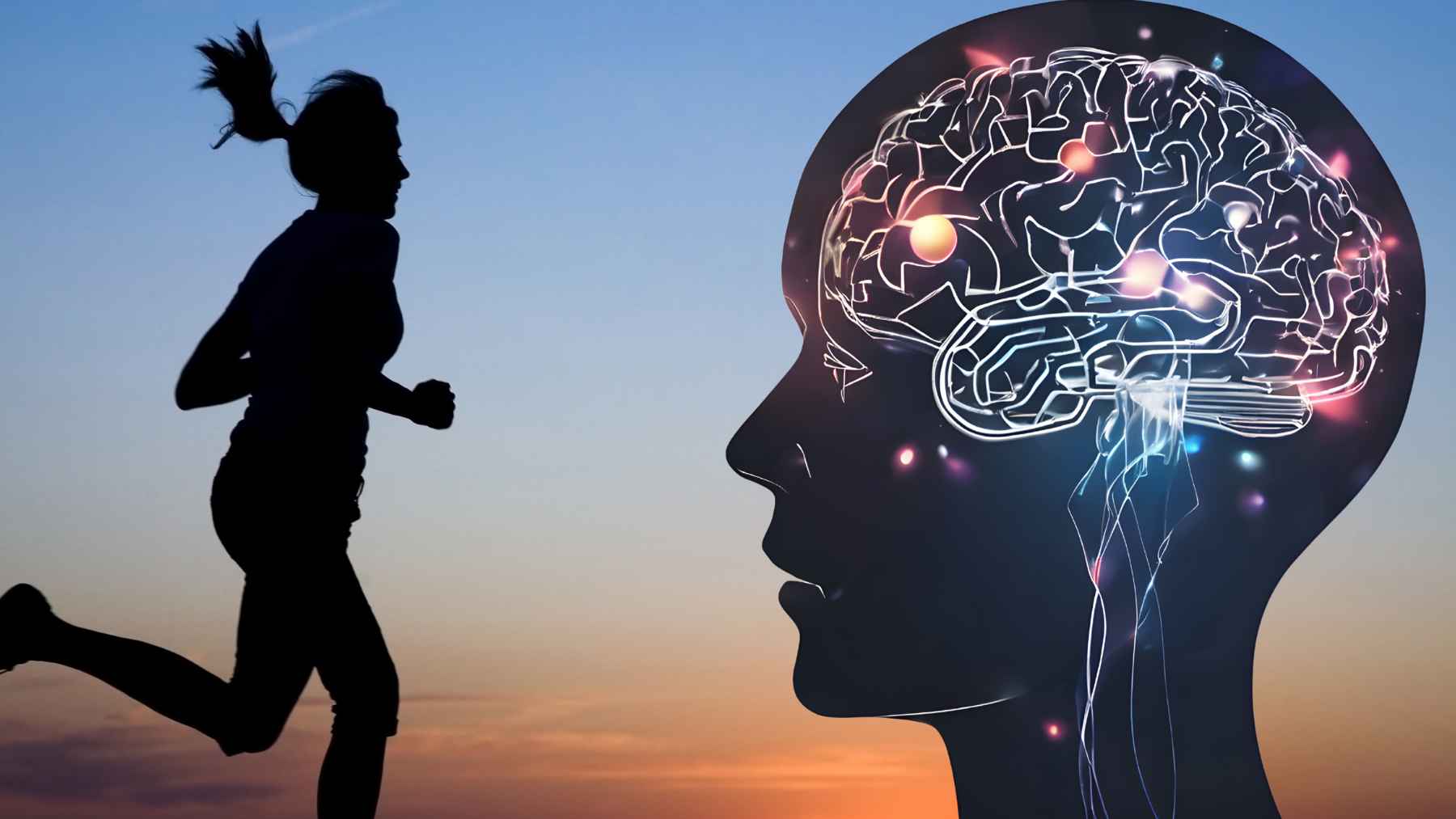
A new study in mice points to one reason why. Repeated exercise appears to strengthen a small brain circuit that helps the body build endurance, suggesting that training changes not only muscles, lungs, and the heart, but also the brain systems that tell the body how to adapt.
The brain joins the workout
The work was led by University of Pennsylvania neuroscientist J. Nicholas Betley, with first author Morgan Kindel and collaborators at The Jackson Laboratory and University of Texas Southwestern Medical Center. Their focus was a small brain area called the ventromedial hypothalamus.
That region helps manage how the body uses energy, including body weight and blood sugar. In practical terms, it is one of the brain’s control rooms for fuel, effort, and recovery.
The fatigue paradox
Why can exercise make you feel wiped out today but stronger next week? That is the everyday puzzle behind this research, the kind anyone recognizes after a first gym session or a hard run around the block.
Betley put it simply when discussing the work, saying, “It turns out we might be building up our brain when we exercise.” The line matters because the study suggests the after-workout period is not just downtime, it may be when the brain helps the body prepare for the next challenge.
What the mice showed
The researchers trained mice on treadmills and monitored activity in specific neurons. After daily exercise for two weeks, the animals could run faster and longer before exhaustion.
Then came the key test. When the scientists blocked the activity of these neurons after exercise, the mice no longer gained the same endurance benefits, even though they still trained. That finding made the brain circuit look less like a side effect and more like part of the machinery of fitness.
The SF1 signal
The neurons at the center of the study are called SF1 neurons, named for a protein known as steroidogenic factor 1. Think of neurons as tiny message senders, and synapses as the contact points where those messages pass from one cell to another.
With repeated exercise, these SF1 neurons became easier to activate and developed more excitatory connections. In plain English, the circuit seemed to become more ready to fire after training, like a trail that gets clearer the more often it is walked.
Why older research matters
This study did not come out of nowhere. A 2016 eLife study had already suggested that SF1 activity in the hypothalamus was needed for some of exercise’s metabolic benefits, including better blood sugar control and energy use.
The new work adds a more direct endurance angle. It suggests that the brain may store part of a body’s exercise history, helping explain why practice, rest, and repetition gradually change what the body can handle.
Could this help people?
This is where the story gets exciting, but also where caution matters. The research was done in mice, not in people lacing up sneakers before work or heading to a physical therapy appointment.
Still, experts say the long-term idea is worth watching. Coral Sanfeliu of the Institute of Biomedical Research of Barcelona noted through Science Media Centre Spain that, one day, activating SF1 circuits might help people with limited mobility gain some brain-related benefits of physical activity, though many links in the system still need to be clarified.
The caution is important
Nobody should read this as proof that a future pill can replace a walk, a bike ride, or a steady training plan. The experiments used genetically modified mice and lab tools that are far from ordinary medical care.
There is also a broader point. Exercise is a whole-body event, involving muscles, blood flow, hormones, breathing, sleep, motivation, and recovery. The brain may be a crucial conductor, but it is not playing the whole orchestra by itself.
What this changes
For the most part, people have been told that workouts build stronger muscles and a healthier heart. That remains true, but this study adds another layer. The brain may be learning from each workout, too.
At the end of the day, that may be the real answer to the fatigue paradox. The first effort hurts, the body adapts, and the brain helps coordinate the comeback.
The official study has been published in Neuron.