Anyone who has tried to keep a bandage stuck after washing their hands knows the problem. Water makes many adhesives give up, and the inside of the body is an even harder place to make anything stick.
A new project in Spain is trying to solve that problem by borrowing a trick from mussels, the shellfish that cling to rocks while waves crash over them. The technology, called HydroBond, is a bioadhesive hydrogel designed to help close wet wounds and, one day, reduce the need for conventional stitches.
Why mussels matter
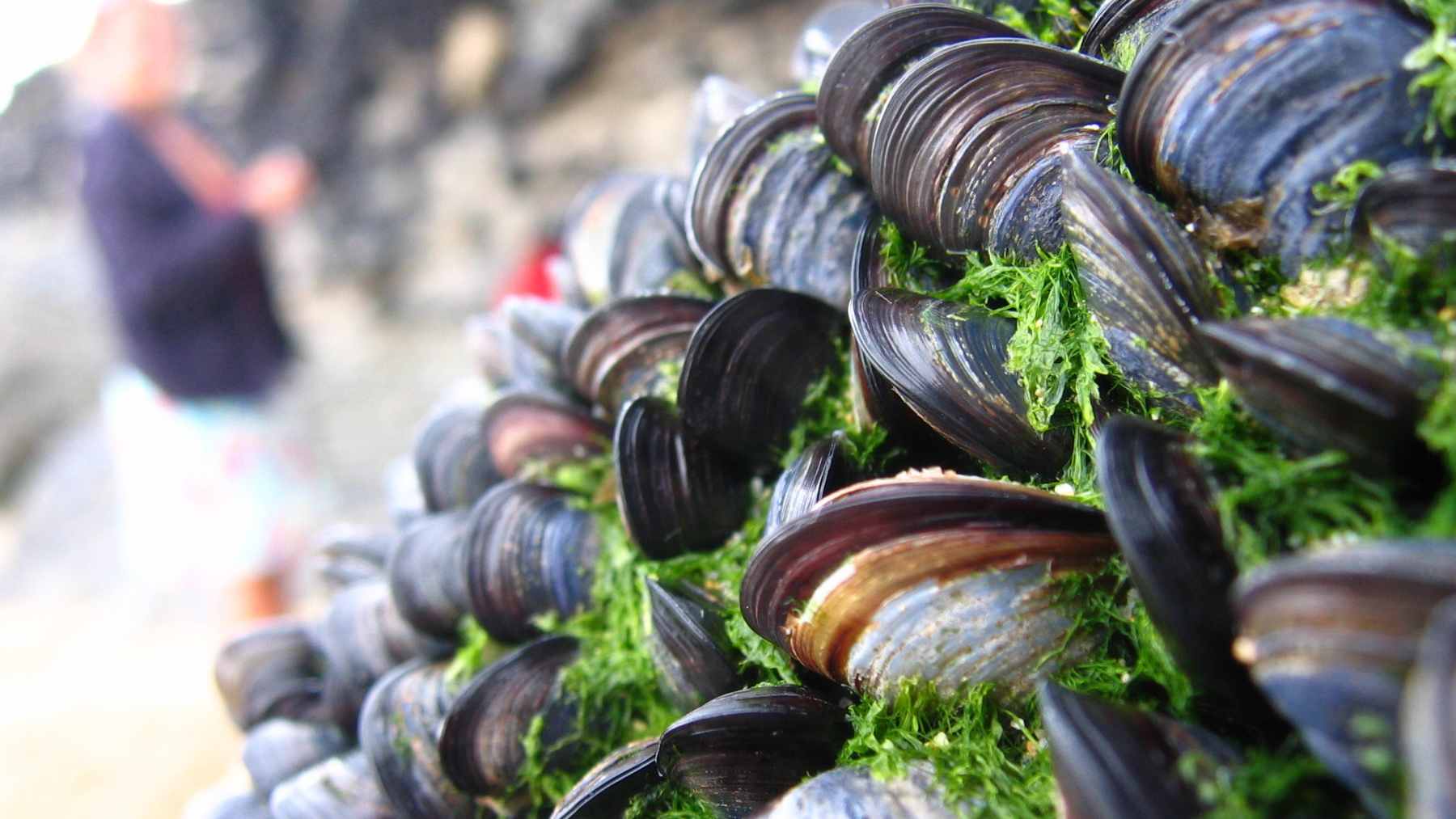
Mussels stay attached underwater because they use natural adhesive proteins that work where ordinary glue would fail. That is the key idea behind biomimetics, a field that studies useful designs in nature and adapts them for human technology.
In this case, the goal is not to copy the whole animal. It is to imitate the chemistry that helps mussels grip wet rock, then turn that idea into a soft medical material that can stick to living tissue.
What HydroBond is
HydroBond is being developed at the Institute of Nanoscience and Materials of Aragón, known as INMA, a joint center of the Spanish National Research Council and the University of Zaragoza.
The project is led by Alexandre Lancelot, a researcher there who has spent years working on bioadhesive hydrogels for wet tissue.
A hydrogel is a water-rich gel, soft enough to be considered for contact with the body. A bioadhesive is simply a medical material designed to stick to biological surfaces, such as skin or internal tissue.
That combination matters because wounds are rarely dry, clean, and still. Blood, fluid, motion, and swelling can make closure difficult, which is why any alternative to stitches has to work in messy real-world conditions.
A step before human use
HydroBond has already been tested on wet pig skin outside the body and in studies with mice, according to the project description. Those results do not mean it is ready for operating rooms, but they do explain why the next phase matters.
The team has now received about $22,800 to expand preclinical testing, optimize the material, and raise its technology readiness level. In plain English, it is moving it from a promising lab material toward a more practical medical device.
More than a glue
The most intriguing part may be what comes next. Researchers are also studying whether the gel can carry medicine and release it directly on the wound.
Early lab tests with antibiotics are described as encouraging. If that line of work holds up, the material could do two jobs at once: closing a wound while helping fight infection right where the problem starts.
That would be a useful shift. For the most part, stitches close tissue mechanically, but they do not treat infection on their own, and they can sometimes bring irritation, scarring, or places where bacteria can settle.
Why wet adhesives are hard
Medical glues already exist, but wet tissue is a tough target. An adhesive must stick, stretch, avoid damaging tissue, and keep working while the body is moving.
That is why mussel-inspired materials have drawn attention for years. A 2017 research review in RSC Advances noted that dopamine-based, mussel-inspired hydrogels had become a major focus because of their ability to perform in wet environments.
Still, a good idea in a lab dish is not the same as a safe product for patients. Preclinical testing is where researchers look more carefully at strength, safety, healing behavior, and whether the material can be made consistently.
A wider push from Aragón
The project also sits inside a broader effort to move Spanish research closer to the market. Activa-T identifies projects with strong innovation potential and gives selected teams training, mentoring, and funding of up to about $22,800 each.
The center’s own growth gives the project more weight. It received Severo Ochoa excellence accreditation, the first center in Aragón to do so, with about $5.1 million in funding and five predoctoral contracts for the 2024 to 2028 period.
The center says it has around 300 members, more than 40 European projects, and an average of 300 publications a year. It also reports about $8 million a year from competitive public programs and about $1.1 million from industry contracts and royalties.
What happens next
For now, HydroBond is best understood as a serious step, not a finished replacement for stitches. The next tests will help show whether the gel can be strong enough, safe enough, and useful enough to keep moving toward clinical use.
Could a future surgeon close some wounds with a mussel-inspired gel instead of thread? That is the possibility this project is chasing, carefully and step by step.
The official press release has been published by the Institute of Nanoscience and Materials of Aragón.