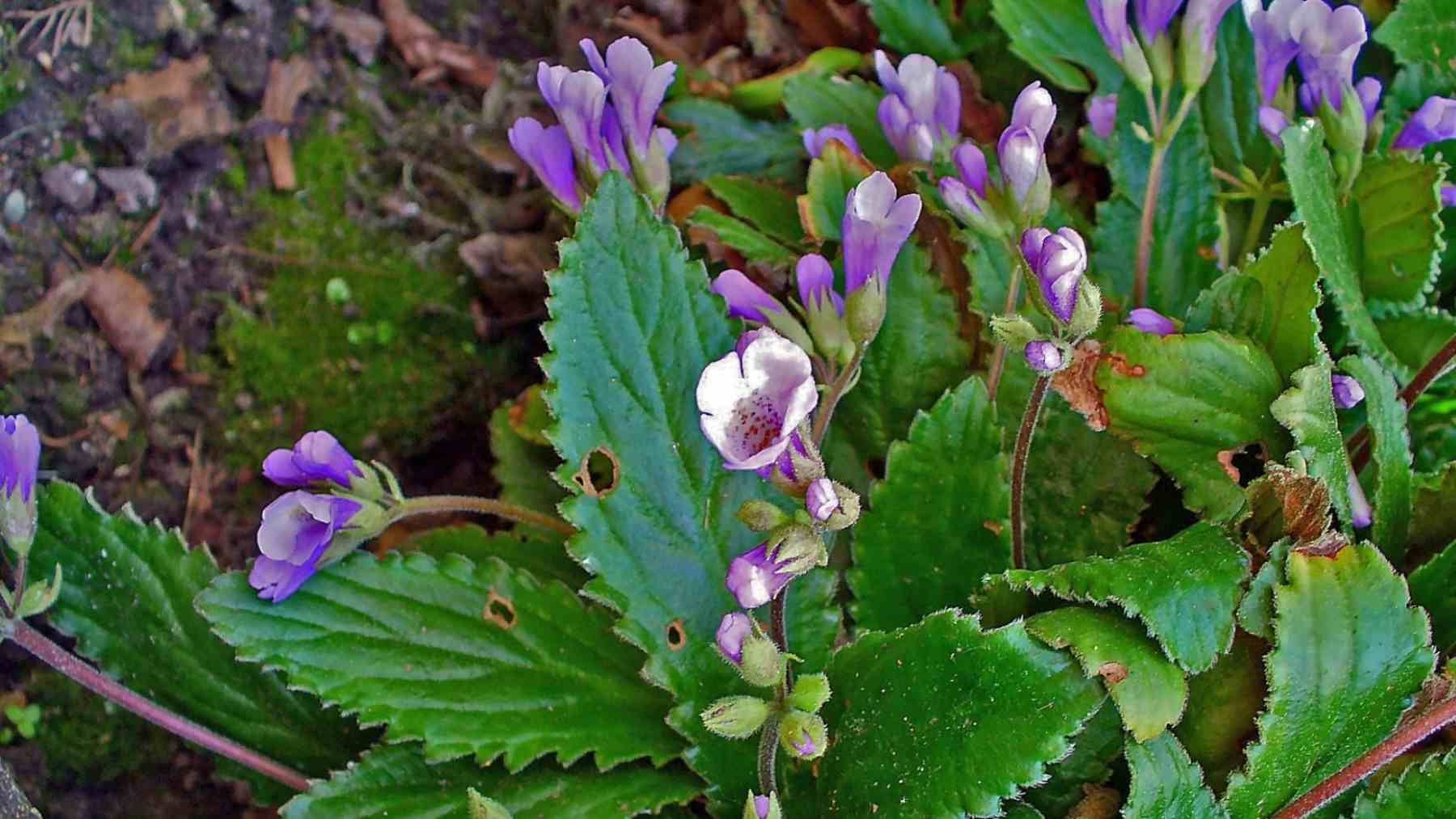
A plant famous for coming back after extreme dryness is now being tested for a very modern job, helping skin cells stay healthier in the lab. In a new study, extracts from Haberlea rhodopensis and tiny cell-message packets called extracellular vesicles helped human fibroblast cells keep their shape, support energy activity, and switch on signals tied to collagen production.
That does not mean a new wrinkle cream is ready for the shelf. The work was done in cells, not in people, so it is an early step. Still, it points to a practical question in skincare science, can lab-grown plants offer gentler tools for aging skin?
A plant built for survival
Haberlea rhodopensis is often called a “resurrection plant” because it can survive long dry periods and recover when water returns. It grows naturally in the Rhodope Mountains on the Balkan Peninsula, and that rugged survival story is part of why cosmetic researchers are paying attention.
Milena Georgieva and Vasil Georgiev worked with colleagues from the Bulgarian Academy of Sciences and Sofia University St. Kliment Ohridski to test the plant in a controlled cell study. The plant extract and culture material were provided by Innova BM Ltd., giving the team a way to study bioactive ingredients without simply harvesting wild plants.
Why fibroblasts matter
Fibroblasts are the quiet workers of the skin. They help build collagen and other support fibers in the dermis, the deeper layer that keeps skin firm, flexible, and able to recover from daily wear.
As skin ages, fibroblasts can slow down. Sunlight, pollution, stress, and ordinary time can add damage, and the support web under the skin becomes weaker. That is when fine lines, slower healing, and loss of firmness begin to show.
Tiny packets from plant cells
Extracellular vesicles are tiny bubble-like packets released by cells. Think of them as microscopic envelopes carrying proteins, fats, and other signals from one place to another. In the body, those messages can affect how nearby cells behave.
The researchers tested two plant extract mixtures and a separate vesicle-rich fraction on human fibroblasts for 24 and 72 hours. Under an electron microscope, many vesicles appeared round and measured roughly two to eight millionths of an inch across, far too small to see with any home microscope.
What the cells showed
The first encouraging sign was simple, the treated cells mostly looked normal. They stayed attached, kept their long fibroblast shape, and did not show obvious damage under the microscope. Their internal actin fibers, which help cells hold their structure and move, also remained largely organized.
The energy side of the cells looked interesting too. Mitochondria, the tiny power centers that help cells do their work, increased in mass under several treatments. In practical terms, the plant materials seemed to nudge some cells toward a more active state, though the response depended on dose and time.
Collagen signals and safety
The study also looked at genes linked to type 1 and type 3 collagen, two major building blocks that help skin keep its structure. Several treatments increased those collagen-related signals, especially after longer exposure. The same experiments also pointed to a stronger oxidative stress response, which is the cell’s way of dealing with damaging chemical stress.
Safety matters here. The team used a DNA damage test often called a comet assay and described the overall profile as biocompatible, but the results were not a blank check. Some responses changed with concentration, so the safer takeaway is that dose, timing, and formulation would matter a lot before any cosmetic use.
Part of a bigger skincare shift
This study fits into a broader move toward plant cell cultures in cosmetics. Instead of relying only on field-grown plants, labs can grow plant cells under controlled conditions and study their ingredients more consistently. A review on plant cell culture technology noted growing interest in using those systems for cosmetic and food ingredients.
Plant vesicles are also getting more attention. One Aloe vera vesicle study found antioxidant and wound-healing effects in skin-related cells, while a Panax ginseng vesicle study reported anti-senescence and anti-pigmentation effects in human skin cells.
What happens next
The biggest missing piece is real skin. A dish of fibroblasts can reveal useful biology, but it cannot fully copy the skin barrier, sweat, oil, sunlight, irritation, or the way a cream behaves after weeks of daily use. Anyone who has tried a “gentle” product and still felt stinging knows that lab promise and bathroom-mirror reality can be two different things.
Future work would need to show how these extracts and vesicles move through skin, how stable they are in a finished formula, and whether they help people without causing irritation. For now, Haberlea rhodopensis looks less like a miracle ingredient and more like a serious lead worth testing carefully.
The main study has been published in Cosmetics.