News alerts stack up, work messages arrive late, and one bad comment can ruin an otherwise ordinary day.
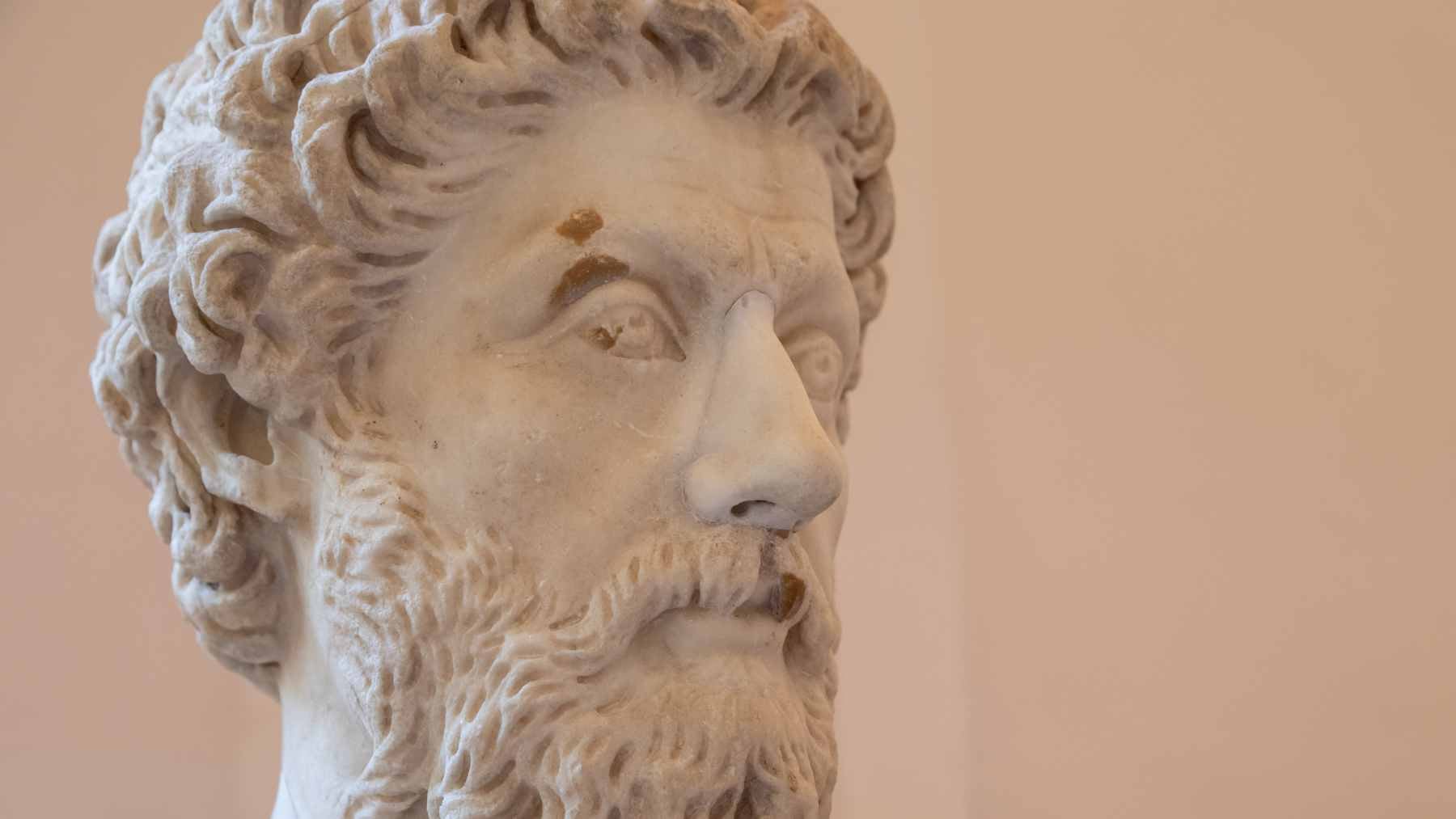
For anyone caught in that loop, an old line from Marcus Aurelius still lands with surprising force, “If you are distressed by anything external, the pain is not due to the thing itself, but to your interpretation of it.”
The thought appears in the source material supplied for this article as a core Stoic lesson about anxiety and judgment.
The message is not that problems are imaginary or that people should simply toughen up. It is sharper than that. Marcus Aurelius was pointing to the narrow but powerful space between what happens and what we decide it means.
An emperor under pressure
Marcus Aurelius governed the Roman Empire from A.D. 161 to 180, a period marked by war, rebellion, and plague.
At least part of Meditations, the work that made him famous as a philosopher, was written during the last years of his military campaigns, according to Rachana Kamtekar in the Stanford Encyclopedia of Philosophy.
That context matters. These were not quiet reflections from a man living far away from trouble. They were private reminders written by someone carrying political power, public danger, and personal strain at the same time.
What the quote really says
The quote is often treated like a slogan for calm. But it is more demanding than a motivational poster. A public English translation of Meditations says that when grief comes from something external, the deeper cause is “thine own conceit and opinion concerning the thing.”
In plain English, Marcus was saying that events hit us twice. First, the event happens. Then the mind adds a story about danger, humiliation, loss, unfairness, or failure.
The Stoic idea behind it
Stoicism is the ancient philosophy behind the sentence. It taught, in broad terms, that people should separate what depends on them from what does not. Scholarly overviews describe Stoicism as one of the dominant philosophical systems of the Hellenistic period, with ethics as one of its central parts.
That sounds simple. It rarely feels simple. A delayed flight, a harsh text, a medical scare, or a boss’s criticism can still hit the body before the mind has time to sort things out.
Judgment changes the pain
For the Stoics, outside events were not automatically good or bad in the deepest moral sense. Marcus’ version of the idea was personal. He kept reminding himself that anger, panic, and shame often grow from the meaning we attach to the facts.
Think about a message left on “read.” One person sees it and thinks, “They must be busy.” Another thinks, “They are rejecting me.” Same screen, different judgment, very different afternoon.
A modern echo
This is not the same thing as modern therapy, and it should not be sold that way. Still, there is a clear echo in cognitive behavioral therapy, a structured form of talk therapy that helps people notice thinking patterns and view challenging situations more clearly, according to Mayo Clinic.
In practical terms, that means looking at the sentence your mind has written under the event. Is it fact, or is it fear dressed up as fact? That question can feel small, but on a bad day, it may keep a spiral from getting worse.
What it does not mean
The quote does not deny real suffering. Losing a job, facing illness, or living through grief can be painful in ways no clever sentence can erase. Marcus Aurelius was not asking people to pretend the world is gentle.
The point is more grounded. Even when we cannot control the first blow, we may still have some say over the second one. That is not total freedom, but it does give some sense of agency.
A small daily test
What does this look like on a normal day? It might mean pausing before answering an irritating email, taking a breath in traffic, or asking whether one cruel remark really defines your worth.
It may also mean admitting that the mind loves jumping to conclusions. It turns one bill into a disaster, one mistake into a life story, and one awkward conversation into proof that everything is falling apart. Slow the story down.
Why it still matters
Nearly two thousand years later, the quote survives because it names a familiar struggle. We still live with uncertainty, noise, and pressure. The tools are different, but the human reaction is not so different after all.
The strength of Marcus Aurelius’ sentence is its restraint. It does not promise an easy life. It says that judgment is part of suffering, and because judgment can be examined, distress is not always the final word.
It remains one of the clearest windows into Stoic self-discipline. The main work behind this reflection has been published in Meditations.