
A blood test may help estimate whether a cognitively healthy older adult is likely to develop Alzheimer’s-related symptoms within the next decade.
In a study of 982 people with no cognitive impairment, a low result for a marker called percent p-tau217 identified a group with a very small chance of progressing to mild cognitive impairment over 10 years.
The finding is important for what it can rule out, not just what it might predict. A high reading raised concern but did not make future disease certain, while a low reading offered reassurance in more than 9 out of 10 cases. This is closer to a long-range risk filter than a diagnosis in a vial.
What the blood marker measures
Alzheimer’s disease can begin changing the brain years before memory problems become obvious. Tau normally helps support nerve cells, but abnormal forms of the protein become linked to the tangles seen in Alzheimer’s and can also be measured in blood.
Percent p-tau217 looks at the proportion of tau carrying a specific chemical change associated with Alzheimer’s biology. The appeal is easy to see. A blood draw is less burdensome than a spinal tap or specialized brain scan, although the researchers used mass spectrometry, a laboratory method that is not the same as a home test.
Nearly 1,000 people followed for years
Researchers from the CIEN Foundation and the Reina Sofía Foundation recruited cognitively healthy older adults from the Madrid area through the Vallecas Project. Participants were about 75 years old on average, 64% were women, and they returned for annual evaluations for as long as 12 years, with an average follow-up of nearly eight years.
The team measured percent p-tau217 at the start and sorted participants into low, intermediate, elevated, or high groups. They then tracked memory and thinking, daily functioning, changes in the hippocampus, and other signs linked to brain-cell damage.
People in the elevated and high groups declined faster and progressed to mild cognitive impairment or dementia at more than six times the rate seen in the low group.
The negative result carried the clearest message
Of the 982 participants, 674 fell into the low group, while 145 were intermediate, 103 were elevated, and 60 were high. After 10 years, the low result had a 92.1% negative predictive value for progression to mild cognitive impairment. Put simply, a little more than nine in 10 people with that low result did not cross that clinical threshold during the decade.
The positive side was less certain. Among people in the high group, 71% progressed to mild cognitive impairment within 10 years, while 41% developed dementia. “The main strength of this study lies in the high negative predictive value of plasma biomarkers,” lead researcher Jesús Silva Rodríguez said.
Why the finding matters for prevention
Finding people who are likely to decline is one of the hardest parts of running Alzheimer’s prevention trials. A blood marker could help researchers invite higher-risk volunteers while reducing unnecessary repeat testing for people whose near-term risk appears low.
In practical terms, that could mean fewer clinic visits and a better chance of testing treatments before everyday memory problems take hold.
The results also fit a broader shift in Alzheimer’s research. Earlier research involving 2,718 cognitively unimpaired people found that p-tau217 blood testing predicted amyloid buildup detected by brain scans or spinal fluid tests in 79% to 86% of cases.
Adding a confirmatory scan or spinal fluid test after a positive blood result pushed confidence above 90%.
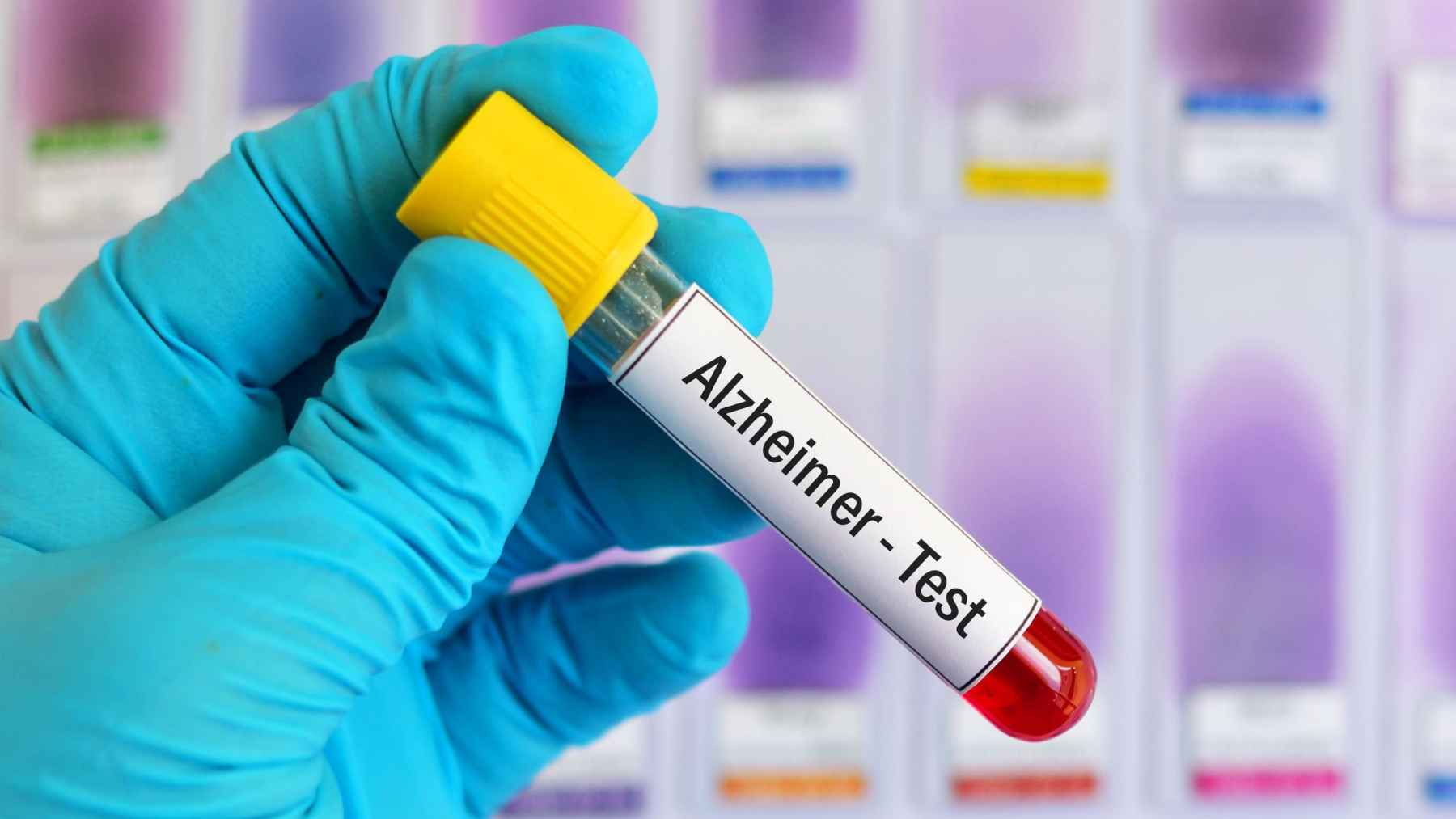
This is not routine screening yet
The study does not mean healthy adults should immediately ask for an Alzheimer’s blood test at their next checkup.
Current clinical guidance focuses on people who already have objective cognitive impairment and are being assessed in specialized memory care. It also warns that blood tests vary in quality and should not replace a full evaluation by a healthcare professional.
There are practical questions, too. The participants came from one older cohort in the Madrid region, so the findings need to be confirmed across more diverse populations and health systems.
Researchers will also need consistent laboratory cutoffs and clear counseling for people who receive results about a disease they may not develop for years, or may never develop at all.
A risk tool, not a verdict
Senior author Pascual Sánchez-Juan said the immediate value is “not deterministically predicting who will develop the disease.” Instead, the test could identify a large low-risk group and help select people who may benefit from closer follow-up or prevention studies. No one should treat a high number as a verdict.
At the end of the day, the advance is quieter than a diagnosis in a vial. It offers a way to narrow uncertainty, especially when the result is low, while keeping medical judgment at the center.
The full study was published in Alzheimer’s & Dementia.