Two people can hear the same story and walk away with different inner movies. One notices danger, another remembers a parent, a road trip, or a fear they never quite named.
A new brain study suggests that this private layer of experience may depend heavily on the default mode network, a set of brain regions tied to memory, meaning, and the sense of self.
The finding does not solve consciousness, but it gives scientists a clearer way to study why your inner world feels like yours.
The brain’s personal mode
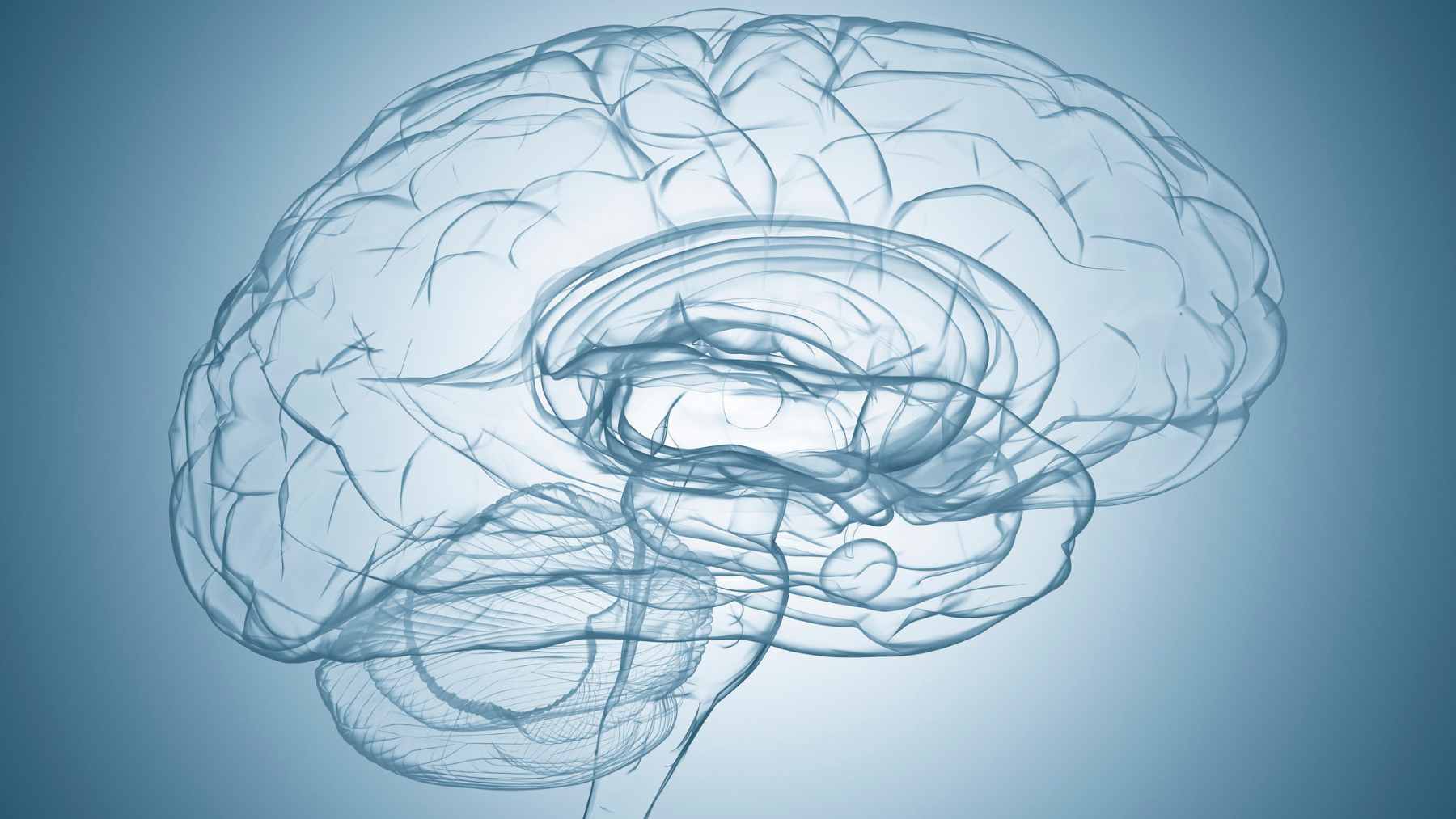
The default mode network, often shortened to DMN, links areas near the front and back of the brain, including the prefrontal cortex and parietal regions. In simple terms, it helps weave together memories, goals, beliefs, and emotions into the running story you carry through life.
That matters because consciousness is not just a camera pointed at the world, it is also interpretation. What does a smell, a voice, or a scene mean to you?
A story inside a scanner
Peter Coppola and Emmanuel A. Stamatakis worked with Adrian M. Owen, David K. Menon, and Lorina Naci across the University of Cambridge, Western University, and Trinity College Dublin to test that idea.
Their team used functional MRI, a brain scan that tracks changes in blood flow as a sign of activity, while volunteers listened to a five-minute audio clip from the movie “Taken.”
The researchers recruited 19 healthy adults, but used data from 16 after exclusions. The volunteers heard the same story while awake and again under different levels of propofol anesthesia, while 25 other people rated the suspense of the story moment by moment.
What changed under anesthesia
When the participants were awake, their default mode network patterns became more different from one person to another. Under deep anesthesia, those personal signatures faded and became more similar across volunteers.
The attention and auditory networks showed a different pattern. They were more alike during conscious listening, which makes sense because those systems help people track sound and gather basic information from the outside world.
In practical terms, the brain seemed to split the job. Some networks helped listeners share the same story, while the default mode network helped turn that story into a personal experience.
Why the DMN stands out
The default mode network has often been linked to daydreaming, remembering, imagining the future, and thinking about yourself. But newer research has pushed that idea further, describing it as a sense-making system that blends incoming events with your past knowledge.
That sounds abstract until you think about daily life. The same song can be background noise to one person and a time machine to another. The same text message can feel harmless, awkward, or painful depending on the memories it touches.
This is also why the finding could matter for medicine. Altered DMN activity has been reported in several neurological and psychiatric conditions, including Alzheimer’s disease, Parkinson’s disease, epilepsy, attention deficit hyperactivity disorder, and mood disorders.
Not a mind-reading machine
The study does not mean scientists can read private thoughts from a scan. The work looked at broad patterns of brain communication, not exact memories, beliefs, or images inside a person’s mind.
The authors also warned that the sample was small, especially for studying differences between people.
They used suspense ratings from separate participants rather than from the same people who were scanned, which limits how strongly the brain patterns can be tied to each volunteer’s exact experience.
Still, the approach is important because it does not force everyone’s brain activity into one average pattern. Instead, it tries to preserve individual dynamics, which is a key step if neuroscience wants to study consciousness as something lived from the inside.
What makes us human
There is another layer to this story. Earlier research has found that human-expanded cognitive networks, especially the default mode network, overlap with high expression of human-accelerated genes linked to brain development and function.
That does not mean one network explains humanity. It suggests, however, that the machinery behind self-reflection, memory, and personal meaning may sit in parts of the brain that changed strongly during human evolution.
At the end of the day, the brain may not simply receive the world. It edits the world through memory, feeling, and expectation, turning the same outside events into an experience no one else can fully duplicate.
The main study has been published in Communications Biology.