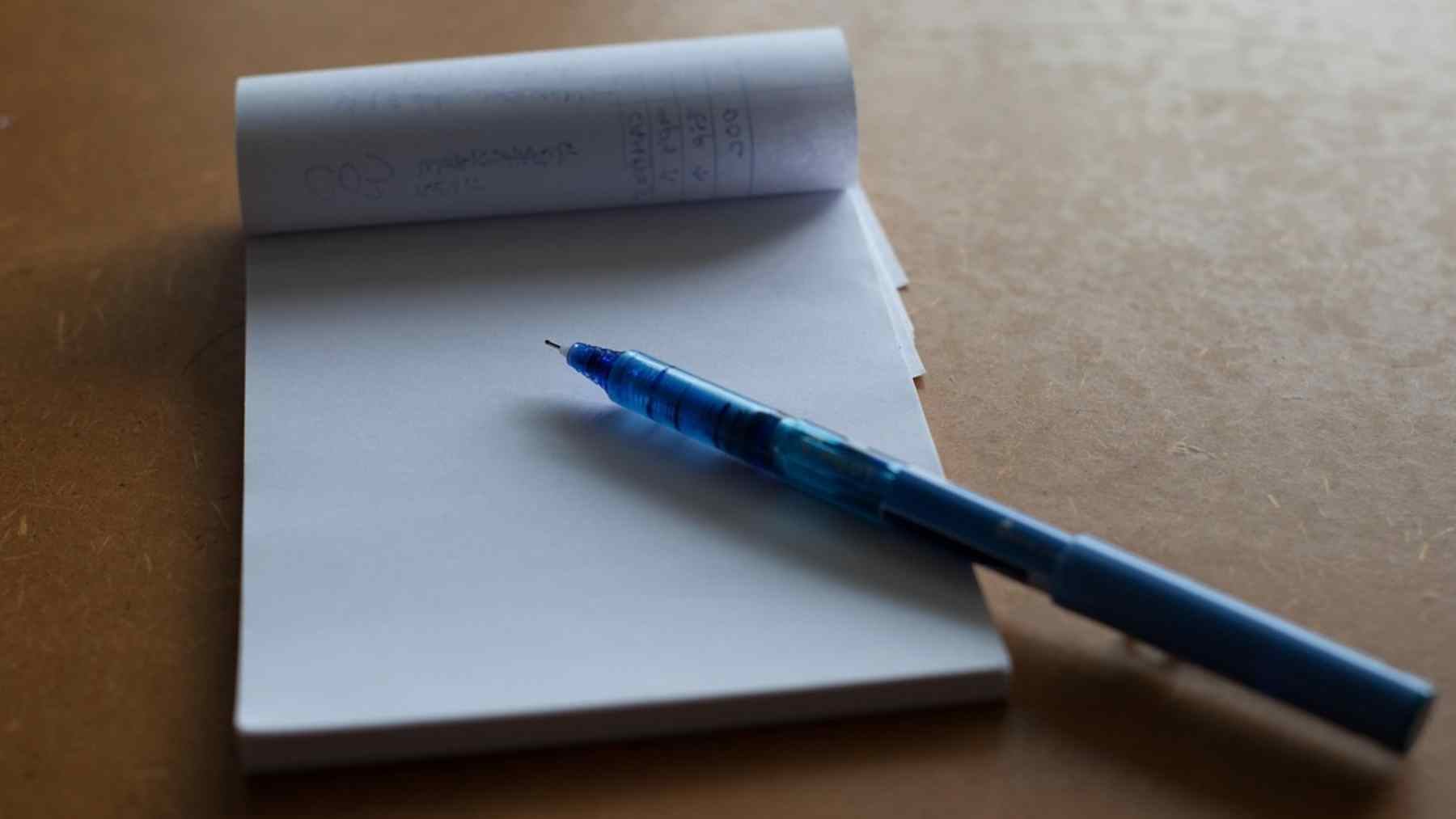
A person walking into a meeting with a notebook and pen can look a little out of step in a room full of laptops, tablets, and phones. Still, psychology suggests that this old-school habit is not a sign of being behind the times.
Writing by hand may actually push the brain to do something useful in real time. It forces the person to listen, choose, summarize, and connect ideas while the conversation is still happening. In other words, that notebook may be less about nostalgia and more about sharper analysis.
Why handwriting changes the meeting
Typing makes it easy to chase every sentence. That can feel productive, but it often turns the note-taker into a fast-moving transcript machine.
Handwriting works differently. Since most people cannot write by hand as quickly as they can type, they have to decide what matters, what can be skipped, and what needs to be turned into a task.
That small delay is the whole point. In practical terms, the brain is not only recording the meeting, it is organizing it.
The brain has to choose
Research has repeatedly linked handwriting with deeper mental processing, especially when compared with simply typing words on a keyboard. A 2014 paper in “Psychological Science” found that students who took notes on laptops performed worse on conceptual questions than those who took notes longhand, partly because laptop users tended to copy more verbatim instead of reframing ideas in their own words.
That finding matters outside the classroom, too. Meetings are not just about remembering what someone said, but understanding what it means for a project, a deadline, or a decision.
So, what is the handwritten note-taker really doing? For the most part, they are filtering the room.
Screens compete for attention
There is another everyday detail that matters here. A notebook does not blink with a new email, buzz with a message, or tempt you to check one more tab before the meeting ends.
A laptop can be useful, of course. But it also sits in the same space as calendar alerts, chat windows, news updates, and that one unfinished task waiting in the corner of the screen.
That’s why pen and paper can feel almost calming. The page asks for one thing at a time, and in a busy workday, that matters more than it seems.
What the studies show
A 2020 study in Frontiers in Psychology examined 12-year-old children and young adults while they wrote by hand, typed, or drew words. The researchers reported that handwriting and drawing appeared to activate learning-related brain activity in ways that were more similar to each other than to typing.
A newer 2024 study from researchers at the Norwegian University of Science and Technology recorded brain activity in 36 university students using a 256-channel EEG sensor array. The study found that handwriting produced more elaborate brain connectivity patterns than typewriting, especially in theta and alpha frequency ranges linked in the literature with memory and learning.
That does not mean every memo should be written with a pen. But it does suggest that when the job is to understand, prioritize, and remember, handwriting has a serious advantage.
It is not about pretty notes
One common mistake is thinking handwritten notes have to look neat. They do not.
A useful meeting page may have arrows, circles, crossed-out words, margins, stars, and messy underlining. That “mess” can be a sign that the person is actively sorting ideas instead of simply collecting sentences.
Think of it like a kitchen counter while someone is cooking. It may not look polished in the moment, but the work is happening right there.
A simple system helps
The best handwritten notes usually have a little structure. At the top of the page, write the date, the meeting topic, and the key people in the room.
Then divide the page in a way that makes sense. One section can hold main ideas, another can list your tasks, another can track other people’s tasks, and a final corner can catch open questions.
Small symbols help, too. A star can mark something important, a box can mean an action item, a question mark can flag uncertainty, and an arrow can point to a decision that depends on someone else.
The five-minute habit
The real value often comes after the meeting ends. Taking five minutes to review the page can turn scattered notes into clear next steps.
That short review is where rough phrases become tasks, half-written ideas become priorities, and forgotten questions make their way into a follow-up message. It is a small habit, but it can save a lot of confusion later.
No notebook can fix a bad meeting. Still, a pen can help you leave with a clearer map of what just happened.
When typing still makes sense
There is no need to turn this into a battle between paper and technology. Typing is faster, easier to share, and often better for long documents, formal minutes, or collaborative files.
But for meetings that require judgment, such as planning sessions, interviews, strategy calls, or feedback conversations, handwriting may offer something screens often do not. It gives the brain a little more room to think.
At the end of the day, the person with the notebook is not necessarily old-fashioned. They may simply be using a tool that makes attention harder to fake.
The study was published on Frontiers in Psychology.