When crisis strikes—a job loss, a breakup, or a death—friendship transforms from a quiet background detail into a vital lifeline. Much like phosphorescent materials that absorb energy only to radiate light long after the source is gone, true companions do their brightest work in
That idea is captured by a line widely attributed to the celebrated Bengali writer, “True friendship is like phosphorescence; it shines brightest when everything has gone dark.” The words are memorable, but their authorship is not firmly established, since online collections assign close versions to different people.
A powerful image in the dark
Phosphorescence is a delayed glow. Unlike fluorescence, which snaps on and off instantly, phosphorescent materials trap absorbed energy at a quantum level and leak it back out slowly—functioning like a rechargeable light battery.
That makes the friendship metaphor easy to understand. Fair-weather companions may be visible when life is bright, but dependable friends become clearest after the party ends, the phone stops ringing, and trouble arrives. Hardship does not create loyalty, though it often reveals it.
What real support looks like
A loyal friend does not need a perfect speech or a dramatic rescue. Listening without rushing, bringing food, helping with paperwork, or checking in again several days later can matter more than a grand gesture that disappears as quickly as it came.
Modern research broadly supports the central idea that relationships matter for health and resilience. A U.S. public health advisory cited a synthesis of 148 studies that associated social connection with 50% higher odds of survival during follow-up, showing that close ties are more than a pleasant extra.
The need is widespread. The World Health Organization reported in 2025 that roughly one in six people worldwide experiences loneliness, while stronger social connection can support mental and physical health. The wider message can still land close to home.

Three friends share a warm moment, illustrating the trust and emotional support that can define lasting friendship.
Years do not tell the whole story
Long friendships can carry shared memories, private jokes, and the comfort of being known over time. However, age alone does not guarantee trust, just as a newer friendship is not automatically shallow.
The Bengali writer made that point directly in “My Reminiscences,” where he wrote that “depth of friendship does not depend upon length of acquaintance.” He was describing a bond formed during only a few days aboard a ship, yet the connection felt immediate and lasting.
Ultimately, the quality of a friendship may be easier to see in patterns than in anniversaries. Who keeps confidence, notices when something is wrong, tells an uncomfortable truth with care, and stays present after the first wave of concern has passed?
The writer behind the reflection
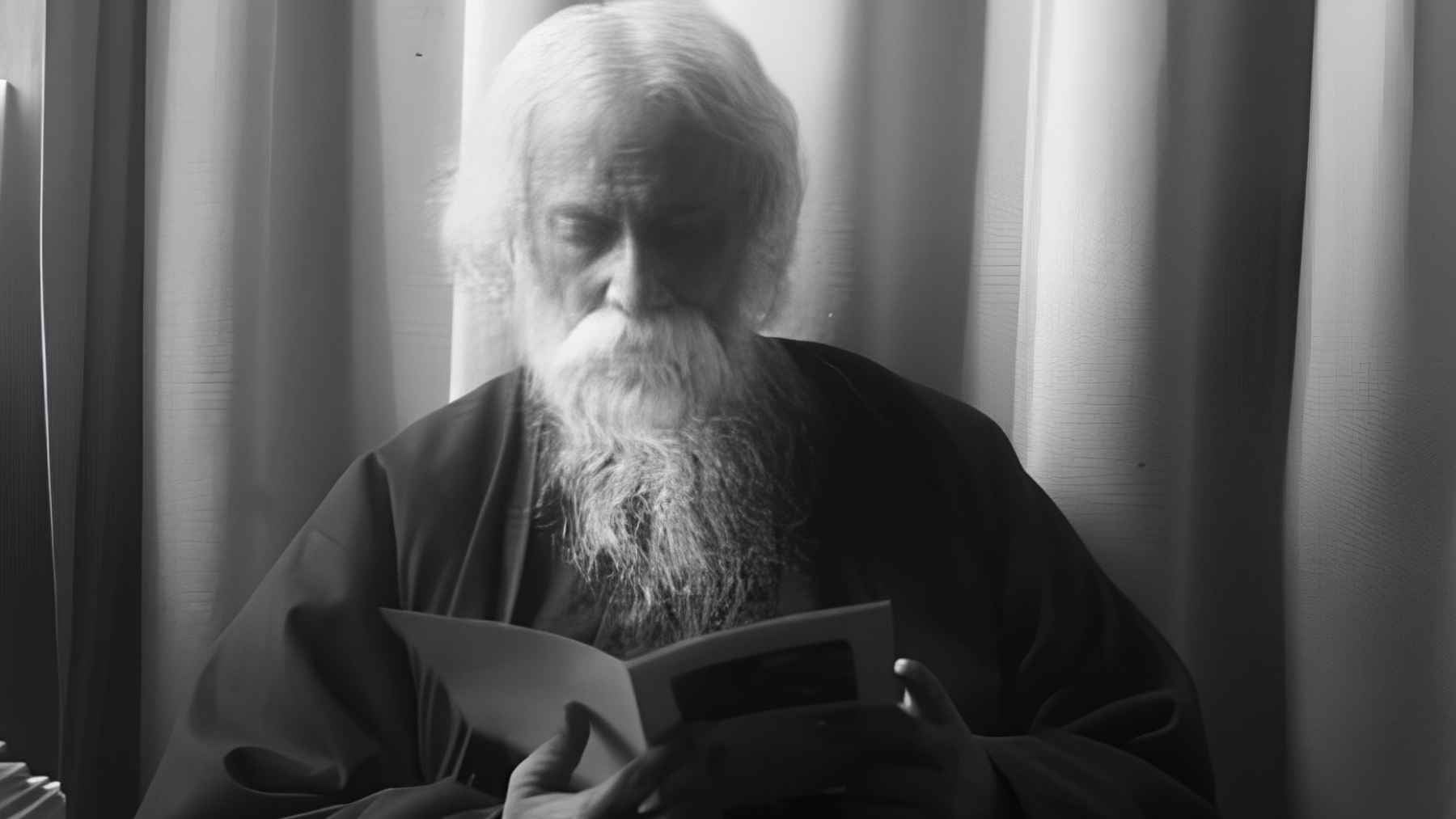
Born in Calcutta on May 7, 1861, he would have turned 165 in 2026. He grew into a poet, novelist, playwright, essayist, composer, educator, and philosopher. He was educated mainly at home, traveled to England as a young man, and did not complete formal studies there.
His work moved across poetry, songs, short stories, novels, drama, criticism, philosophy, and social questions. It frequently portrayed ordinary lives while bringing Indian and Western traditions into conversation, helping his writing reach readers far beyond Bengal.
In 1913, he became the first non-European recipient of the Nobel Prize in Literature. That milestone made him a global literary figure, but his influence did not stop at books.
A different kind of school
In 1901, he opened an experimental school at Santiniketan with only five students. Classes were often held outdoors under trees, and the curriculum included music, painting, and performance alongside academic study, a deliberate break from rigid colonial education.
That school later became the center of Visva-Bharati, founded in 1921 as an international university shaped by cultural exchange and intellectual freedom. The project reflected a belief that education should develop the whole person, not simply fill a student with facts.
He died on August 7, 1941. Yet the school, the books, and the questions he asked about human connection continued to travel.
A quote worth handling carefully
A scholarly digital archive at Jadavpur University confirms that the poet did use phosphorescence as an image. A manuscript linked to “Stray Birds” includes the words “Our names are like the phosphorescence that flashes,” while the published poem describes names glowing on sea waves, not friendship during hardship.
There is another reason for caution. A 1978 U.S. college yearbook printed a nearly identical friendship sentence and credited Denise Martin through the National Enquirer, which does not settle the matter but shows that the attribution is disputed.
Consequently, the safest description is “commonly attributed to the poet.” The authorship may be uncertain, but the idea remains clear enough for everyday life, since real friendship often has its strongest afterglow when the easy light is gone.
The official biographical record has been published by Nobel Prize Outreach.