Standard cancer treatment follows a scorched-earth strategy: attack the tumor as hard as possible to destroy every last malignant cell.
However, evolutionary biologist Carlo Maley warns that this aggressive approach can backfire in advanced cases—wiping out drug-sensitive cells and leaving lethal, drug-resistant mutants with free rein over the tumor.
His alternative is adaptive therapy, which pauses or adjusts medicine as the tumor changes. In a small prostate cancer pilot, patients receiving adaptive treatment went more than twice as long before the disease progressed as a nonrandomized comparison group.
The finding is promising, not proof, but it points to a different goal for advanced cancer— control rather than total eradication.
Tumors evolve under pressure
Why would less treatment ever help? A tumor is not one uniform lump. It contains groups of cells with different traits, and some may already be less vulnerable to a drug.
Treatment acts like a filter, killing sensitive cells while allowing the toughest survivors to multiply. When a very high dose removes most sensitive cells, resistant cells gain more room and resources. “They no longer have competitors,” he said after speaking at Pompeu Fabra University’s annual biomedical symposium in Barcelona.
What adaptive therapy changes
Adaptive therapy uses frequent measurements, such as prostate-specific antigen, or PSA, a blood marker that often tracks prostate cancer activity. In the best-known protocol, medication was paused after PSA fell by half and restarted when it returned to the patient’s starting level.
This is different from simply taking a low dose every day or skipping pills at home. The schedule is controlled by doctors and tied to tests that estimate tumor burden. Standard continuous therapy, on the other hand, generally keeps treatment going until the cancer progresses or side effects force a change.
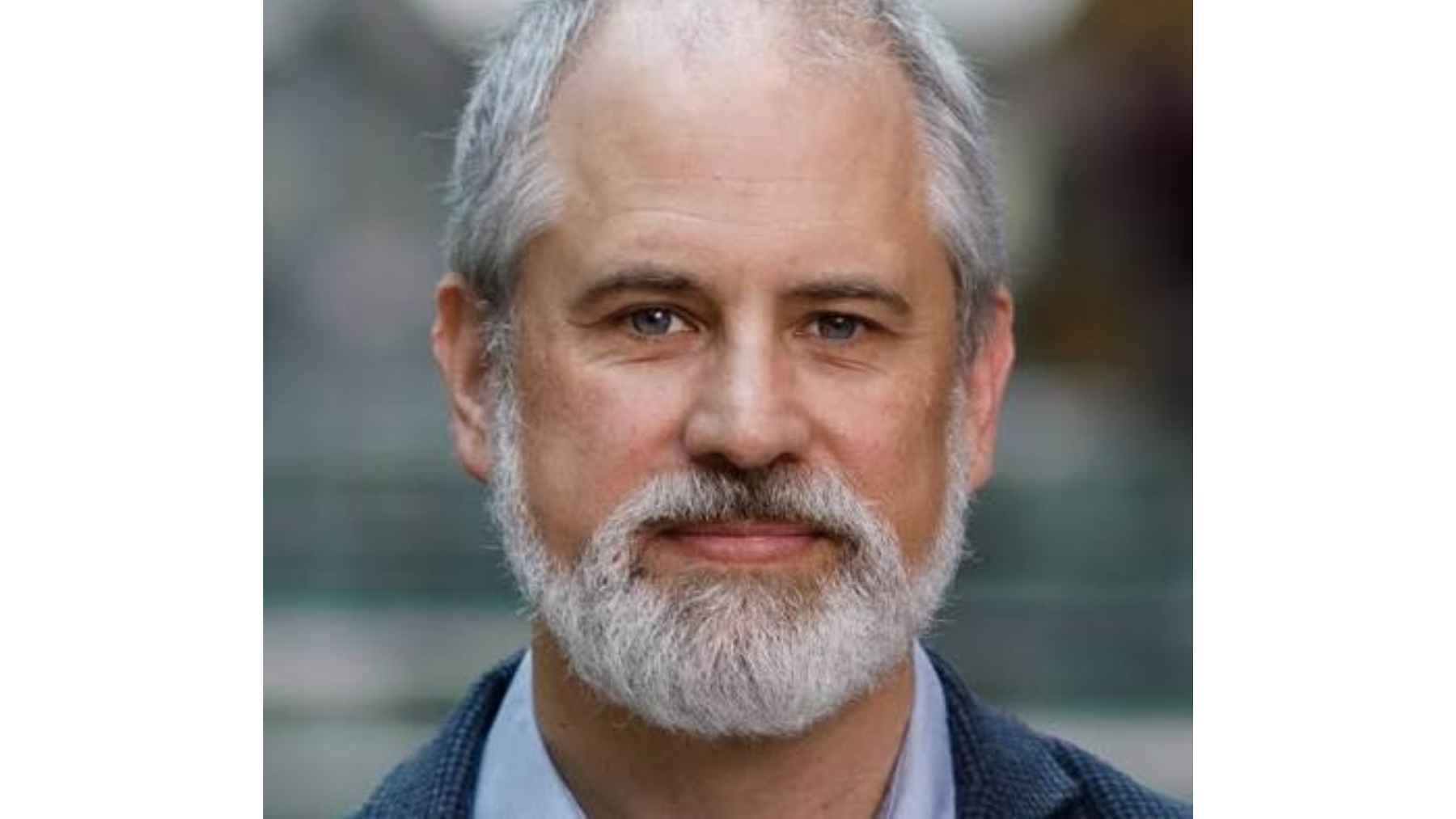
Carlo Maley, an evolutionary biologist who studies how cancer evolves and how treatment can adapt to drug resistance.
A small trial showed longer control
A pilot study led by Jingsong Zhang at Moffitt Cancer Center followed 17 men receiving adaptive abiraterone and compared them with 16 similar patients who chose continuous treatment.
Median time before progression was 33.5 months with adaptive therapy, compared with 14.3 months in the comparison group. Median overall survival was 58.5 months versus 31.3 months.
Patients in the adaptive group were off abiraterone for 46% of the time, so they received substantially less medication. Still, the study was small and not randomized.
A published critique said it could not prove that adaptive therapy was superior, while the researchers acknowledged possible selection bias and described the trial as a proof of concept.
A larger randomized phase 2 study known as ANZadapt is recruiting and plans to include 168 men with advanced prostate cancer. It compares pause-and-restart treatment with continuous abiraterone or enzalutamide. Results are not yet available.
Nature has solved parts of the problem
The director of the Arizona Cancer Evolution Center at Arizona State University also studies why elephants and bowhead whales do not develop as much cancer as their cell counts and long lives seem to predict.
This puzzle is called Peto’s paradox. More cells and more years should create more chances for harmful mutations, yet cancer risk does not simply rise with body size across species.
A 2015 JAMA study led by Lisa Abegglen at the University of Utah found that African elephants have at least 20 copies of TP53. This tumor suppressor gene helps identify DNA damage and can tell badly damaged cells to self-destruct. The research estimated elephant cancer mortality at about 5%, compared with 11% to 25% in humans.
Whales appear to use a different route. A 2025 Nature study led by Denis Firsanov at the University of Rochester reported that bowhead whale cells repaired dangerous DNA breaks more accurately and accumulated fewer mutations than cells from other mammals. Evolution, in other words, has built more than one anticancer toolkit.
Control may matter more than cure
His argument is aimed at metastatic or otherwise incurable cancers, not tumors that surgery or other treatment may eliminate. When cancer is still contained in its original organ, cure can remain a realistic goal. Adaptive therapy is being explored mainly where resistance is expected to become the central problem.
He wants oncology to judge success by years of good life, not only by whether every cancer cell disappears. “We should be talking about years or decades,” he said. That is an ambitious target, and current evidence is nowhere near proving it can be reached for most patients.
What patients should know
The idea is simple enough to sound tempting. It is also easy to misuse. Because the published protocols tie every pause to blood tests, scans, and specialist review, cutting or stopping prescribed medication at home is not adaptive therapy.
For now, adaptive therapy remains an experimental approach that belongs in clinical trials or carefully designed research programs. The key question is whether larger randomized studies can reproduce the pilot’s survival gains and show that treating less at selected moments can truly help patients live longer.
The main adaptive therapy study has been published in eLife.