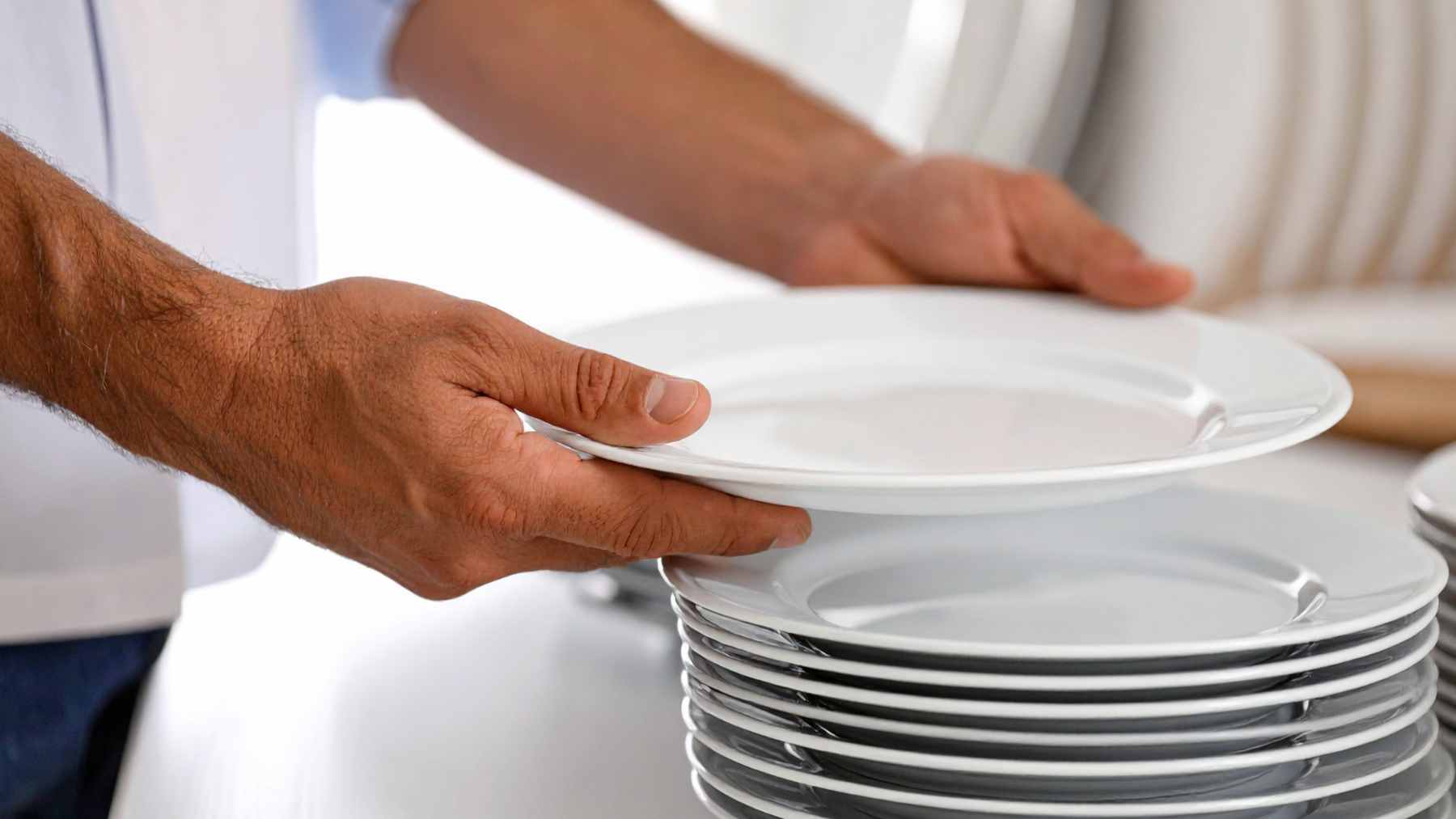
At the end of a restaurant meal, the same scene plays out again and again. Someone gathers the forks, nudges the glasses together, and starts stacking plates before the server even reaches the table.
It looks like simple politeness. But psychologists say the habit can point to something bigger, from empathy and teamwork to a quiet need for approval. In other words, one little stack of plates may say more about social instincts than most people realize.
A tiny restaurant clue
Spanish psychologist Francisco Tabernero has framed this routine as more than courtesy. In one explanation, he says that offering help without expecting anything back can show empathy and altruism, while the same gesture can also reflect fear of negative judgment.
Psychologists often call this kind of action prosocial behavior. The American Psychological Association defines prosocial behavior as conduct that benefits one or more other people. In plain language, it means noticing that someone else is carrying a load and trying to make it a little lighter.
Empathy, or approval
At its best, plate stacking is a small show of empathy. It says, without fanfare, that the server’s time and effort matter. Anyone who has watched a server cross a crowded dining room with a heavy tray can understand the impulse.
But the motive is not always so tidy. Is the person helping because they care, or because they cannot stand the idea of looking rude? Tabernero warns that, in some people, the need to be seen well can take over, turning a kind gesture into a quiet search for social safety.
Why companies care
This is where the restaurant moment becomes more than a manners test. In offices, hospitals, schools, and stores, managers often value people who notice small gaps and step in before being asked. Recruiters often call this a soft skill, a people-based strength that helps groups work with less friction.
Research connected to Harvard Business School has looked at a more formal version of that idea.
In a study on prosocial bonuses, Lalin Anik, Lara B. Aknin, Michael I. Norton, Elizabeth W. Dunn, and Jordi Quoidbach tested what happened when people were given money to spend on others instead of themselves across an Australian bank, Canadian dodgeball teams, and Belgian pharmaceutical sales teams.
The results were not just warm feelings. In the sports teams, every ten dollars spent prosocially was linked to an 11 percent rise in winning percentage, while every ten dollars spent on the self was linked to a 2 percent drop.
That study was not about diners, so it should not be read as a restaurant personality test.
Helping has limits
That does not mean every helper is a model employee, or that every team needs more people grabbing tasks outside their role. Helping can become a problem if it hides anxiety, creates confusion, or makes someone say yes when they really need to say no.

A broader meta-analysis led by Huiyao Liao found that prosocial motivation at work generally lines up with better well-being, more helpful behavior, higher job performance, and more career success.
Still, the researchers noted that the strength of those links depends on context, including whether helping feels voluntary or forced.
Mess can be the motive
Sometimes, the plate stack has nothing to do with the server. Some people simply hate visual clutter. The meal may be done, the sauce bowls are in the way, and the whole table feels like a traffic jam.
For that person, clearing space is less about altruism than relief. A clean table lowers the mental noise. It is not heroic; it is practical.
The polite way to help
The best version of the habit is simple and respectful. Move empty plates closer together, keep knives and forks visible, and avoid building a wobbly tower that makes the server’s job harder. A quick “Is this okay?” can be better than taking over.
Restaurants have their own rhythm. Servers often know how to stack dishes, separate glasses, and carry plates safely through noise, crowded aisles, and moving chairs. Helping should lighten the load, not become another problem to manage.
What the habit really says
So, what does it mean if you always help clear the table? For the most part, it suggests awareness. You notice labor, you dislike leaving a mess, or you want the people around you to see that you are considerate.
The catch is that one gesture cannot reveal a whole personality. It is a clue, not a diagnosis.
The main work on prosocial bonuses has been published in PLOS ONE.