Walk into almost any meeting today and you will see screens light up before the first agenda item is finished. Laptops, tablets, and phones make note-taking faster, cleaner, and easier to search later.
But could that old notebook be doing more than catching words? Research on handwriting suggests that writing by hand forces the brain to select, organize, and process information in real time, which can turn meeting notes into a quiet form of analysis.
The notebook advantage
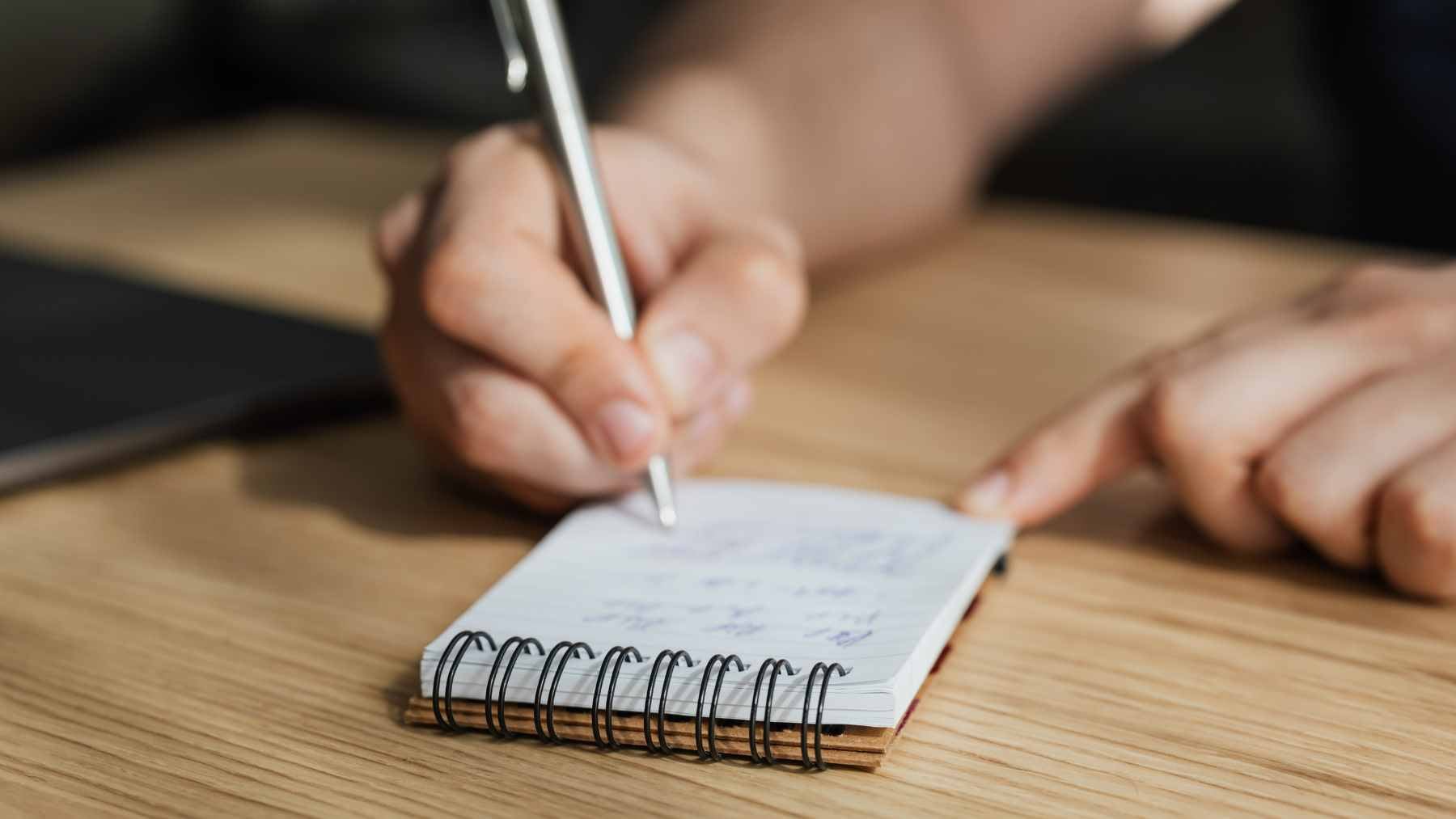
Taking notes by hand is slower than typing, and that may be the point. A person holding a pen cannot capture every sentence at keyboard speed, so the brain has to choose what matters.
In a meeting, that choice is useful. Instead of becoming a human recorder, the note-taker has to compress a comment into a shorter idea, mark a decision, and notice what still needs an answer.
That’s why a page with arrows, circles, crossed-out lines, and underlined phrases can be a good sign. It may look messy, but it often shows that the person is connecting ideas while the conversation is still moving.
What brain studies show
One key study by Eva Ose Askvik, F. R. van der Weel, and Audrey van der Meer at the Norwegian University of Science and Technology used high-density EEG, a cap that records brain activity, while children and young adults wrote, typed, or drew words.
The researchers studied 12 young adults and 12 children who were 12 years old, and they found activity patterns linked with learning and memory when participants wrote by hand.
A later Frontiers in Psychology study looked at brain connectivity, which means how different brain areas work together during a task. It analyzed usable data from 36 university students and found more widespread connectivity during handwriting than during typing.
The simple version is this. Forming letters by hand uses vision, movement, touch, and attention at the same time, while typing repeats a simpler key press again and again.
Why meetings are different
A classroom is not the same as a workplace meeting. Still, the mental task is surprisingly similar. You hear information, decide what matters, and turn it into something you can use later.
This is where handwriting can help, at least to a large extent. It slows the process just enough to make the note-taker ask, “Is this a decision, a task, a risk, or just background detail?”
Screens can do valuable work too. But they also bring email, chat alerts, calendar reminders, and that small urge to check one more tab. A notebook has fewer tricks up its sleeve.
The evidence has limits
The case for handwriting is strong, but it is not perfect. A well-known 2014 study by Pam A. Mueller and Daniel M. Oppenheimer found that laptop note-takers performed worse on conceptual questions, partly because they copied more words instead of reframing ideas.
On the other hand, a 2021 report from the Association for Psychological Science described a direct replication that did not find a clear immediate advantage for handwritten notes on quiz performance.
It also found a pattern that still matters for meetings. Typed notes tended to include more word-for-word material, and more verbatim overlap was linked with worse performance.

So the takeaway is not that laptops are bad. A more careful reading is that the method matters. If typing turns into automatic transcription, some of the thinking may be pushed off until later, when everyone is already rushing to the next call.
A simple system
Good handwritten notes do not need to be pretty. In practical terms, the first step is to write the date, meeting topic, and key people at the top of the page, so the notes still make sense days later.
The Cornell method can work well for longer meetings. Put the main notes in the center, use a side margin for questions and keywords, and save a few lines at the bottom for a quick summary.
For project meetings, four boxes can be even easier. Use one area for main ideas, one for your tasks, one for other people’s tasks, and one for open questions. Simple beats fancy here.
Turning notes into action
The last five minutes matter more than most people think. Before closing the notebook, fill in gaps, rewrite any rushed words, and move tasks into the place where you actually track work.
This little review turns raw notes into decisions, priorities, and next steps. It is also where a meeting stops being a blur of comments and becomes something useful.
At the end of the day, handwritten notes are not a rebellion against technology. They are a tool for focus, especially when the goal is not to record everything but to understand what should happen next.
The main study has been published in Frontiers in Psychology.