For many men over 40, strength training has to fit into real life. There may be work, family, sore joints, less sleep, and the small problem of not wanting to spend an hour driving to a gym after a long day.
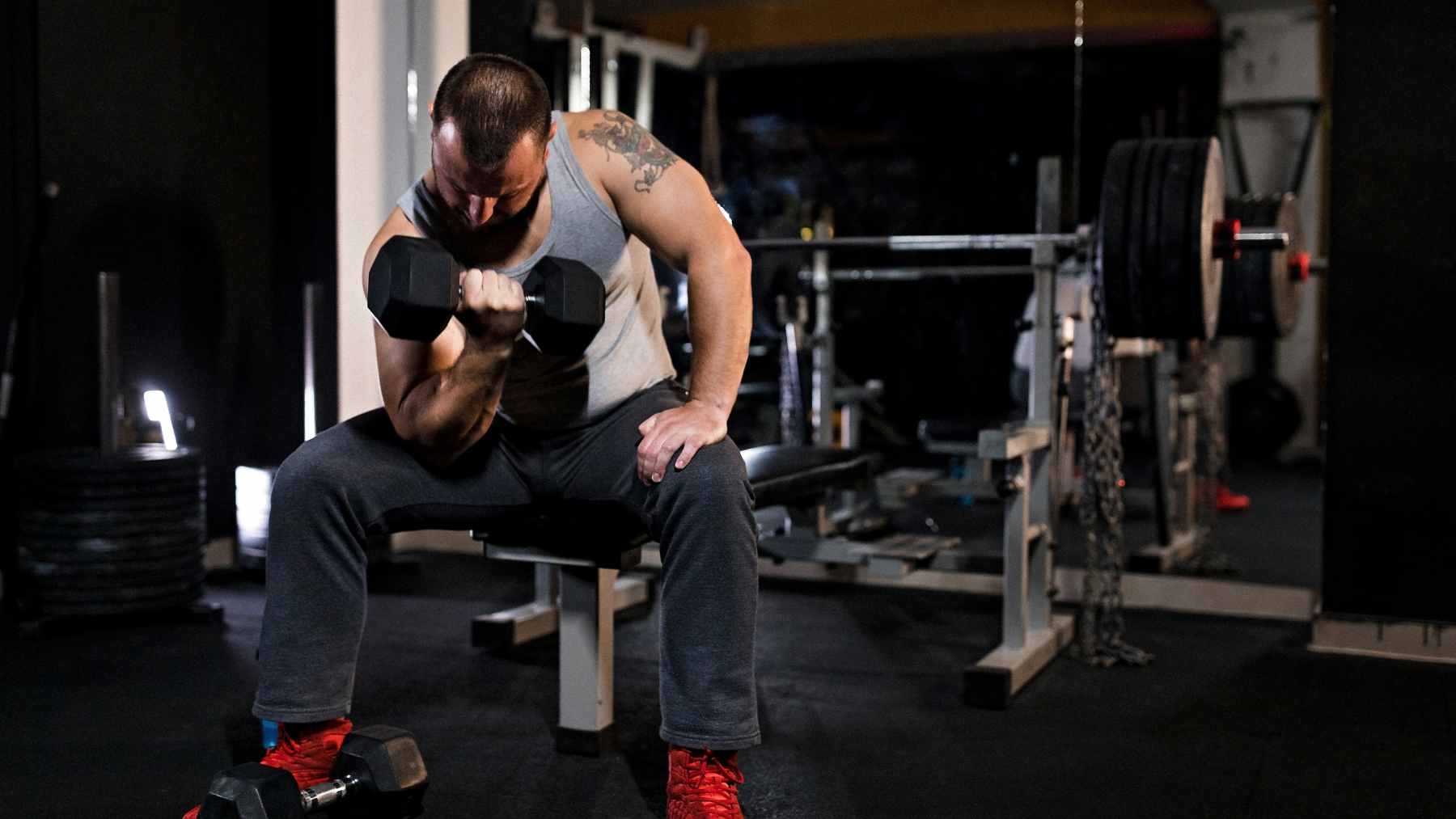
That is why a stripped-down home routine can be so useful. Jeff Sutherland of Midlife Fit Club promotes a full-body session built around dumbbells, simple movement patterns, and a short finisher, with no machines and no complicated moves.
He describes it as “real strength training that you can do at home.”
Why it fits midlife
Training after 40 is not about pretending the body works exactly like it did at 20. The basic rules still matter, including effort, clean reps, and gradual progress, but recovery and time become bigger parts of the equation.
The CDC says adults should get at least 150 minutes of moderate activity each week, along with two days of muscle-strengthening work. Those strength sessions should hit major areas such as the legs, hips, back, abdomen, chest, shoulders, and arms.
Essentially, this workout asks the body to squat, lunge, press, brace, and move with control. That is useful for men who want strength that carries into everyday life, not just the weight room.
The simple routine
Sutherland’s plan uses three rounds. The sequence starts with 15 goblet squats with a 60-lb. dumbbell, followed by 20 goblet reverse lunges with the same weight, 12 dumbbell presses with 35-lb. weights, 12 lateral raises with 20-lb. weights, and 20 ab wheel reps.
Then comes the finisher. It calls for 20 slam-ball thrusters with a 20-pound ball, though a dumbbell squat can stand in if you do not have a slam ball.
Is that exact weight mandatory? No. Sutherland tells men returning to training to start lighter, slow down, and focus on clean reps. More experienced lifters can use heavier weights and push closer to muscle failure, when the muscles can no longer complete another controlled rep.
Why simple still works
The American College of Sports Medicine updated its resistance-training position in March 2026, after reviewing 137 systematic reviews with more than 30,000 participants. Its message was refreshingly plain: consistency matters more than hunting for the perfect routine.
That fits this workout. There are no fancy machines, no novelty exercises, and no circus tricks for social media, just a handful of movements that cover a lot of muscle in a short window.
At the end of the day, that is the point. A plan repeated for weeks is far more useful than a “perfect” plan abandoned after two sessions.
How to move
The goblet squat trains the legs, hips, and core at the same time. Hold the dumbbell in front of the chest, sit the hips back, bend the knees, and rise with control.
The reverse lunge adds a balance challenge, while the dumbbell press builds the shoulders, arms, and upper chest. Anyone who has stumbled on a curb or climbed stairs with groceries knows why strength and balance matter.
The lateral raise targets the side shoulders, and the ab wheel trains the midsection by forcing the body to resist sagging. Sutherland’s cue is simple: “Control every rep, don’t rush. When you start to feel the burn, stay there.”
Strength for daily life
MedlinePlus says improving muscle strength can help people climb stairs, carry groceries, and stay independent. That is the real payoff here, not just bigger arms or a better mirror check.
No ab wheel? Use walkout planks instead. Place the hands on the floor, walk them forward to a strong plank, then return under control.
Small adjustments matter. A lighter dumbbell, slower tempo, or shorter range of motion can make the routine manageable while still keeping the work honest.
A safer way to progress
The easiest mistake is going too heavy too soon. A 60-lb. dumbbell may be fine for one man and reckless for another. The better starting point is a load you can move cleanly while still feeling challenged by the last few reps.
That does not mean chasing pain or ignoring warning signs. Sharp pain, dizziness, or unusual pressure in the chest is a reason to stop. Men with heart disease, uncontrolled blood pressure, or a recent injury should get medical advice before pushing hard.
Do the routine once or twice a week at first, depending on your current fitness and recovery. Add weight only when your form stays solid across all three rounds.
The bottom line
This workout is not magic, and it is not meant to be. Its strength is that it is simple enough to repeat and complete enough to train the whole body.
For men over 40, that may be exactly the right deal. A few weights, controlled reps, and a short session at home can bridge the gap between wanting to get stronger and actually doing the work.
The official resistance-training position stand referenced in this article has been published in Medicine & Science in Sports & Exercise.