
When Lena Koropey’s mother was diagnosed with Alzheimer’s disease 10 years ago, the family faced a difficult question. How could an aging parent receive increasingly demanding care without losing the comfort of home?
Koropey, 48, has chosen an unusual and expensive answer. Rather than move her mother into a nursing home, she plans to build a roughly $450,000 accessory dwelling unit in the backyard, move into it herself, and leave her mother in the familiar main house with a full-time caregiver.
A promise shaped the plan
Koropey said her Ukrainian American upbringing placed a strong emphasis on relatives caring for one another. Her mother had previously moved into her own parents’ Long Island home and became their sole caregiver when they grew ill.
Now Koropey sees herself as continuing that family tradition. Her mother made it clear early on that she wanted to remain close to loved ones, and Koropey said she feels grateful to be able to honor that wish.
That choice is deeply personal, but it is not simple. Her mother’s condition has progressed gradually, and Koropey said every year has become more difficult.
Why the property mattered
After years of searching, Koropey bought a three-bedroom, two-bath ranch-style house in Mattituck, on Long Island’s North Fork, for $550,000 in 2020. The roughly 1,290-square-foot home has one bedroom for her mother, one for the live-in caregiver, and one for Koropey.
Its single-story layout removes the need to climb stairs. A fenced yard also gives her mother room to walk, enjoy nature, and move around in a quieter setting where she feels safe and comfortable.
The property’s biggest advantage, though, is its approximately 1.2 acres of land. Koropey did not know exactly how her mother’s needs would change, but that extra space gave the family options that a smaller lot or apartment could not provide.
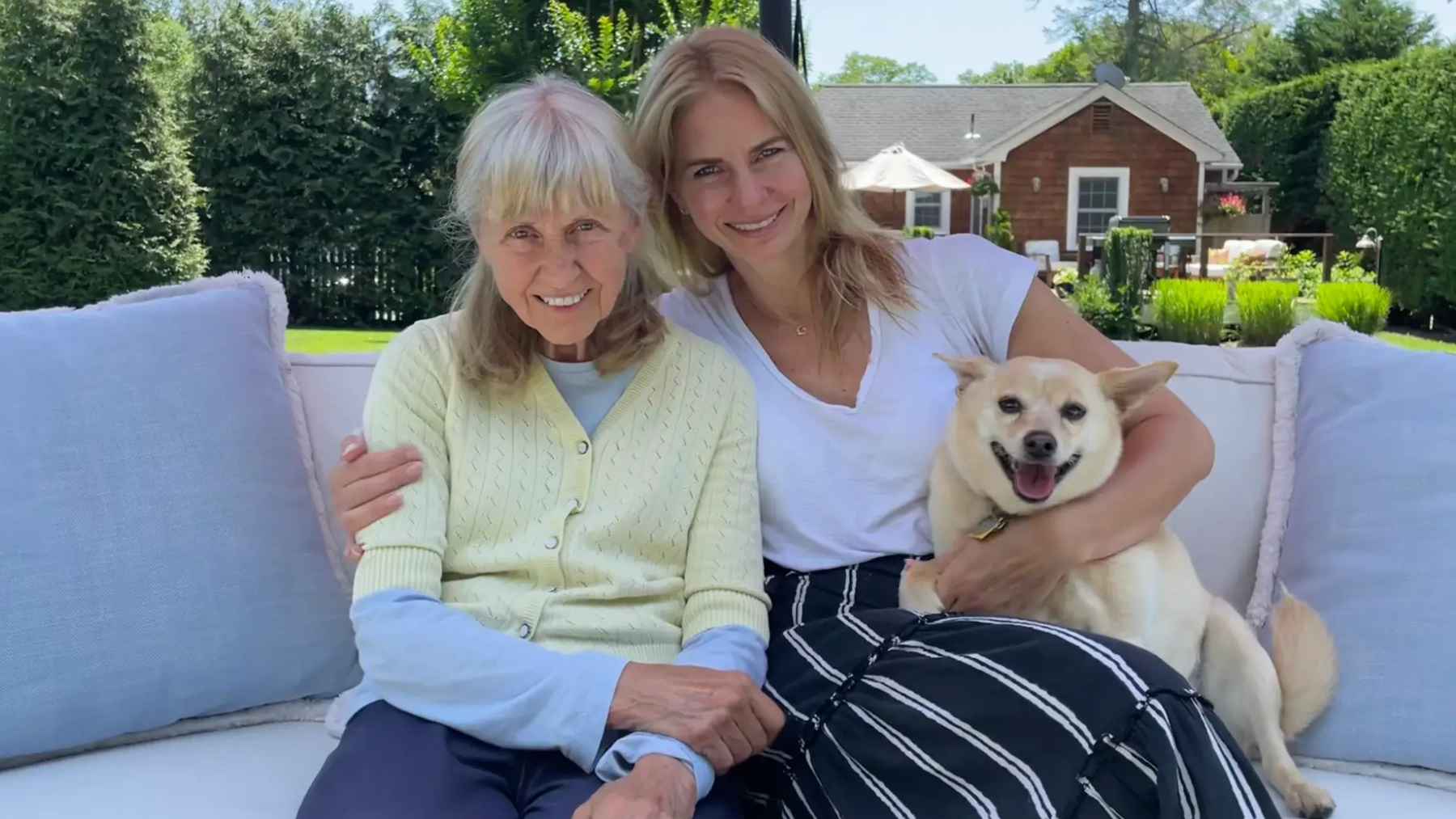
An older mother and her daughter spend time together at home, reflecting the family’s decision to keep her close as her care needs grow.
The cost of staying at home
Koropey’s mother currently lives with a full-time caregiver from Shelter Island Home Care Agency. The agency told Business Insider that live-in care typically costs between $520 and $550 per day.
If that level of coverage is needed every day, the typical price works out to roughly $190,000 to $201,000 a year. That is not necessarily Koropey’s exact bill, but it shows why long-term care can place enormous pressure on a family budget.
Koropey has spent years building spreadsheets and comparing scenarios. She considered moving, adding a small cottage, constructing an accessory dwelling unit, or using a nursing home only as a last resort. In practical terms, the backyard plan gives her mother stability while preserving some personal space for everyone involved.
Building a second small home
An accessory dwelling unit, often called an ADU, is a smaller independent residence built on the same property as a main home. Koropey’s proposed unit would be about 750 square feet, with two bedrooms and one bathroom, essentially functioning as a compact apartment.
The process has already taken several years of planning. Zoning rules, permits, architects, builders, and the septic system all have to be considered, making the project feel much like building another house from the ground up.
Koropey expects construction to cost about $550 per square foot, with the full project estimated at around $450,000. That is nearly as much as she paid for the original house, and she acknowledges that the final price could rise because major building projects often cost more than first expected.
Accessibility comes first
The proposed home would sit as close to ground level as possible and include very few steps. Doors, hallways, and the bathroom would be wide enough for a wheelchair and for a caregiver to assist someone comfortably.
The design is also intended to follow accessibility standards associated with the Americans with Disabilities Act. Although Koropey plans to live in the new unit first, those features give the property more flexibility if her own needs, her mother’s care, or the household arrangement changes later.
That flexibility is the real point. The new building is not meant to replace professional care, but to keep the family close while allowing Koropey’s mother to remain in surroundings she already recognizes.
No perfect answer for families
Caring for a parent with a progressive illness can be physically draining, emotionally difficult, and financially punishing. Some families choose nursing homes and have positive experiences, while others prefer aging in place with relatives and paid caregivers.
As a real estate agent, Koropey said she is seeing more people plan for those choices earlier. Some buyers look for two-bedroom apartments that can eventually house a caregiver, while others seek homes with separate wings, cottages, or enough land for several generations to live nearby.
“There is no perfect solution, but this works for us,” Koropey said. Her plan is costly and complicated, but it gives her the chance to keep a promise and adapt the family’s home as her mother’s Alzheimer’s progresses.
The original personal essay was published by Business Insider.