Could a medicine best known for erectile dysfunction also help protect the brain? The answer is not proven, but a new review of existing drugs has pushed sildenafil, the generic ingredient in Viagra, into serious scientific conversation.
The bigger story is not that anyone should start taking Viagra for memory. It is that researchers are searching drug cabinets for treatments that already have safety histories, hoping one of them could slow cognitive decline before dementia steals daily routines, names, and independence.
Three familiar treatments rise to the top
A study funded by Alzheimer’s Society and led by Dr. Anne Corbett at University of Exeter convened an international panel of 21 dementia specialists, clinicians, industry representatives, and people affected by dementia.
The group reviewed 80 approved drugs and identified three leading candidates for future Alzheimer’s trials, Zostavax, sildenafil, and riluzole. Zostavax, an older shingles vaccine, came out as the strongest overall option, while the other two stood out because they may act on brain processes tied to Alzheimer’s damage.
That matters because Alzheimer’s research has not had an easy road. Even promising new treatments can be complex, expensive, and useful only for some patients, so older medicines with known safety records are getting a fresh look.
Why Viagra caught attention
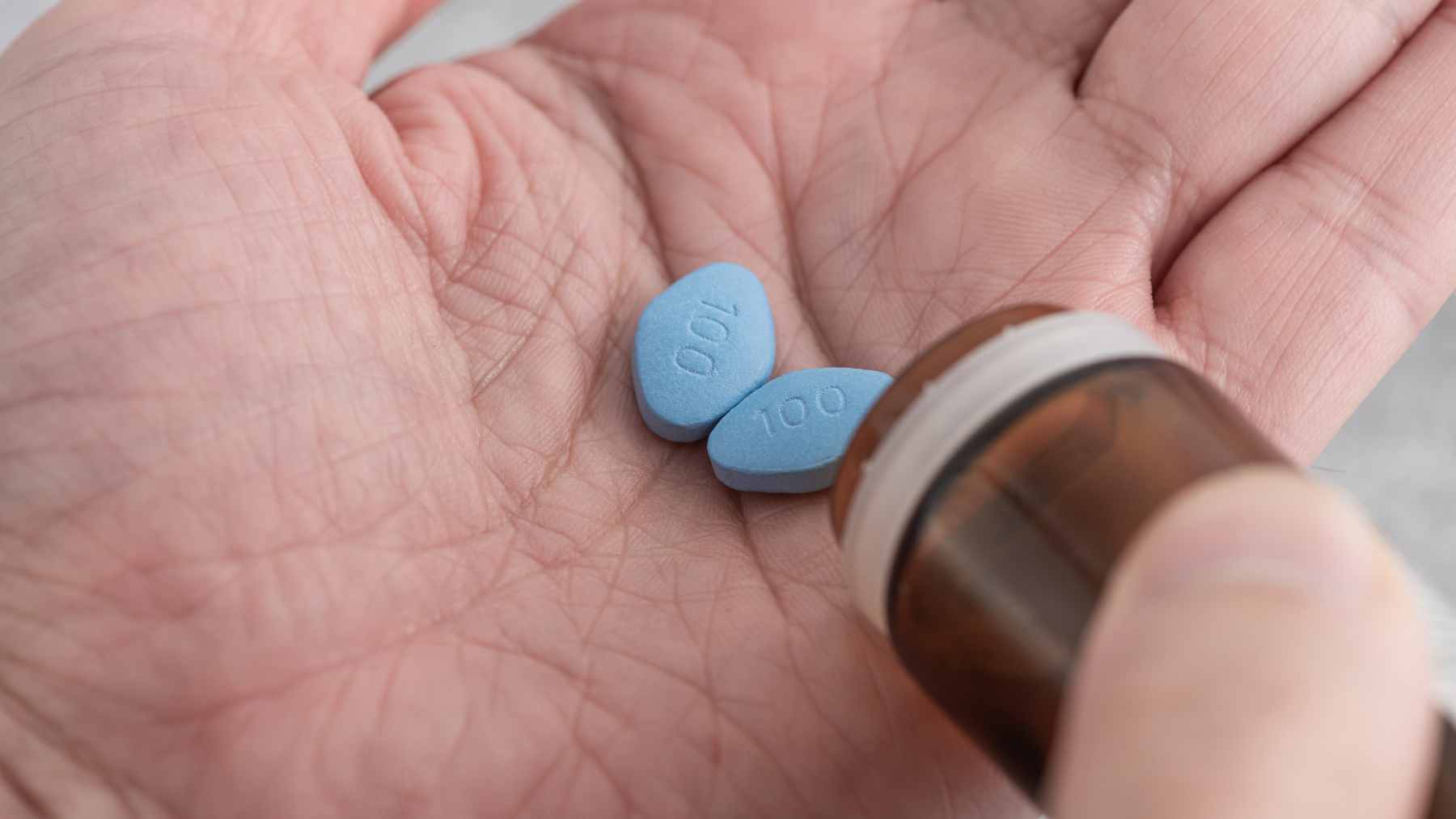
Sildenafil was not designed as a brain drug. It helps widen blood vessels, which is why it is prescribed for erectile dysfunction and pulmonary arterial hypertension, a form of high blood pressure in the lungs.
The Alzheimer’s link comes from several directions at once. Cleveland Clinic researchers analyzed insurance claims from millions of people and found that sildenafil use was associated with 30 percent to 54 percent fewer Alzheimer’s diagnoses after adjustments for other factors.
In lab work using brain cells from Alzheimer’s patients, Dr. Feixiong Cheng’s team reported lower levels of tau after sildenafil exposure. Tau is a protein that can build up into harmful tangles inside the brain, like clutter blocking a busy hallway.
What the data does not prove
Here is the catch. These findings show an association, not proof that sildenafil prevents Alzheimer’s. People who receive the drug may differ from people who do not in ways that medical records cannot fully capture.
That is why Cheng has urged caution. “We need to do more to confirm any potential benefits to patients,” he said, and that means controlled clinical trials, not guesswork from prescription records.
The same caution applies to women who took sildenafil for pulmonary hypertension. Researchers saw a possible protective signal, but the number of cases was limited, so the finding is more of a clue than a conclusion.
The shingles vaccine signal
The vaccine result may sound less flashy than Viagra, but it could matter more for public health. A systematic review cited in the research found that shingles vaccination was linked with about a 16 percent lower risk of developing dementia.
There is a practical wrinkle for American readers. The vaccine highlighted in the study, Zostavax, has not been available in the United States since November 18, 2020, while Shingrix is the current CDC-recommended shingles vaccine for many adults.
Still, the idea remains important. If the immune system, viral reactivation, or inflammation helps shape dementia risk, vaccines may become part of a much larger prevention conversation.
Why repurposing matters
Alzheimer’s has been a stubborn target for drug developers. The World Health Organization says dementia affected 57 million people worldwide in 2021, and Alzheimer’s disease is the most common form, contributing to most cases.
In the United States, the Alzheimer’s Association estimates that 7.4 million Americans age 65 and older are living with Alzheimer’s in 2026. Behind that number are missed appointments, repeated questions, lost keys, and families quietly reorganizing entire lives around care.
Repurposing drugs is attractive because researchers already know a lot about their safety, side effects, and dosing. Corbett put it simply, “Drug repurposing is a vital part of that mix,” because it can turn today’s medicine for one condition into tomorrow’s option for another.
What happens next
The expert panel recommended clinical trials for all three candidates. Those studies would need to test who might benefit, what dose would be safe, how often treatment should be given, and whether the effect is strong enough to matter in real life.
For now, the message is careful optimism. Nobody should use sildenafil, riluzole, or any shingles vaccine as an Alzheimer’s treatment unless a physician recommends it for an approved medical reason.
But the search itself is worth watching. Sometimes progress does not begin with a brand-new miracle drug, but with a familiar medicine being asked a new question.
The main study has been published in Alzheimer’s Research & Therapy.