Muscle aging is not only about fibers getting smaller. Part of the problem may begin when a chemical signal that wakes muscle stem cells becomes damaged and can no longer connect properly with its receptor.
Researchers have now found that a sulfur-based compound called LASSS can protect that signal and make it bind more than twice as strongly in laboratory tests.
The finding is early, based on isolated proteins, rat cells, and a small mouse experiment, but it points to a new way of supporting the body’s own repair machinery.
A repair signal that wears down
Kahona Zushi and Miyumi Seki shared first authorship on the study, which was led by Professor Ryuichi Tatsumi at Kyushu University’s Faculty of Agriculture. Their work focuses on hepatocyte growth factor, better known as HGF, a protein that acts as a wake-up call for muscle stem cells.
HGF normally rests in the supportive material around muscle fibers. When a muscle is injured, stretched, or placed under mechanical stress, the protein is released and attaches to a receptor called c-Met, telling satellite cells to multiply, mature, and help rebuild damaged fibers.
That system becomes less reliable with age. Earlier research by the group found that HGF can undergo nitration, a chemical change that alters two important points in the protein’s receptor-binding region.
Tatsumi said HGF “is not necessarily missing as we age” but can be “chemically altered after it is made,” rather like a rusty key that is still present but no longer fits its lock.
Why LASSS stood out
The researchers tested two antioxidant compounds containing chains of three sulfur atoms. One was glutathione trisulfide, while the other was lipoic acid trisulfide, shortened to LASSS.
At first, both compounds reduced nitration and helped preserve HGF activity in laboratory experiments. But when the team increased the amount of each compound and removed any material that had not reacted, only LASSS produced the more striking result.
HGF exposed to LASSS displayed more than twice the receptor-binding affinity of untreated HGF and became more resistant to nitration. “This exceeded our expectations,” Tatsumi said, describing the enhanced form as “Super HGF.”
The team suspects that LASSS subtly remodels the protein instead of acting only as an antioxidant.
What happened in cells and mice
Tests using satellite cells collected from adult male rats showed why receptor binding matters. Nitrated HGF largely lost its ability to activate those cells, while pretreatment with the sulfur compounds preserved the signal needed to begin the repair process.
A 2025 study from the same research line had already connected short-term muscle disuse with increased HGF nitration in young mice. In the new experiment, 12 young male mice were divided into four groups, with some receiving LASSS for three days before five days of hind-limb unloading.
LASSS prevented the increase in HGF nitration seen in untreated mice, while glutathione trisulfide did not provide measurable protection. Still, the experiment tracked chemical damage to HGF, not restored strength, movement, or long-term muscle growth. That distinction matters.
It is not a treatment yet
The findings do not show that LASSS reverses sarcopenia, the age-related loss of muscle strength and tissue. They also do not prove that the compound is safe or effective in people, and the animal test used only three young male mice in each group.
The paper’s authors say studies in aging animals are now needed. Researchers will also have to determine dosing, possible side effects, how long the effect lasts, and whether stronger HGF signaling improves muscle mass, tissue repair, and physical performance.
LASSS should not be confused with ordinary lipoic acid supplements. Regular lipoic acid did not reproduce the enhanced receptor binding in the study, so buying an over-the-counter product would not recreate the experimental result. For now, this remains a research lead, not a medical treatment.
Why the discovery matters
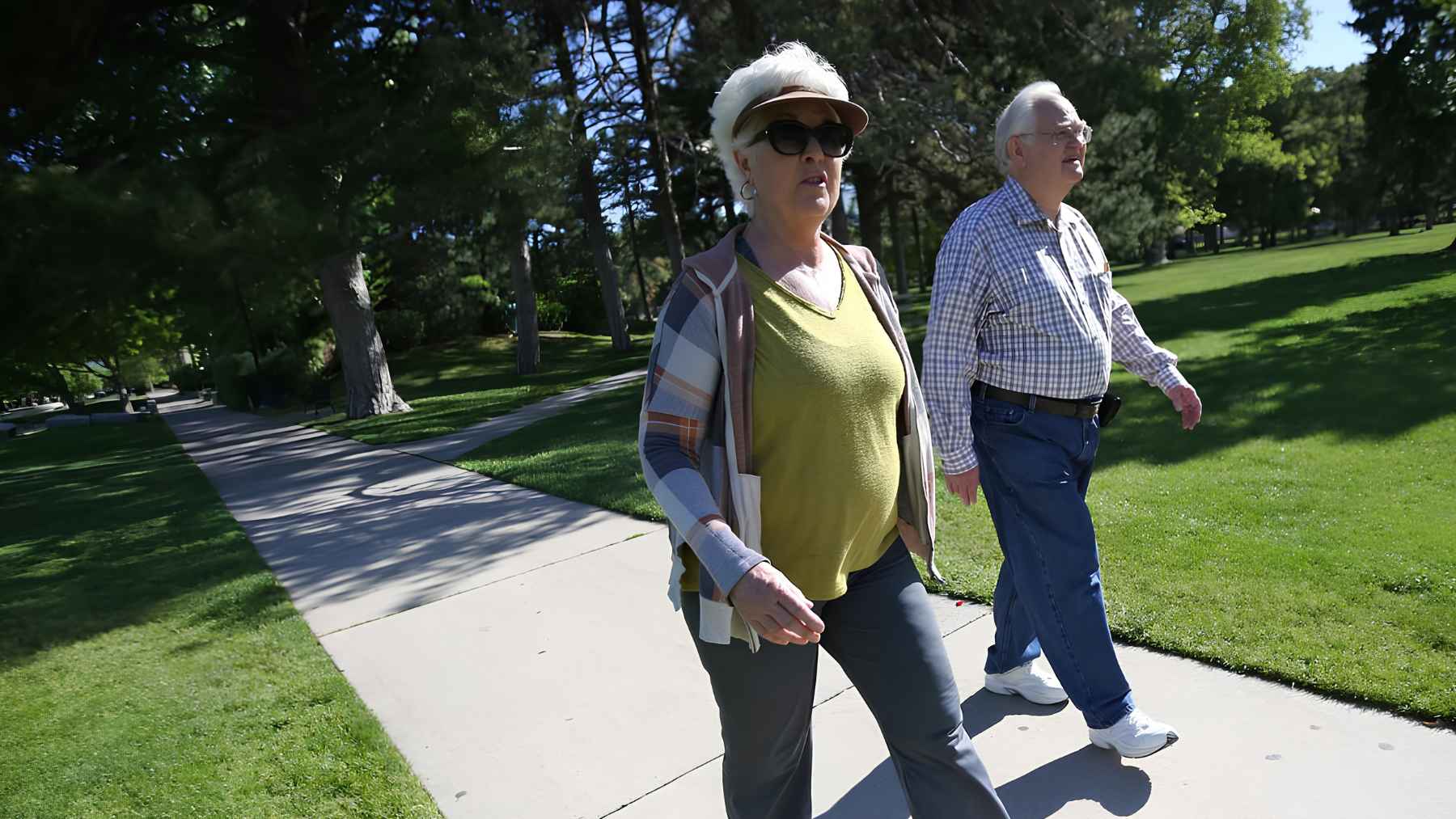
Age-related muscle decline can turn ordinary moments into obstacles, from climbing stairs to carrying groceries or rising from a chair. Studies have reported that after age 50, leg muscle mass may fall by 1 to 2% each year, while strength may decline by about 1.5 to 5%.
A therapy that protects natural repair signals could eventually be useful not only during aging but also after extended bed rest, immobilization, or other periods of severe inactivity.
The researchers believe the biology may be relevant across mammals, including humans, dogs, and cats, although that possibility has not been clinically tested.
LASSS has not yet rebuilt aging muscle. What it has done is reveal that a damaged repair signal may be chemically protected and possibly strengthened. That gives scientists a clearer target for the next round of experiments.
The study was published on July 24, 2026, in Scientific Reports.