A 63-year-old woman who already exercised regularly and watched her sugar intake tried an unusually strict experiment. For two days, she ate almost nothing but plain oatmeal, hoping to lower cholesterol that had been rising alongside her weight and worrying family history of early heart attacks.
Her blood tests moved in the right direction, and a month later they looked better still. But the experience also left her listless, grumpy, and unsteady, making one point hard to miss. The so-called “oat cure” may produce rapid changes, yet it is far more restrictive than an ordinary bowl of breakfast oats.
What the 48-hour oat cure involved
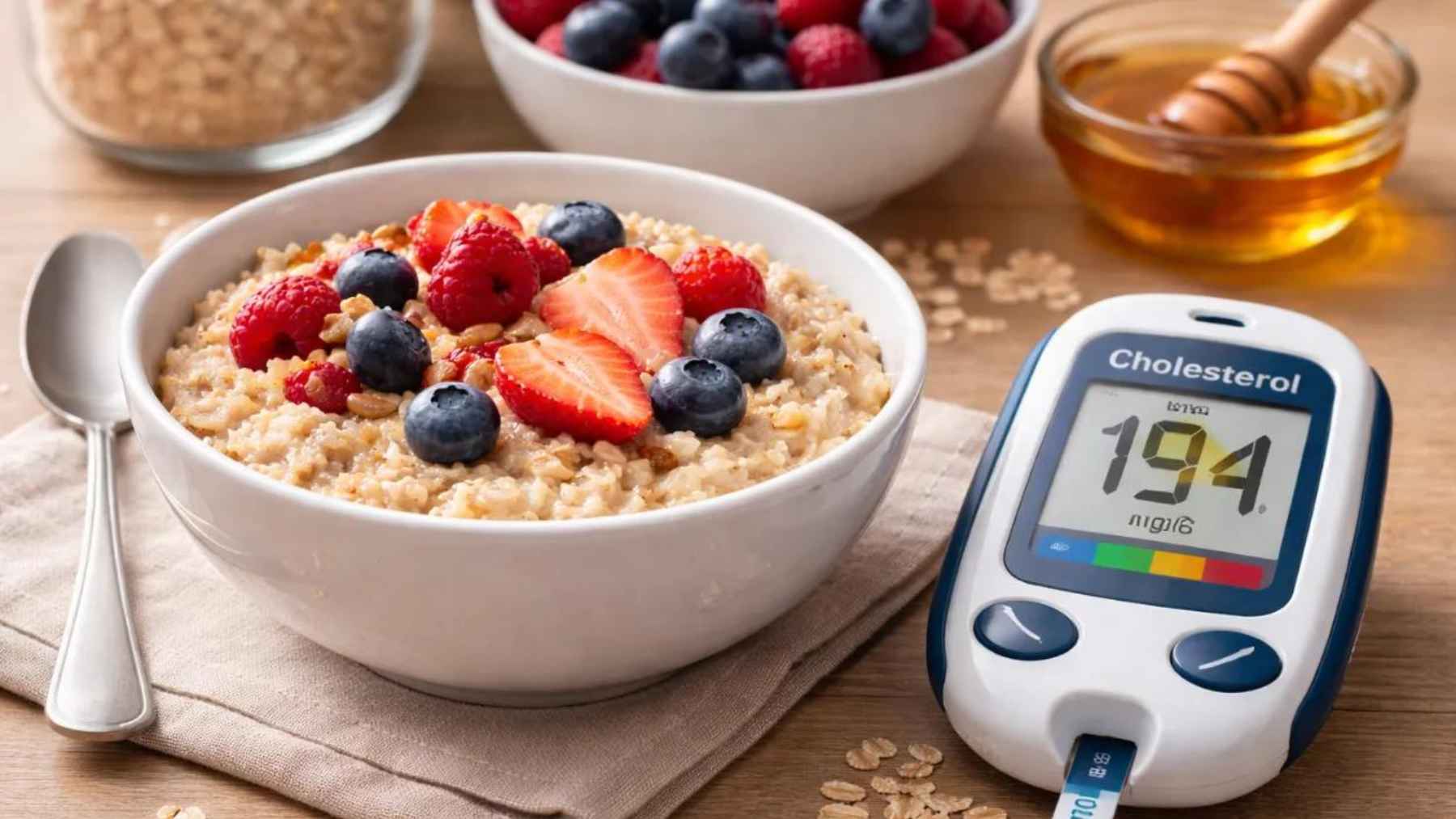
The German protocol used three oatmeal meals a day. Each contained 3.5 oz. of rolled oats cooked in water, for a daily total of about 10.6 oz., with only small amounts of apple, pear, berries, spinach, or leeks. Salt, sugar, and sweeteners were off the table.
In the personal trial, each serving was prepared with about 13.5 fl. oz. of water. Unsweetened drinks were allowed, but the total food intake came to roughly 1,000 calories a day, well below what most adults normally eat.
At first, the large portions seemed filling. Satisfaction was another matter. By the second day, the writer described the meals as “Dickensian gruel” and reported feeling wobbly while crossing roads, even though she was barely hungry.
Her cholesterol changed quickly
Before the experiment, her total cholesterol was about 239 mg/dL. After 48 hours, it had fallen to roughly 221, a drop of 7.6%, while LDL cholesterol moved from about 145 to 138 mg/dL.
One month later, she reported total cholesterol of about 204 and LDL of around 120. Her clinic results also showed a loss of nearly 4.4 lbs. and a BMI change from 28.1 to 27.6.
Those numbers are striking, but this was one person without a control group. Her experience cannot prove that oats alone caused every change, especially because the diet sharply reduced calories and replaced her normal meals.
What the German trial found
The research behind the plan involved 68 adults in two randomized controlled studies. Participants were 45 to 70 years old, had overweight or obesity, and had metabolic syndrome, a cluster that includes abdominal obesity plus problems such as high blood pressure, abnormal blood sugar, or unhealthy blood fats.
In the short trial, 17 people followed the oat diet and 15 completed a calorie-reduced control diet without oats. After two days, the oat group’s LDL cholesterol fell by 10% and total cholesterol by 8%. Participants also lost about 4.4 lbs. on average, while blood pressure declined slightly.
Marie-Christine Simon of the University of Bonn called the LDL change “a substantial reduction,” while stressing that it was not directly comparable with modern medication.
Cholesterol levels also tended to remain below baseline during a six-week oat-free follow-up, although the study was too small to establish a lasting preventive effect.
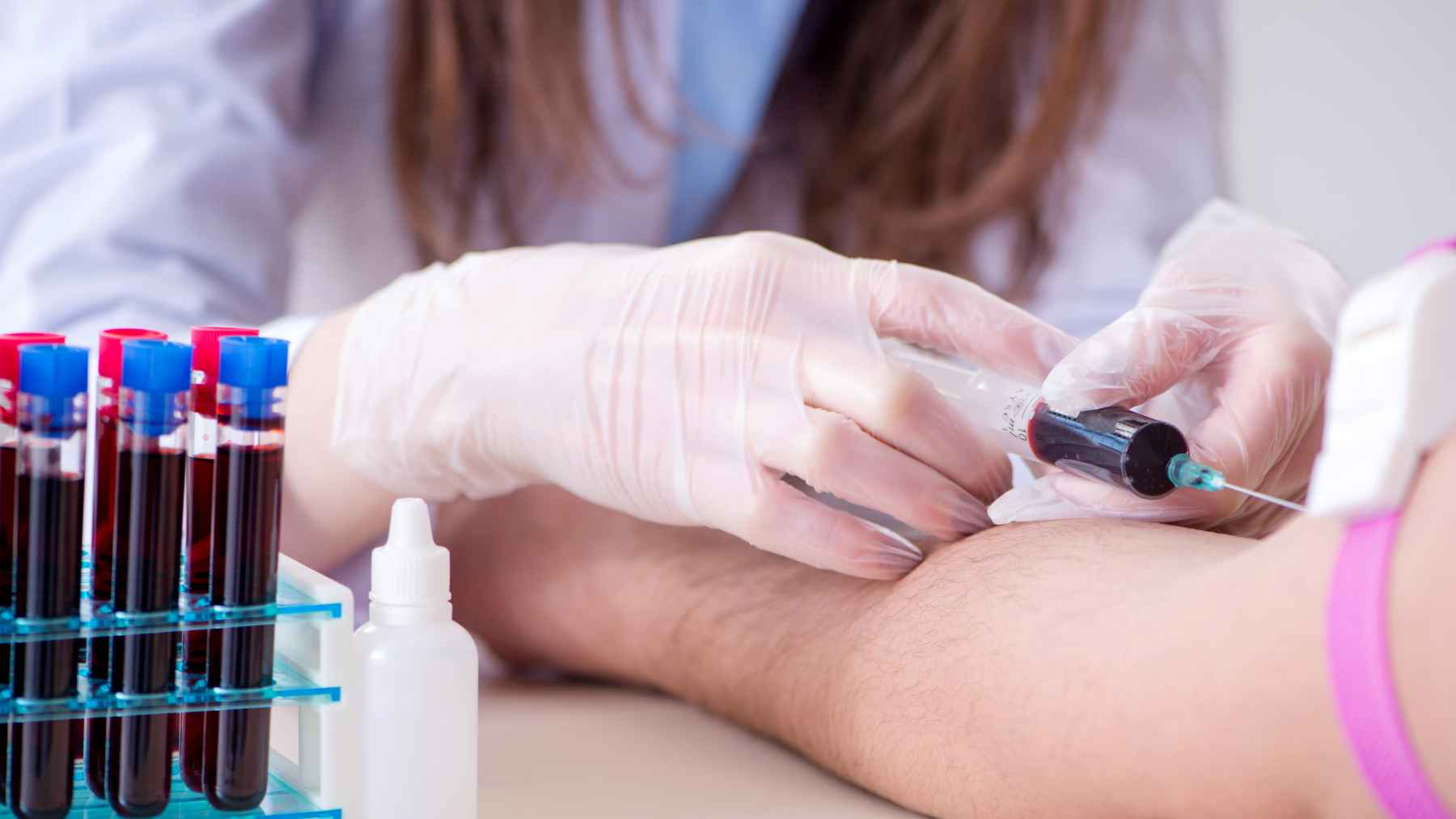
A blood sample is collected for laboratory testing, illustrating the cholesterol measurements used to track changes after the two-day oatmeal diet.
Why oats may affect LDL
Oats contain beta-glucan, a soluble fiber that turns gel-like in the digestive tract. This can reduce the absorption of cholesterol and fats and increase the removal of bile acids, which pushes the body to use more circulating cholesterol.
The study also pointed to another possible pathway. Lead author Linda Klümpen found that the oat diet altered gut bacteria and increased plant-derived compounds in the blood, including substances created when microbes break down oat components.
In practical terms, the gut may act like a small processing plant. It transforms parts of the oats into chemicals that could help regulate cholesterol, although the researchers said this mechanism still needs confirmation in larger and more diverse groups.
Why this is not a statin replacement
The study did not test whether the oat cure prevents heart attacks, replaces medication, or safely works for everyone. Its short-term group was small, the participants already had metabolic syndrome, and the researchers acknowledged differences between individuals and an uneven balance of men and women.
Sarah Berry of King’s College London also urged caution about using a two-day oat binge as the main cholesterol strategy. She favored a broader eating pattern that combines oats with nuts, seeds, vegetables, and plant sources of protein, rather than removing almost everything else.
That matters for anyone with a strong family history of cardiovascular disease. Oats can support a heart-healthy diet, but decisions about statins depend on overall risk and should be made with a clinician, not postponed because of a dramatic two-day food experiment.
What the oat cure really shows
The most convincing message is not that everyone should live on porridge for a weekend. It is that a concentrated oat intervention, paired with calorie restriction, produced measurable short-term changes in a specific high-risk group and may work partly through the gut microbiome.
For everyday life, a balanced bowl is easier to sustain than six servings of plain porridge across 48 hours. Oats may help, but the rest of the diet, medical history, and appropriate treatment still matter.
The main study was published in Nature Communications.