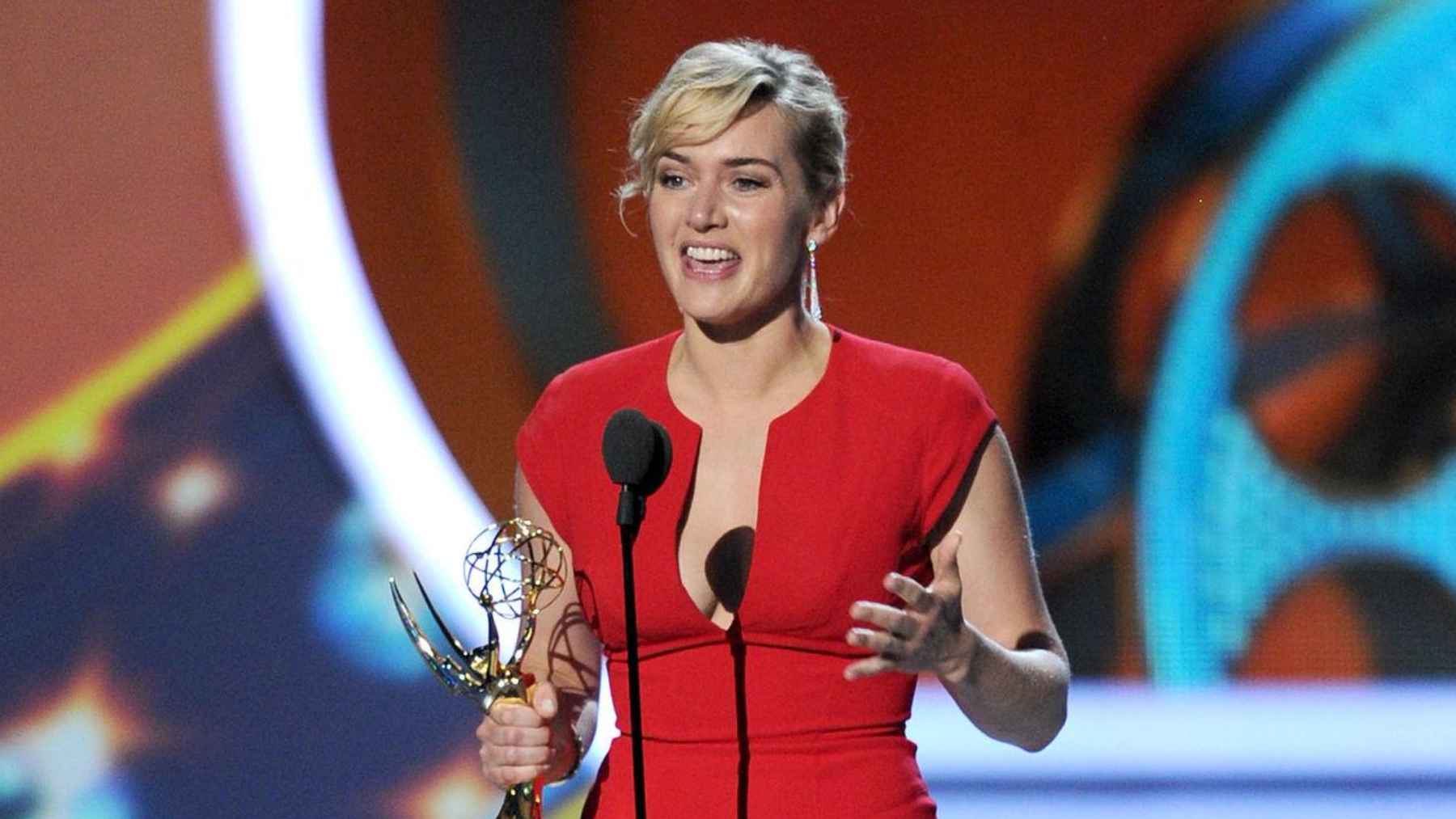
Kate Winslet was standing at the height of professional recognition when she shared a deeply ordinary truth. Accepting an Emmy for “Mildred Pierce” in 2011, she said, “It doesn’t matter how old you are, or what you do in your life, you never stop needing your mum.”
The line is not really about refusing to grow up. It is about recognizing that careers, money, experience, and public praise do not automatically replace the comfort of being known by someone who was there before the résumé, the deadlines, and the difficult adult decisions.
The moment behind the words
Winslet delivered the quote at the 63rd Primetime Emmy Awards. She had just won Outstanding Lead Actress in a Miniseries or Movie for playing the title character in HBO’s “Mildred Pierce,” and she used part of her acceptance speech to thank her mother.
That setting gives the sentence much of its force. By then, Winslet had already become an international star through “Titanic” and won the Academy Award for Best Actress for “The Reader”. Yet the person holding another major trophy was still willing to say that achievement had not made her emotionally self-contained.
What “needing” a mother means
What does an accomplished adult still need from a mother? Often, it is not permission or practical rescue. It may be a familiar voice, honest advice, a safe place to admit fear, or the relief of speaking with someone who remembers the person beneath the job title.
That does not mean every mother-child relationship is close, healthy, or even present. For people who experienced loss, estrangement, neglect, or abuse, the wider lesson can apply to another trusted caregiver, a grandparent, a sibling, a mentor, or chosen family. The heart of the quote is dependable connection.

The data behind lifelong support
Recent survey data shows that parental support remains part of adult life for many people. In a 2024 Pew Research Center survey of Americans ages 18 to 34 with a living parent, 31% said they relied on their parents a great deal or a fair amount for emotional support, while another 29% relied on them some.
Advice also keeps flowing long after childhood. Some 68% turned to parents at least occasionally about finances, 67% did so about careers or jobs, and 62% sought guidance about physical health. Adults in their early 30s were just as likely as younger respondents to report substantial emotional reliance on parents.
The numbers do not suggest that every adult has the same experience or needs the same amount of help. They do show that emotional independence rarely arrives as a clean break. For the most part, relationships change shape rather than simply ending.
Vulnerability can show strength
Needing support is sometimes treated as the opposite of independence. But adulthood is not a contest to see who can carry every worry alone. In practical terms, maturity can mean knowing when to make a decision yourself and when to call someone whose judgment you trust.
The relationship can also become more mutual with time. Pew found that 26% of young adults said a parent relied on them a great deal or a fair amount for emotional support, rising to 35% when respondents were speaking about their mothers. The lifelong bond is not always a one-way shelter. It can become a shared roof.
Why the quote still connects
Winslet’s words are especially memorable because they were spoken during a celebration of personal success. The Television Academy records that she later earned a second acting Emmy for “Mare of Easttown” in 2021, another performance centered on a complicated mother facing grief, work pressure, and family strain.
Still, no knowledge of her filmography is required to understand the message. A stressful workday, a frightening medical appointment, or a life-changing decision can leave even a confident adult wanting to call home. One conversation can make the room feel less heavy.
How to use the message today
The quote can be applied through small actions rather than grand declarations. Call the person who has supported you, ask how that person is doing, seek advice when it would genuinely help, and say thank you while there is still time to say it. Gratitude should not be saved for an awards stage.
Boundaries still matter, especially where a relationship is harmful. But in healthy families and trusted support networks, accepting care does not cancel strength. To a large extent, it helps build it.
At the end of the day, growing older changes the relationship. It does not necessarily erase the need for it.
The official record of the award and acceptance speech has been published by the Television Academy.