
More than eight decades after Simone Weil wrote through the darkness of World War II, one sentence still cuts through modern debates about dignity. In a concise English rendering, she argued, “In the heart of every human being, despite the experience of crimes suffered, there remains an expectation that good will be done.”
The thought comes from La Personne et le sacré, usually translated as Human Personality, an essay from her final period in wartime London. It was not cheerful reassurance offered from a safe distance. Weil was trying to understand justice while occupation, persecution, and violence were tearing Europe apart.
A hope that survives cruelty
Read in context, Weil was not saying that people are naturally kind or that suffering automatically makes anyone better. Her point was more unsettling. Even after cruelty, something deep within a person still expects that harm should not happen and that goodness ought to be possible.
That expectation appears in the simple inner question, “Why am I being hurt?” For Weil, the question matters because it reveals a basic sense of injustice before legal arguments, political slogans, or social status enter the picture. The voice may be quiet, but it is not meaningless.
What Weil called sacred
Weil challenged the idea that a person is sacred mainly because of personality, reputation, intelligence, or membership in a respected group. Those things can change, disappear, or be judged differently by society. What deserves protection, she argued, is the vulnerable human core that recoils when evil is inflicted.
In practical terms, this shifts attention away from prestige and toward the person who can be wounded. A stranger with no influence still possesses that same expectation of good. So does someone who has been ignored, humiliated, or pushed to the edge of public life.
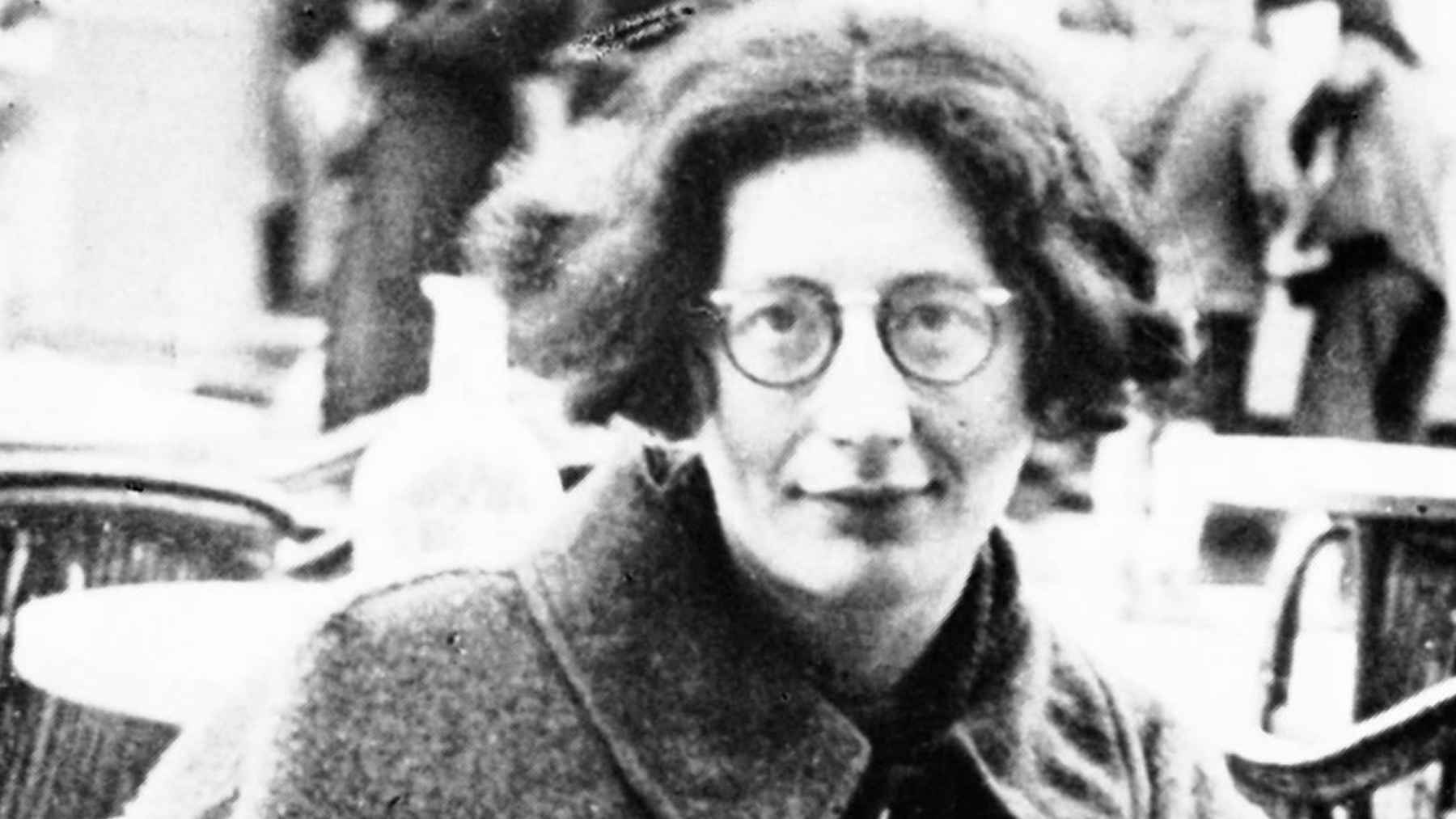
A black-and-white portrait of Simone Weil, the French philosopher whose wartime writings explored suffering, dignity, justice, and moral responsibility.
A philosopher who entered factory life
This concern was not only theoretical. Born in Paris in 1909, Weil became a philosophy teacher and political activist, but she also stepped away from the classroom to work as an unskilled laborer in factories, including Renault. She wanted direct knowledge of industrial work rather than an opinion formed entirely from books.
The experience left a lasting mark on her thinking. Repetitive labor, pressure from supervisors, exhaustion, and the loss of control over time showed her how institutions can reduce people to functions. Anyone who has felt invisible at work can recognize the problem, even if the setting today looks different.
War, exile, and the Free French
Born into a Jewish family, Weil left Paris with her relatives after Germany’s 1940 offensive and later traveled from France to New York.
She soon felt too distant from the suffering of her country, so she moved to London and worked with the Free French movement associated with Charles de Gaulle. There she drafted proposals about France’s political and moral reconstruction after liberation.
Her health deteriorated sharply during those months. Weil had tuberculosis and restricted her food intake while people in occupied France lived on scarce rations, a decision that worsened an already fragile condition.
She died on Aug. 24, 1943, at age 34, and biographers describe the circumstances as more complex than a simple story of voluntary starvation.
Why rights were not enough
One of the essay’s boldest arguments concerns the language of rights. Weil did not claim that laws or rights were useless. Instead, she warned that legal vocabulary can fail to express the deepest injury suffered by someone who has been abused or stripped of dignity.
A victim may need a court, a remedy, and enforceable protection. But the first cry is often more basic than a legal demand. It says that something happened which should never have happened, and that response calls for attention before it becomes a case file or political talking point.
Justice begins by paying attention
For Weil, attention was a moral act. It meant listening closely enough to recognize pain that may be confused, poorly expressed, or nearly silent. The people most exposed to harm are not always those best equipped to explain it in polished language.
That idea gives her wartime sentence its continuing force. Justice is not only a system of rules applied after damage occurs. It is also the willingness to notice another person’s vulnerability early and refuse to treat suffering as background noise.
A lasting moral test
Weil’s conclusion is demanding rather than sentimental. Human beings may commit terrible acts, yet the expectation that good should be done remains a standard by which those acts can be judged.
That small inner expectation is fragile, but in her philosophy it becomes a compass for compassion, obligation, and justice.
What would change if institutions listened for that quiet expectation before harm became routine? Weil did not offer an easy program or promise that goodness would win. She offered a test of moral seriousness, starting with whether we truly notice the person who is suffering.
The original essay La Personne et le sacré was published posthumously in Gallimard’s 1957 collection Écrits de Londres et dernières lettres.