What does it really mean to be free? A popular line linked to Immanuel Kant says a person is not free by breaking every rule, but by choosing to obey reason within. The message turns the everyday idea of freedom on its head.
For the German philosopher, freedom was not life without limits. It was the power to choose principles through reason and accept responsibility for them. Doing whatever feels good can make a person less free, not more.
The quote is a paraphrase
The familiar wording says, “A human being is not truly free by breaking all the rules, but by choosing to obey reason within.” It captures the idea in the source material, yet the documented formulation in the philosopher’s work is different. The comparison suggests it is safest to treat the line as a modern paraphrase.
In Groundwork of the Metaphysics of Morals, he writes that “a free will and a will under moral laws are the same.” The point is not that rules always create freedom, rather, rational self-government does.
Freedom is not impulse
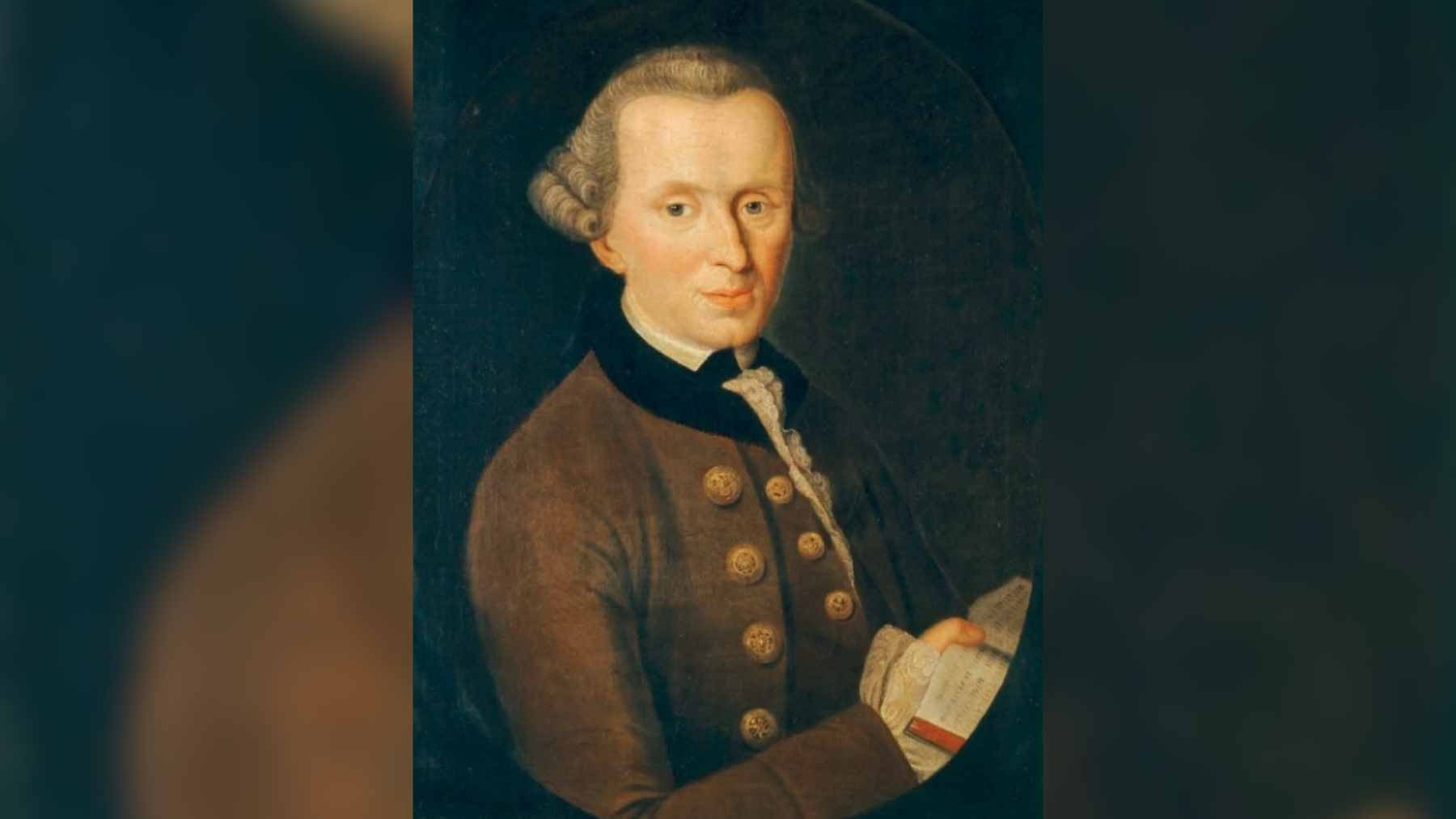
The thinker, who lived from 1724 to 1804, became a central figure in modern philosophy. He helped bridge early modern rationalism and empiricism, while arguing that the mind actively structures experience.
The Stanford Encyclopedia of Philosophy identifies human autonomy as the central idea of his critical philosophy.
Autonomy does not mean inventing a private rule that excuses whatever you want to do. It means letting reason guide the will instead of fear, appetite, anger, social pressure, or reward. A craving can feel powerful, but being pushed around by it is hardly independence.
The opposite is heteronomy, a technical word for being directed by something other than rational moral choice. Someone who tells the truth only to avoid punishment may behave correctly, yet the decision still comes from fear.
In this framework, the deeper moral act comes from recognizing honesty as a duty.
Reason sets a universal test
How can anyone tell whether a self-chosen rule is rational rather than convenient? The answer is the categorical imperative, his test for moral principles. One version says people should act only on a rule they could reasonably want everyone to follow.
Take a promise–breaking it may solve an immediate problem, much like slipping out of a commitment when the day becomes inconvenient. But if everyone made promises with no intention of keeping them, promises would lose their meaning.
That is why freedom is tied to consistency. You do not get one moral standard for yourself and another for everybody else. Rational freedom asks whether your choice could work as a fair rule in a shared world.
Two views of the same person
He also tried to explain why human actions can look determined and free at once. In the world we observe, events follow causes, including biology, habits, upbringing, and circumstances. He called this the phenomenal standpoint, meaning the world as it appears in experience.
From the moral standpoint, people must also regard themselves as capable of choosing and answering for their actions. This connects with the noumenal or intelligible standpoint, which considers reality beyond ordinary sensory experience. It does not mean each person has two separate bodies.
This part of the theory remains debated. Freedom cannot be measured like temperature or seen under a microscope. Instead, he argued that moral obligation requires us, for practical purposes, to think of ourselves as free.
Responsibility comes with freedom
There is a hard edge to this idea. Once people claim the ability to choose rationally, they also accept accountability. Freedom without responsibility becomes permission to follow the strongest impulse in the room.
Everyday examples make the point clearer. Returning a lost wallet, keeping a difficult promise, or refusing to cheat when nobody is watching may restrict what feels easiest. Yet those limits can express considered principles rather than outside pressure.
The quote does not praise obedience for its own sake. It asks a tougher question: are you following a rule because you have examined it and found it defensible, or are you reacting to desire, fear, or the crowd?
Why the idea still matters
This distinction matters whenever freedom is used to defend conduct that harms others. He did not define rightful liberty as unlimited choice. His political theory held that one person’s freedom must coexist with everybody else’s under a universal law.
Rational self-rule is not blind submission to every command or custom, but a compass for decisions that can be defended consistently and do not reduce others to tools.
The main work discussed here, Groundwork of the Metaphysics of Morals, was first published in 1785, with a modern edition published by Cambridge University Press. A modern edition of the main work discussed in this article has been published by Cambridge University Press.