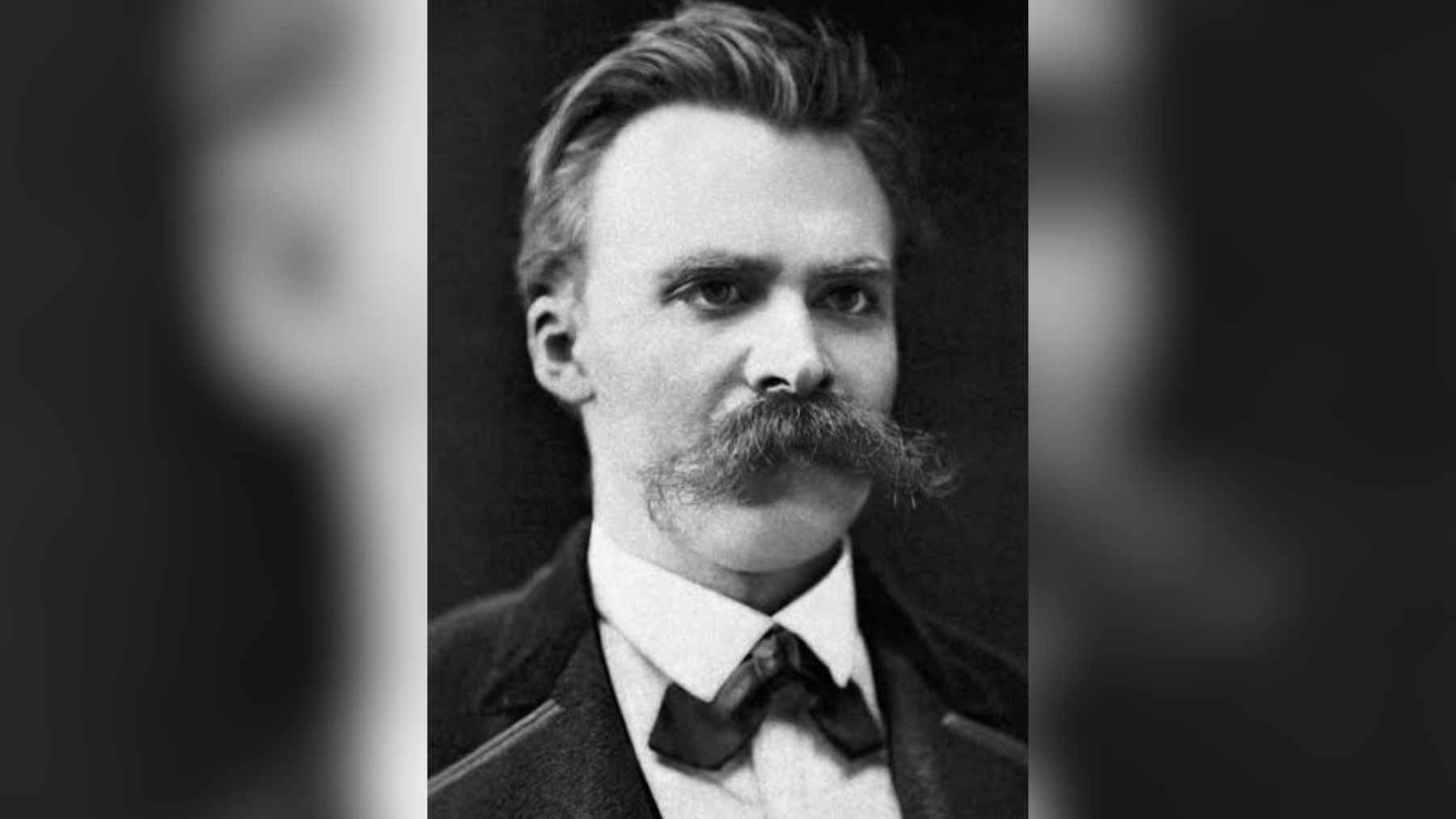
A line often used to sum up Friedrich Nietzsche’s philosophy says, “Man must take responsibility for his life, not ask others to live for him.” Whether read as a direct quote or a modern paraphrase, the idea captures one of the sharpest points in his work.
For the German thinker, a human life could not be handed over to the crowd, the church, tradition, or any comfortable moral script. His challenge was simple, but not easy. What happens when no one else can tell you what your life is supposed to mean?
A philosopher against the herd
Friedrich Nietzsche was born in 1844 in Röcken, then part of Prussia, and became one of the most disruptive voices in modern philosophy.
The Stanford Encyclopedia of Philosophy describes him as a cultural critic known for attacking traditional European morality, religion, and many of the social beliefs tied to modern life.
His talent was recognized early. According to the Leipzig University Archive, he studied there from 1865 and was named doctor of philosophy in 1869 without an exam, without submitting a dissertation, and in absentia, meaning he was not present for the ceremony.
Responsibility without excuses
At the center of his thought is a demanding idea. A person should not hide behind the group, wait for rescue, or treat weakness as proof of moral superiority.
That does not mean his philosophy is a simple self-help slogan, it is much harder than that. He wanted people to examine the values they inherited and ask whether those values helped life grow or quietly drained it.
In practical terms, the German philosopher was suspicious of a morality that praises obedience, guilt, and submission simply because they make people easier to manage. The question he leaves behind is uncomfortable: are we living by our own judgment, or just repeating what the herd approves?
What “God is dead” meant
Nietzsche’s famous claim that “God is dead” was not just a provocation against religion. It was his diagnosis of a historic shift in Europe, where Christian belief no longer held the same cultural authority over morality and meaning.
The problem, as he saw it, was what came next. If old values lose their power, people can fall into nihilism, a state where life feels empty because no higher purpose seems to hold.
The Internet Encyclopedia of Philosophy explains that he tied this crisis to the “death of God” and to the need for a revaluation of values.
That is where responsibility becomes unavoidable. Without a ready-made moral map, each person has to face the blank page. For Nietzsche, that blank page was frightening, but it was also a chance to create.
The problem with slave morality
One of his most controversial ideas is the contrast between “master morality” and “slave morality.” The first begins with strength, nobility, and self-affirmation. The second grows from resentment, turning weakness into virtue and strength into evil.
The Internet Encyclopedia of Philosophy notes that, in Nietzsche’s account, slave morality reverses older aristocratic values and presents meekness, mildness, and servility as “good.” It also links that moral reversal to promises of reward beyond earthly life.
To many modern readers, this sounds harsh, but it should not be flattened into cruelty. The deeper point is that he wanted to expose hidden motives inside moral language. Sometimes, he warned, what looks like goodness may actually be fear wearing a polite mask.
Will to power
The “will to power” is another idea that is easy to misunderstand. It does not only mean ruling over other people, barking orders, or chasing status.
For the most part, it means the drive to overcome resistance, shape one’s life, and become more capable. A student struggling through a difficult book, an artist breaking an old habit, or a worker choosing a harder but more honest path can all show something like this force.
That is why self-mastery matters so much here. The real battle is not always outside us. Often, it is the quiet fight against laziness, fear, resentment, and the need to be approved by everyone in the room.
The camel, the lion, and the child
In Thus Spoke Zarathustra, the philosopher uses three symbols to describe a path of inner change. The camel carries heavy burdens, the lion says no to old commands, and the child represents a fresh beginning.
A Cambridge University Press translation presents this sequence as the “three metamorphoses of the spirit,” moving from camel to lion and then to child. The lion wins freedom from old duties, but the child shows the creative “yes” needed to build new values.
It is a strange image, but a clear one. First we carry what we are given, then we resist. Finally, if we are strong enough, we create without needing permission.
Why this still matters
Nietzsche’s challenge still feels modern because many people now live surrounded by ready-made opinions. Social media, politics, family expectations, school pressure, workplace culture, and public shaming can all become new versions of the herd.
His answer was not comfort, it was responsibility. No one else can fully live your life, make your choices, carry your consequences, or decide what kind of person you are becoming.
That may sound lonely. But for him, it was also freedom. At the end of the day, what he was trying to do was push human beings toward a life strong enough to create meaning instead of waiting for it to arrive.
The main reference works discussed in this article are available through Project Gutenberg Works of Friedrich Nietzsche.