What happens when a people famous for courage no longer has an outside enemy to fight? A sentence attributed to a Roman historian answers with a warning about Hispania, the Roman term for the Iberian Peninsula.
The core idea is ancient, but the polished quotation now circulating in Spanish is a modern paraphrase rather than a word-for-word line from the surviving text.
The surviving English translation is blunter, saying, “They prefer war to peace; and, if no foreign enemy offers himself, they seek one at home.” It is unforgettable, especially beside the fact that Rome needed about 200 years to conquer the peninsula. Yet the evidence points to a portrait shaped by Roman literary habits, not an eternal diagnosis of modern Spain.
What the text actually says
Pompeius Trogus came from the Vocontii of Gallia Narbonensis in southern Gaul and wrote the 44-book Philippic Histories, a sweeping account of the ancient world, during the age of Augustus. His original work was lost.
Book 44 survives mainly through a later abridgment by Marcus Junianus Justinus, so modern readers are receiving one ancient writer through another ancient editor.
The familiar wording about “very brave” people with “one great defect” combines separate statements. The surviving passage praises bodies hardened for hunger and work, minds prepared for death, strict frugality, and a preference for war over peace.
In practical terms, the popular version captures the theme, but it presents a neat quotation that does not appear in the surviving wording.
Rome needed generations
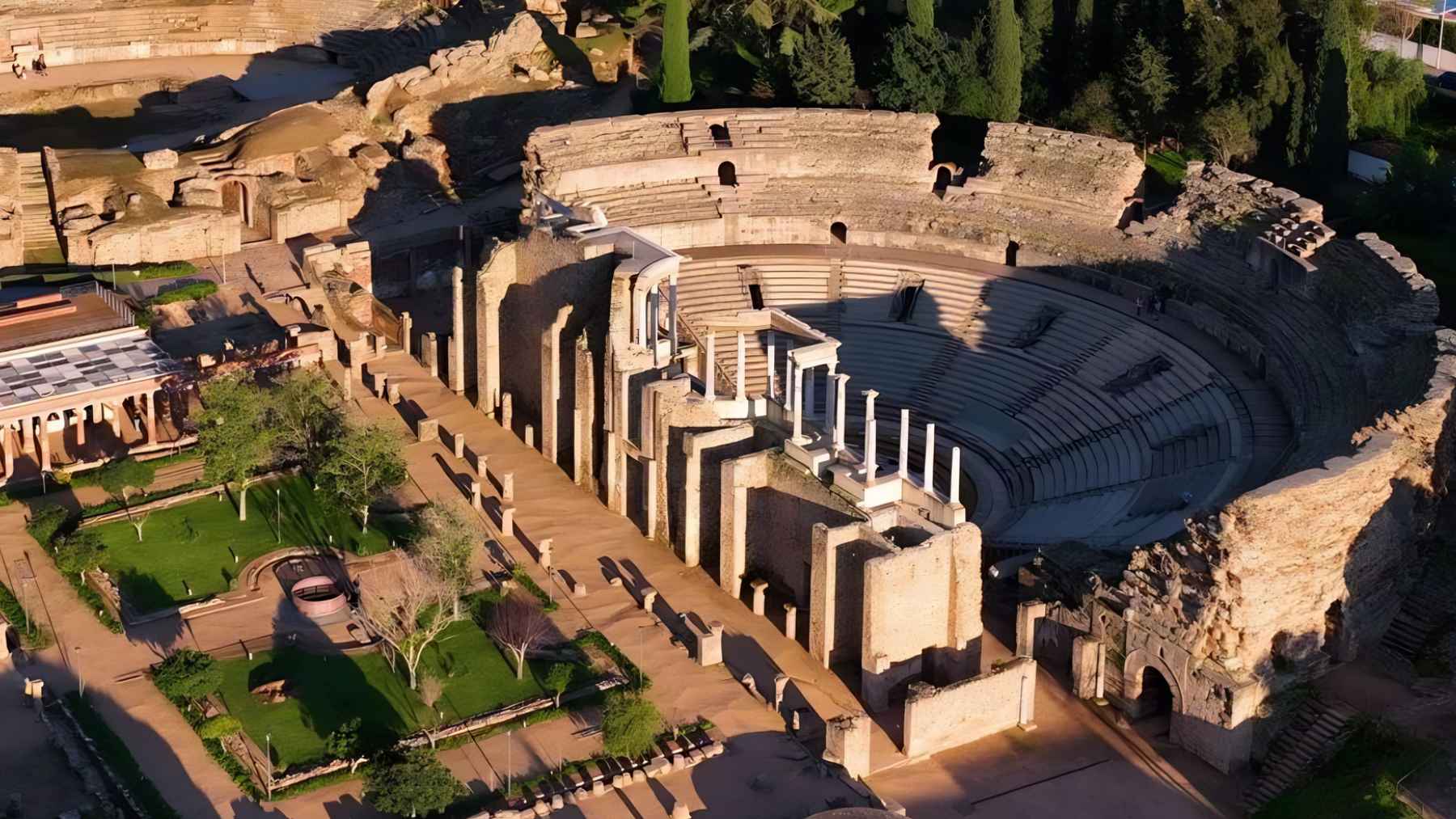
Roman troops entered the peninsula in 218 BCE during the Second Punic War, initially to break Carthaginian power. The last major northern campaigns ended in 19 BCE. That is roughly 199 years, although the conquest was a chain of wars, settlements, treaties, revolts, and pauses rather than one uninterrupted battlefield.
One detail often gets blurred. For most of those two centuries, the conqueror was the Roman Republic, not the later imperial system. Augustus’s rule began in 27 BCE, only eight years before the conventional end of the conquest, so the final push came just as Rome itself was changing political shape.
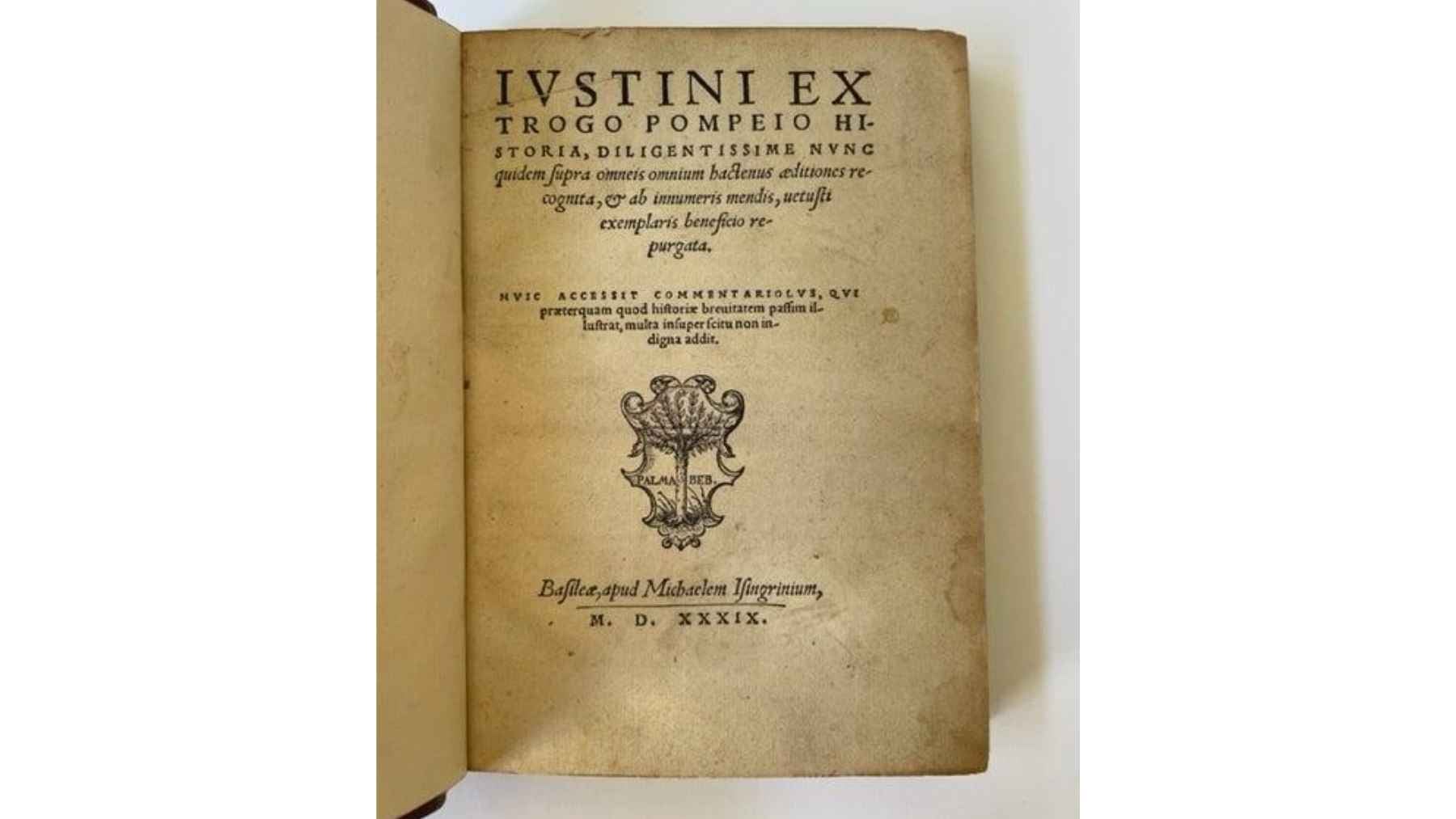
A 16th-century edition of Justin’s Epitome of the Philippic History preserves the ancient Roman account attributed to Pompeius Trogus about Hispania.
Hispania was not one army
The Iberian Peninsula contained many communities, including Iberians, Celtiberians, Lusitanians, Vaccaei, Vettones, Gallaeci, Cantabri, and Astures. They did not answer to one capital or field a single national army.
Rome usually confronted regional coalitions and city-based resistance, not a united country resembling the Spain or Portugal of today.
That helps explain both sides of the story, since some local elites collaborated with Rome while others resisted, and alliances could shift as wars dragged on. Yet fragmentation also made conquest hard because victory in one region did not settle the next. One surrender did not silence the whole map.
Fierce resistance stayed regional
Viriathus led the Lusitanian resistance through years of victories and reversals, and the surviving account says he fought Roman armies for roughly a decade. The wider conflict around Numantia lasted from 153 to 133 BCE, ending when Scipio Aemilianus captured the Celtiberian stronghold. These were major shocks to Roman power, but neither became a permanent peninsula-wide command.
The pattern continued in the north. Cantabrian and Asturian resistance lasted until the campaigns ended in 19 BCE, long after Rome controlled important southern and eastern areas.
The timeline shows extraordinary resistance, but it does not prove that unity alone would have defeated a state able to raise new armies, fund new campaigns, and come back.
Roman writers had an agenda
Ancient descriptions of entire peoples were not modern surveys. They often turned geography and warfare into short character sketches about bravery, luxury, discipline, or savagery.
Samuel Nión-Álvarez of the Spanish National Research Council cautions that classical texts can preserve outsider perceptions, but their stereotypes are not direct transcriptions of past societies.
The line about seeking an enemy at home fits that tradition. It praises toughness while also making Roman rule look like the force that imposed order on a divided land. The account then calls the inhabitants “barbarous and savage” and credits Augustus and law with bringing a more civilized way of life, a revealing piece of its Roman frame.
Why the line still resonates
Centuries later, the theme found a visual echo in Francisco de Goya’s Duel with Cudgels, painted around 1820 to 1823. The Prado describes the scene as “brutal and useless violence.” It is easy to connect that image with the ancient sentence, especially after Spain’s later civil conflicts, but a powerful symbol is not statistical proof.
The safest conclusion is also the most interesting. The passage preserves a genuine Roman observation about conflict and courage, while the two-century conquest shows that local resistance could be remarkably hard to crush.
But turning either fact into an eternal national defect flattens two thousand years of changing states, institutions, alliances, and identities, which is where history starts becoming mythology.
The surviving passage appears in Book 44 of the Epitome of the Philippic History, published in a modern Loeb Classical Library edition by Harvard University Press.