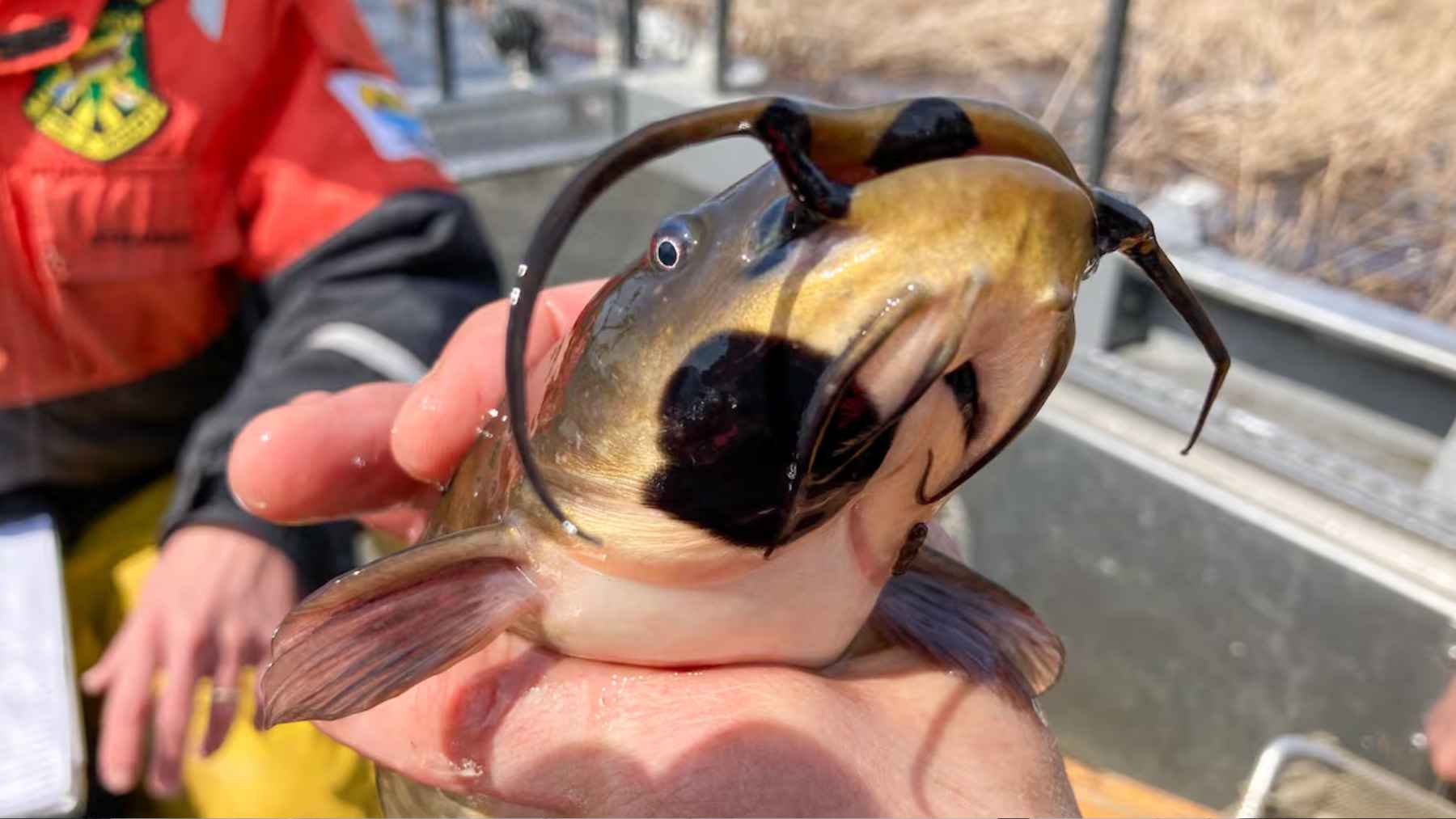
Anglers began seeing black patches and raised lumps on brown bullhead catfish in Lake Memphremagog in 2012. A genetic study published July 22, 2026, concludes that these melanomas are not forming independently in each fish.
The cancer cells themselves appear to move between animals, making this the first documented transmissible cancer in a fish and in a freshwater ecosystem.
The conclusion comes from an unusual DNA pattern. Tumors from different catfish were far more closely related to one another than to the fish carrying them, while surveys found lesions in 23 to 37% of sampled adults between 2014 and 2017. The 32-mile lake supplies drinking water to more than 175,000 people, but researchers report no known risk that the cancer can infect humans.
A cancer that acts like a parasite
Most cancers begin when one animal’s own cells mutate and multiply out of control. In a transmissible cancer, living tumor cells escape one host, survive outside it, evade another animal’s immune defenses, and take root again. The tumor becomes the infectious agent.
Only three other natural types had been recognized, in dogs, Tasmanian devils, and bivalves such as clams and mussels. Julie Dragon of the University of Vermont recalled, “At first, we thought this disease might be a virus, but that wasn’t panning out.”
Genomic researchers Emily Curd and Samuel Hart then helped turn the investigation toward the tumors’ own DNA.
The genetic fingerprint
The team used whole-genome sequencing, a method that reads nearly all of an organism’s DNA. It compared 19 pairs of tumor and normal tissue with healthy tissue from 84 unaffected lake fish and reference populations in Vermont, Maine, and New Hampshire. Samples from different years tested whether the same lineage persisted over time.
Conventional tumors usually resemble the body in which they arose, with many mutations unique to one growth. These tumors told a different story. They shared hundreds of thousands of variants absent from their hosts, and their large-scale DNA changes clustered together across fish and sampling years.
Researchers also screened tumor and normal tissue for viruses and microbes. They found no organism consistently tied to the lesions, although a pathogen or environmental stress could still have helped the cancer emerge or spread. The genetic evidence points strongly to one clonal cancer lineage.
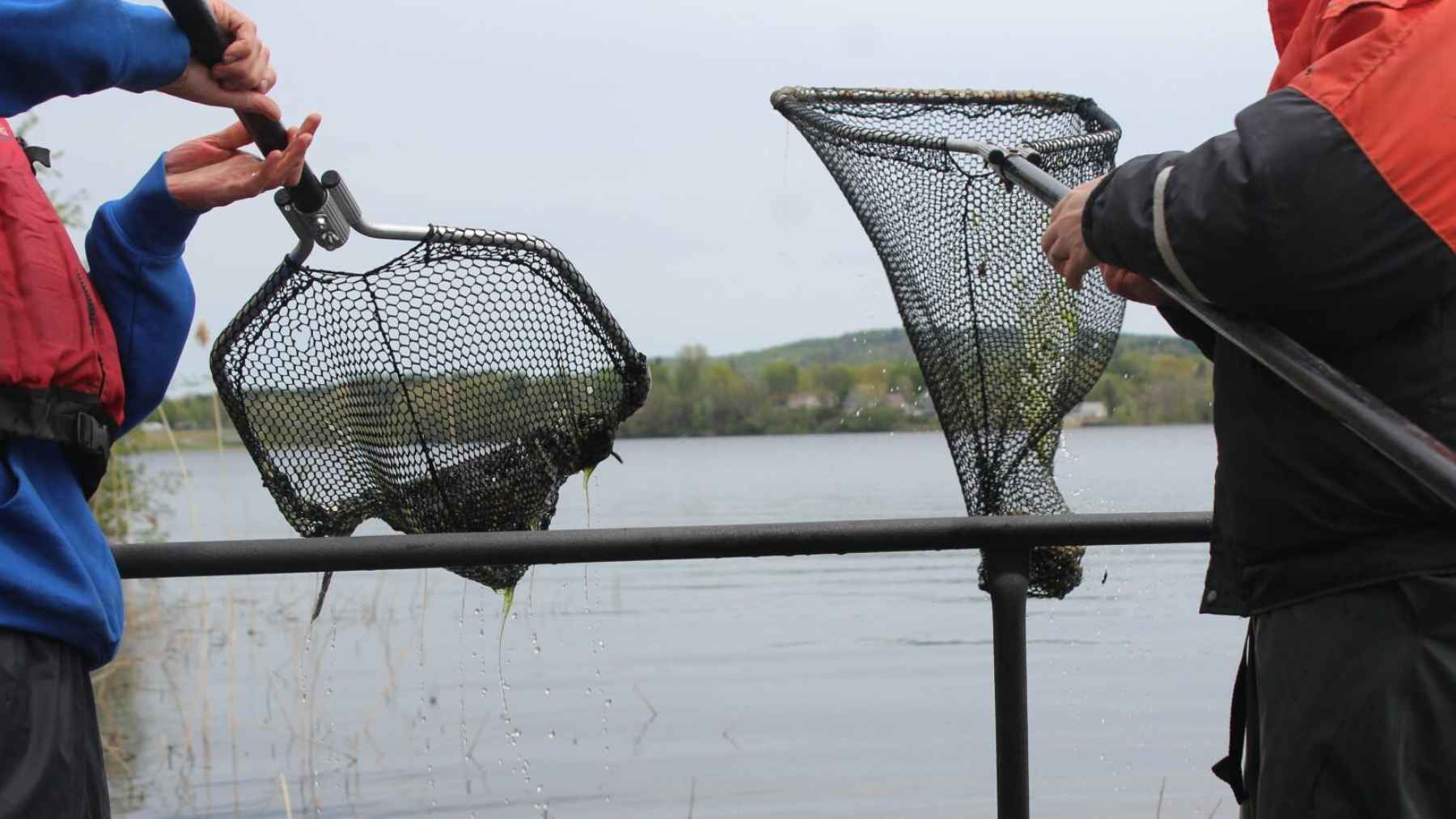
Fish are collected from a freshwater lake as scientists investigate disease, cancer and environmental health in aquatic ecosystems.
Why the flood raised alarm
The lesions appeared soon after severe 2011 flooding from Tropical Storm Irene, so residents wondered whether runoff had washed carcinogens into the lake.
An earlier pathology study confirmed malignant melanoma and found that it could invade muscle, bone, and internal organs. Pollution, sunlight, viruses, and inherited vulnerability all went onto the suspect list.
A separate May 2026 study led by retired U.S. Geological Survey scientist Vicki Blazer found seven metals at higher concentrations in lesioned skin, including arsenic and zinc. It documented lesions in 18 to 42% of fish across seven lake sites in 2023, 29% in a Maine pond, and 22% in a New Hampshire pond. That does not prove metals caused the cancer.
This is where the picture stays messy. Direct fish-to-fish transmission has not yet been demonstrated in a laboratory, leading some experts to urge caution, while the new study says the shared tumor genomes are the decisive signature. Both ideas could matter, since pollutants may weaken fish defenses even if living cancer cells are what spread.
How could the cancer spread?
The disease has so far been seen mainly in adults of spawning age. During spawning, brown bullheads crowd into shallow areas and make close contact, creating chances for loose tumor cells to enter through the skin, gills, or mouth. That is plausible, not proven.
Another route may be the lake itself. Brown bullheads are scaleless bottom-dwellers, so shed cells could persist in water or sediment before reaching another fish. Hormonal changes during reproduction might also weaken immune defenses.
The unanswered question now sits at the center of the investigation. Laboratory work must show whether tumor cells can move between fish and establish a new growth. Until then, genetics provides the strongest evidence, but not a direct observation of the transfer.
What anglers should know
There is no evidence that this cancer can infect people, and researchers say the cells cannot survive in another species. Still, Quebec health guidance recommends avoiding fish with tumors or other obvious deformities, a sensible rule when the catch on the cleaning table looks abnormal. Anglers should also follow local consumption advisories.
The bigger concern is ecological. Some infected bullheads appear able to live with lesions for years, while severe melanomas can invade other tissues, so scientists do not know whether the disease will eventually reduce fish populations. Reports from additional lakes will help reveal how far the lineage has traveled.
The discovery changes a basic assumption about where cancer can travel. It also gives biologists a new way to study how tumor cells survive outside their original host and how environmental stress might open the door.
The full study was published in the journal Nature.