Fish can be a nutrient-rich choice, with protein, omega-3 fats, vitamins, and minerals packed into every serving. But raw sushi, lightly cured anchovies, and undercooked fillets can carry a less welcome ingredient. Anisakis is a parasitic worm that can cause a painful digestive illness, and in rare cases, a dangerous allergic reaction.
Spanish food technologist and creator Santiago González, known online as San Tierno, recently urged people to buy fish already gutted, freeze it before eating it raw, and cook the belly section carefully.
“Have you ever wondered why you always have to freeze fish before eating it raw?” he asked. His main point is sound, but 48 hours in a home freezer should not be treated as a universal safety rule.
What anisakis is
Anisakis moves through a marine food chain that includes small crustaceans, fish, squid, and sea mammals. People become accidental hosts when they eat infected seafood raw or not fully cooked, allowing a live larva to attach to the stomach or intestinal wall.
The Centers for Disease Control and Prevention lists abdominal pain, nausea, vomiting, diarrhea, and mild fever among the possible symptoms. Some people develop hives, itching, or anaphylaxis, a severe reaction that can make breathing difficult. The parasite cannot spread from one person to another.
Why the belly matters
The belly flap is the soft, fatty strip of muscle beside the internal organs. That location matters because many larvae begin in or around the organs, and several fish studies have found more of them in nearby ventral meat than in the upper fillet.
A 2025 study of European hake found the front belly area was the most heavily affected part of the muscle. Removing the belly flaps cut the number of larvae found by 83% in the sampled fish, although trimming alone did not make the remaining meat safe.
So yes, the belly deserves extra attention, but the practical lesson is not to heat one small patch and ignore the rest. The entire edible portion must reach a safe temperature, especially the thickest section.
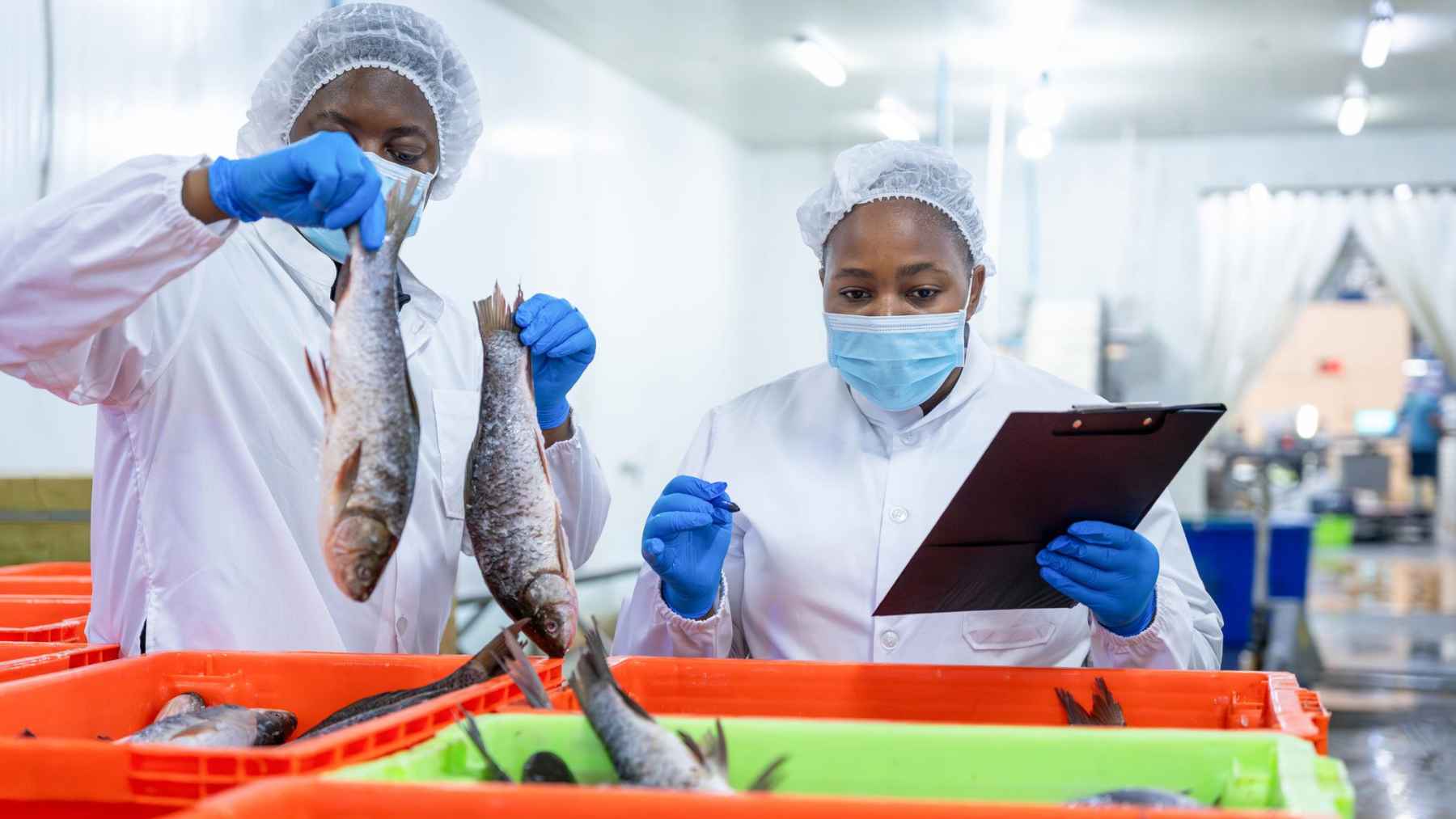
Workers examine fresh fish during processing, an important step in food safety before seafood is cooked or frozen to help prevent anisakis infection.
The 48-hour problem
González advised freezing fish for at least 48 hours before eating it, yet time alone is not enough to determine whether the treatment worked. The answer depends on the freezer temperature, the thickness of the fish, and how long its center remains fully frozen.
For fish that will be served raw, the U.S. Food and Drug Administration gives one validated schedule of -4°F or colder for seven days. Faster schedules require specialized equipment reaching -31°F, which is far below what most kitchen freezers can manage.
That is why two days in the freezer may create false confidence. A thick piece of fish can take time to freeze solid at its center, just as a large ice cube takes longer than a thin one.
Cooking does the job, too
Fish that will be thoroughly cooked does not also need parasite-destruction freezing. The key is to bring the whole piece to an internal temperature of 145°F, measured in the thickest part with a food thermometer.
No thermometer nearby? The flesh should be opaque and separate easily with a fork, though temperature is the more reliable check. A browned surface can look finished while the center remains cool, especially in a thick belly cut.
Vinegar, lemon juice, light salting, and cold smoking do not reliably replace freezing or proper cooking. That is why raw and lightly treated dishes such as ceviche, sashimi, sushi, and some pickled fish need seafood that has already received an approved freezing treatment.
Gut the fish quickly
Buying fish already gutted is another useful step. Removing the organs soon after capture or purchase takes away tissue where many larvae are found and can reduce the parasite load reaching the plate.
Still, visual inspection is not a guarantee. Larvae can be small, pale, or buried in the muscle, so “I do not see anything” is not a food-safety method. Freezing and heat remain the dependable barriers.
At home, keep fresh fish cold, prepare it promptly, and avoid letting raw juices touch ready-to-eat foods. A clean cutting board matters here just as much as it does when handling chicken.
Farmed fish needs nuance
Controlled feed and closed farming systems can sharply reduce parasite risk, but “farmed” does not automatically mean parasite-free.
A 2024 review from the European Food Safety Authority found no evidence of human-infecting parasites in many commonly farmed species, yet it also reported parasites in some fish raised in open cages or flow-through ponds.
Freshwater trout and carp are not considered anisakis risks under guidance from the Spanish Agency for Food Safety and Nutrition because this parasite has a marine life cycle. That statement applies only to anisakis and does not mean every raw freshwater dish is free of other parasite risks.
The takeaway is simple. Cook fish fully, or use fish frozen under a validated schedule before serving it raw.
The official scientific opinion supporting the updated farmed-fish assessment was published in the EFSA Journal.