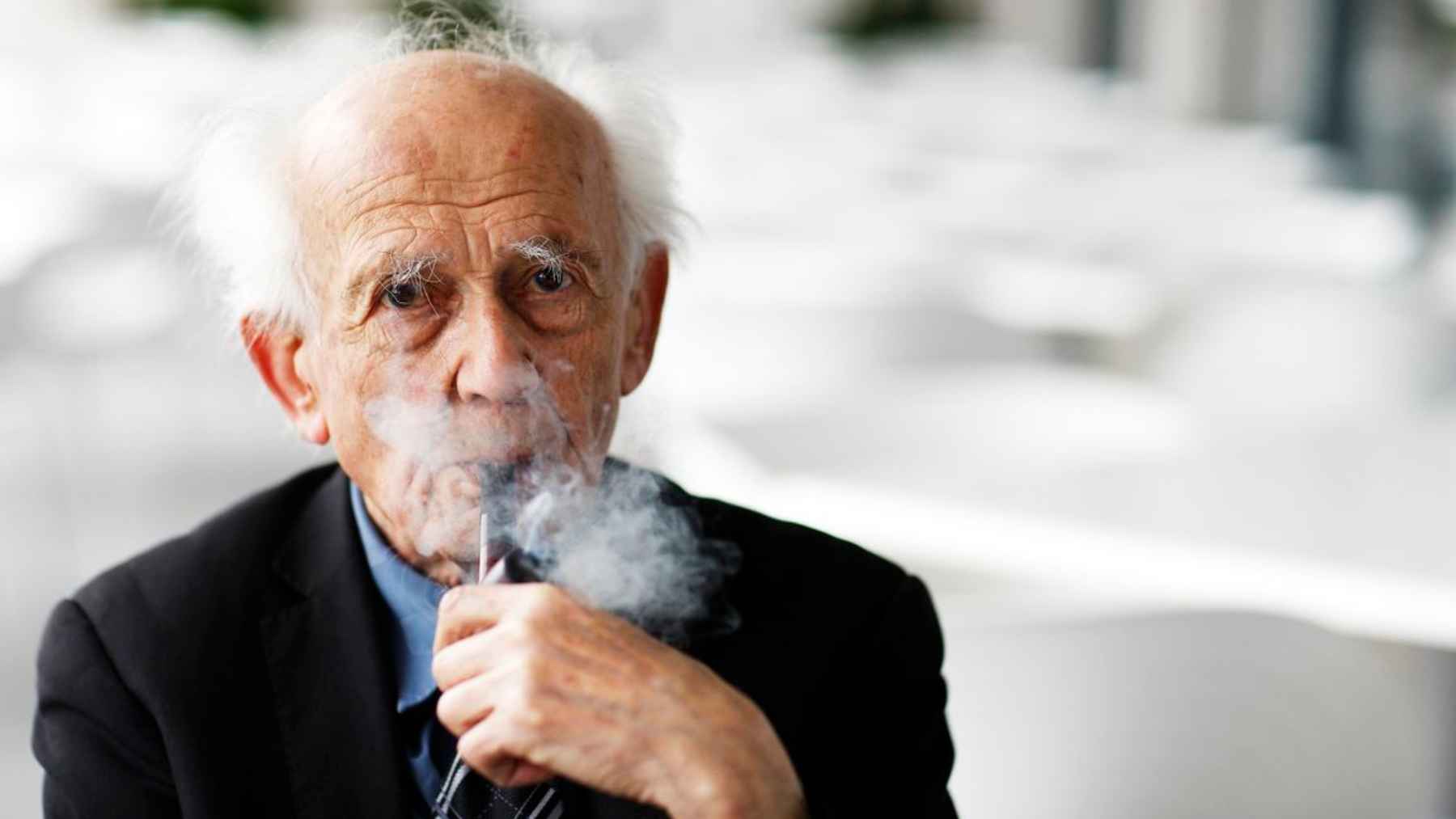
Have you ever left a store, or clicked “buy now,” feeling lighter for a moment, only to feel the old restlessness return later? That small emotional swing is the space Zygmunt Bauman tried to explain.
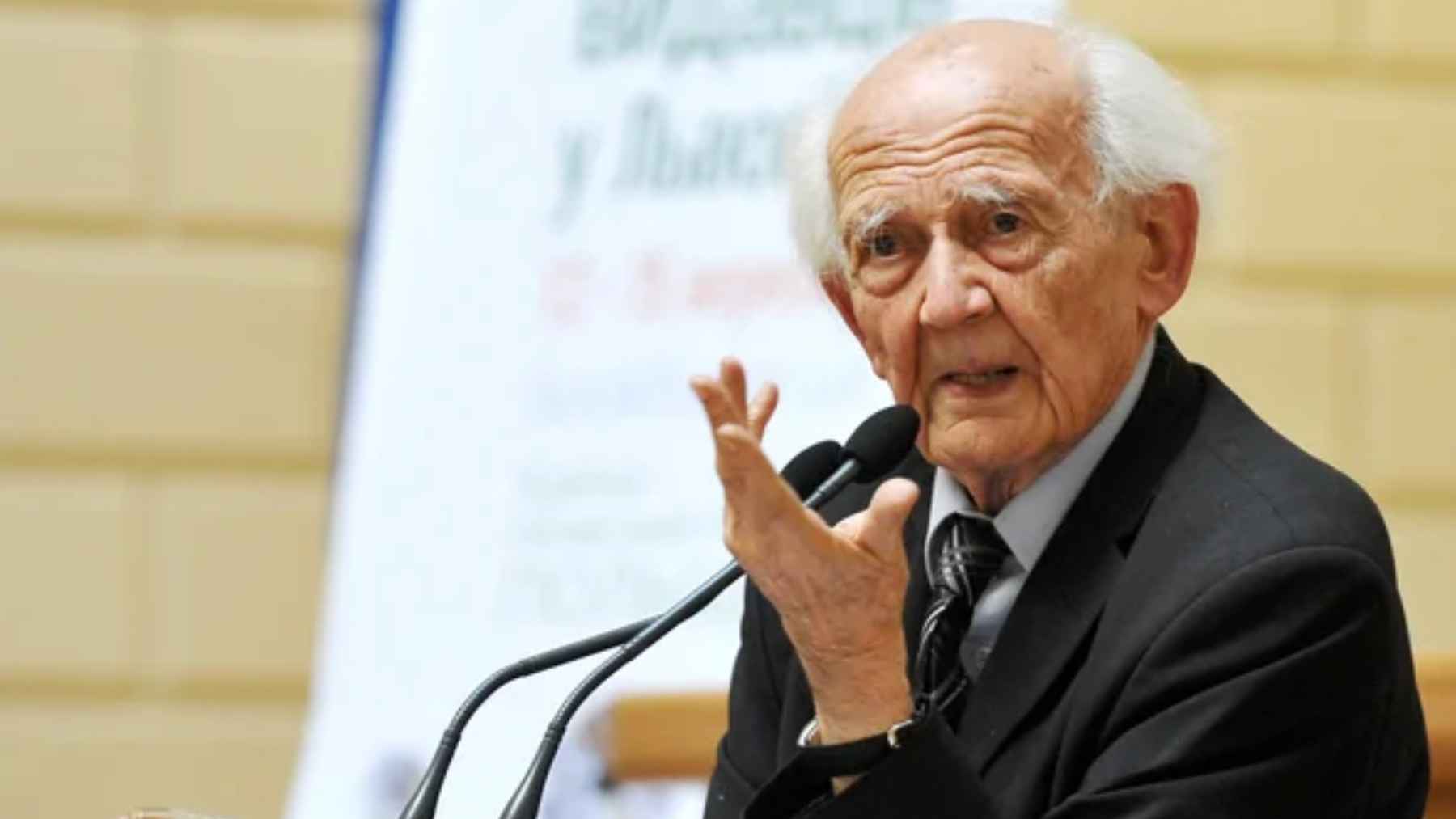
The late Polish thinker put it sharply in an interview with El Mundo, saying, “There are many ways to be happy, but in today’s society they all pass through a store.”
He was not simply scolding people for shopping; he was warning that when a culture teaches us to seek identity, relief, and belonging through consumption, happiness can start to feel like something we must keep purchasing.
A liquid life
Bauman’s best-known idea, “liquid modernity,” described a world where stable institutions, long careers, and lasting social roles lose their shape. The University of Leeds says his work examined the disappearance of traditional structures and the rise of consumer culture at the expense of civic engagement.
This trend drives less permanence in work, love, community, and even personal identity. A life that once seemed mapped out can now feel like an app that keeps demanding updates.
Happiness in a checkout line
In older “solid” societies, many people expected life to follow a clearer path. A job, a home, marriage, and a familiar community often shaped a person’s sense of purpose, even if those structures also carried limits and inequalities.
In Bauman’s liquid world, people are told to stay flexible. Change jobs, update your image, move when needed, reinvent yourself when the market asks. That can feel freeing, but it can also make the ground under daily life feel unsteady.
That is where the store comes in. A purchase gives quick proof that something has changed, even if the change is only a new phone, a jacket, or the latest thing everyone seems to be showing online.
The comfort fades fast
Bauman did not deny that buying can feel good–it often does. The problem begins when shopping becomes the main language a person has for comfort, success, or self-respect.
That kind of pleasure is usually brief. The package arrives, the screen lights up, the compliment lands, and then the feeling starts to fade. Soon, another purchase promises to bring it back.
In Spain, one sign of wider social fragility appears in family life. A 2024 CEU Demographic Observatory report said slightly more than half of marriages in Spain would end in separation, while the marriage fragility indicator reached 47.3% in 2022 after pandemic-era distortions.
Science points elsewhere
Modern research does not make Bauman’s argument for him, but it does point in a similar direction. Harvard Health Publishing describes dopamine, serotonin, endorphins, and oxytocin as “feel-good hormones,” and says habits such as exercise, meditation, diet, and time with people we care about can help support them.
That matters because many of these actions do not require a checkout line. A walk, a long conversation, a song, a book, or helping someone with a hard day can be ordinary. Still, they can give the brain cues of safety, meaning, and connection.
The Harvard Study of Adult Development has followed lives for decades and reached a simple finding that is hard to ignore. People who were more satisfied with their relationships at age 50 were healthier at age 80, and strong social ties were linked to better aging and less mental decline.
Social media is the new shop window
If the mall once showed people what to want, social media now does it in real time. It turns purchases, trips, meals, bodies, and lifestyles into a public display case, where likes can feel like proof that a choice mattered.
But there is a catch: a life built for display has to be updated constantly, and that means the feeling of being enough can become tied to the next post, the next outfit, or the next experience worth showing.
This is not only about money, it is also about attention. The trouble is, attention is exactly what relationships, learning, rest, and reflection need if they are going to deepen.
A different kind of wealth
At the end of the day, Bauman’s message is not “stop buying.” People need things, enjoy things, and sometimes find real comfort in small pleasures. No serious reading of his work requires pretending that consumption has no place in a normal life.
His point was about balance. When every promise of happiness ends in a store, other routes begin to look old-fashioned or inefficient. Working with others, studying, meditating, caring, and talking become slower roads in a culture addicted to shortcuts.
Maybe that is why his warning still travels so well. The bag is full, the cart is confirmed, and the feed looks perfect, yet something is still missing.
The main work behind Bauman’s idea of liquid modernity has been published by Polity Press in the book Liquid Modernity.