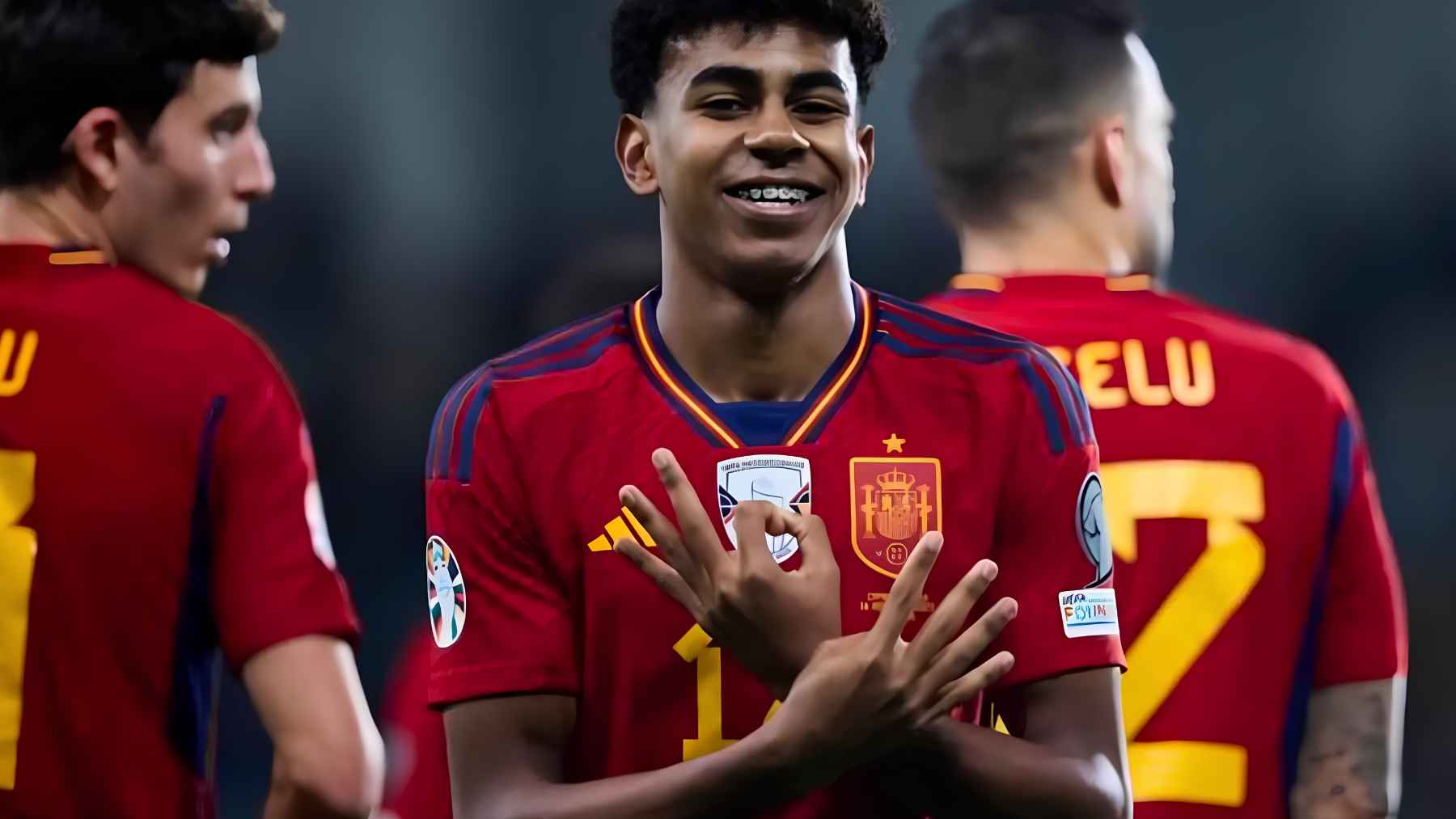
At 19, Lamine Yamal has already won the European Championship and the World Cup with Spain. On July 19, 2026, Spain defeated Argentina 1-0 after extra time, making the Barcelona winger one of the youngest players ever to appear in and win a World Cup final.
Yet even on soccer’s largest stage, two small details kept pointing back to home.
One was the headband carrying the word “Rocafonda.” The other was his familiar “304” hand sign after goals, a celebration connected to the neighborhood in Mataró where he grew up.
These are not random fashion choices or a carefully invented slogan. They are a public statement about identity, family, and belonging.
What “304” means
Rocafonda’s postal code is 08304, and Yamal uses its final three digits when he celebrates. He forms “304” with his hands, placing a neighborhood that was rarely known outside Catalonia in front of millions of viewers. A goal lasts seconds, but the message travels much farther.
During the 2026 World Cup, he also wore a headband marked “Rocafonda” and displayed the national flags connected to his parents on his boots. His father is Moroccan and his mother is from Equatorial Guinea. Put together, those details show several parts of his story without requiring a speech.
The final three digits are also simple enough for other people to repeat. Children and residents have copied the sign on local fields, while murals and neighborhood stories have turned the code into shorthand for community pride.
What once looked like an ordinary postal reference is now recognized far beyond Mataró.
The neighborhood behind it
Yamal was born in Esplugues de Llobregat on July 13, 2007, but Rocafonda became the community most closely tied to his childhood. It is a working-class, multiethnic area of Mataró where local residents still regard him as one of their own. The neighborhood helped shape the player before stadium crowds knew his name.
In an interview with “60 Minutes,” Yamal described Rocafonda as a place that, like many disadvantaged neighborhoods, can feel forgotten. He also stressed the pride shared by people there, saying, “We know where we come from, and we are proud of it.” That line explains the celebration better than any marketing campaign could.
That connection remains visible in the area. A mural of Yamal overlooks the community field where residents say he sharpened his skills, and neighbors gathered nearby during the World Cup final. When Spain won, the celebration was national, but in Rocafonda it also felt deeply local.
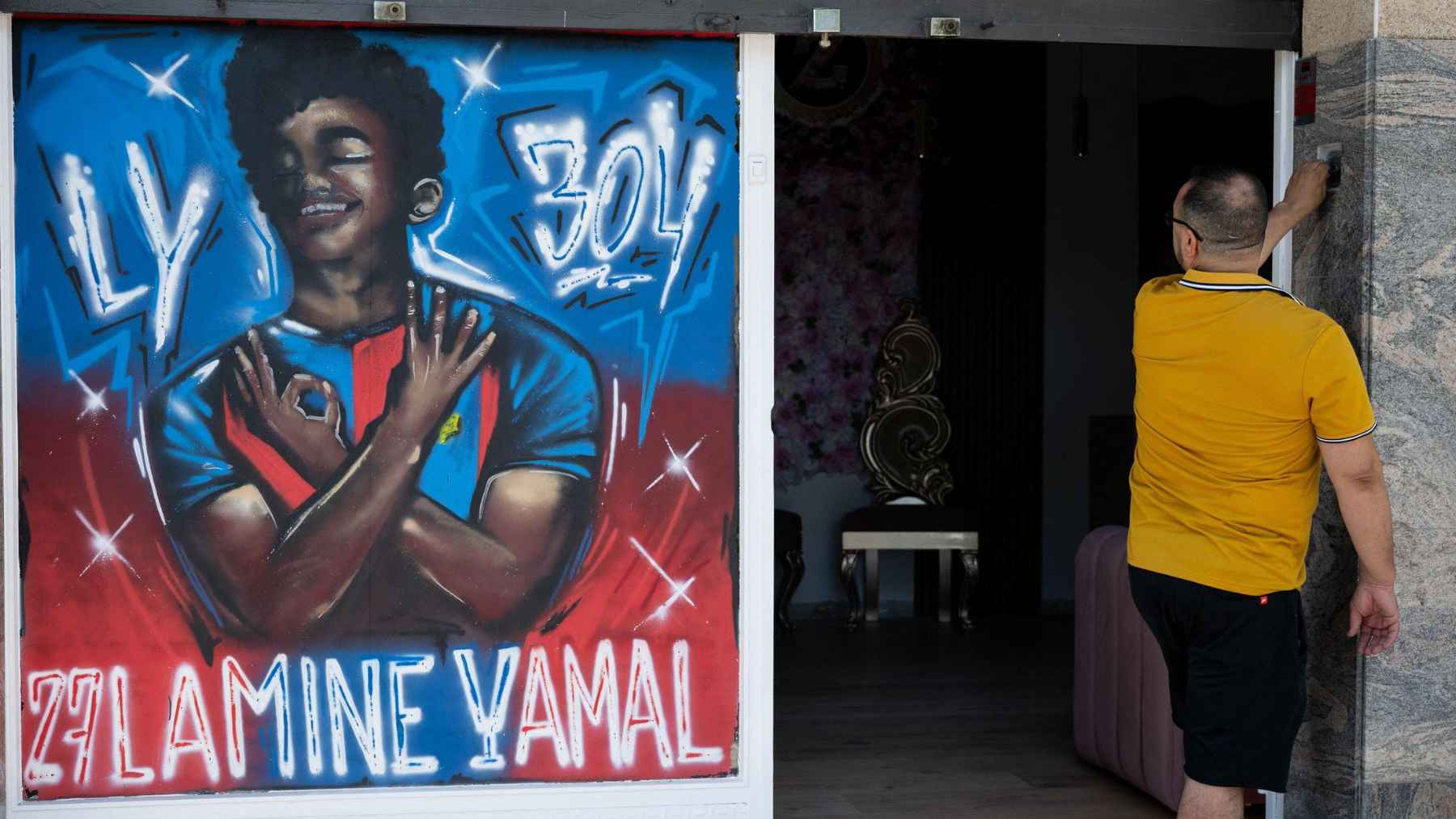
A mural celebrating a young soccer player displays the number 304, a symbol associated with Rocafonda and community pride.
Why roots matter psychologically
Spanish psychologist Leticia Martín Enjuto told Lecturas that the place where someone grows up is more than a physical location.
It is also where people learn about effort, relationships, solidarity, opportunities, and hardship. Over time, the neighborhood becomes an emotional map that a person carries into adult life.
Success can create pressure to distance yourself from anything considered modest or disadvantaged. Yamal appears to do the opposite by making Rocafonda more visible as his fame grows.
Enjuto’s point is that a stable identity does not erase the past but finds a way to include it, although this remains a psychological interpretation rather than a clinical judgment about the player.
In that reading, familiar symbols can act like an anchor when fame changes routines, relationships, and expectations almost overnight.
The headband and celebration suggest that moving into elite spaces does not require someone to hide where the journey began. Progress and loyalty to one’s beginnings do not have to pull in opposite directions.
A symbol bigger than one player
For children in Rocafonda, the “304” gesture offers something concrete to recognize. They can see a player from familiar streets reaching the highest level while still naming the place that raised him. That does not mean every young person will follow the same extraordinary path, but representation can widen what seems imaginable.
The timing has made the symbol even more powerful. Yamal and Pau Cubarsí became two of only a handful of teenagers to play in a World Cup final, and both finished the night as champions.
In a sport usually reduced to scoreboards, transfer fees, and trophies, three simple digits carried a whole neighborhood onto the field.
The headband’s real message
The headband may help keep Yamal’s curls in place, but “Rocafonda” is the part meant to be read. It answers a basic question about his public identity. Where did he come from? The answer stays visible even when he is far from home.
At the end of the day, his celebration is about belonging rather than geography alone. “304” represents family history, a multicultural community, and confidence in a past that does not need to be hidden. That is why the gesture resonates beyond Barcelona supporters or Spain fans.
The original report and psychological analysis were published by Lecturas.