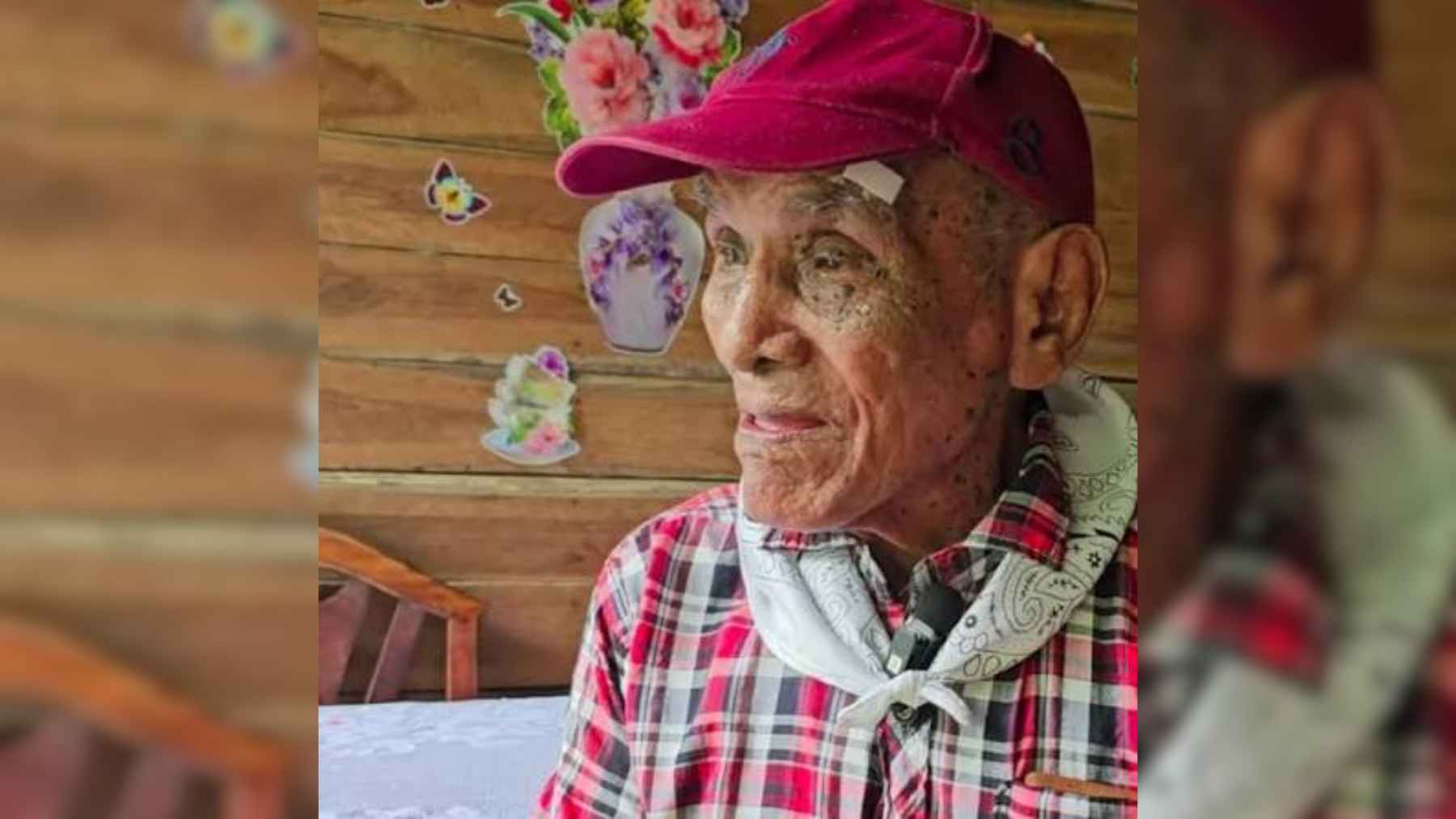
José Flores Flores arrived when the 20th century was still new. At a reported 119, the Costa Rican farmworker may now be the oldest person alive.
Civil and church records support a birth date of July 11, 1907, but international validators have not finished checking it. If confirmed, his claim would make him the world’s oldest living person by more than two years.
His story also connects extreme longevity with hard labor, family care, persistent poverty, and a rural way of life that is rapidly changing.
A world record still unproven
Flores was born in Las Lajas de Cañas, a farming community in northwestern Guanacaste. Costa Rica’s Civil Registry and electoral records confirm the 1907 birth date, and his family says they also hold a baptismal record from the same year.
Claims that this extreme requires more than one old document. The Gerontology Research Group defines anyone aged 110 or older as a supercentenarian and uses modern age-validation standards. The process checks whether records from different stages of life tell a consistent story.
As of Aug. 4, 2026, Guinness World Records recognizes Britain’s Ethel Caterham as the oldest living person. She is 116 and will turn 117 on Aug. 21, so Flores’ claimed age is more than two years greater. The all-time record still belongs to Jeanne Calment of France, who lived 122 years and 164 days.
A life built on hard work
Flores did not grow up with comfort or financial security. His mother left, his father died when he was seven, and his grandmother raised him. As a teenager, he traveled south to earn money through grueling work on banana plantations.
He later supported a wife and children through farm labor, but his wages never stretched far enough to buy land. After decades in other parts of Costa Rica, he returned to Guanacaste in 2024. He now lives in a modest wood-and-metal home on property his family does not own.
Age has left its mark. Flores has hearing loss, knee wear, and uses a walker, yet he still goes outside for the breeze, the birds, and a few words with neighbors. Around the breakfast table, he may play dominoes or cards after eating gallo pinto, a rice-and-beans dish, fresh cheese, and fried plantain.
What may explain his longevity
Asked for his formula, Flores gives a plain answer. “Work hard, trust in God, and eat healthy,” he says. It sounds simple, but researchers caution that no one habit can explain a life this long.
Jorge Vindas, founder of the Península de Nicoya Blue Zone Association, points to constant movement, traditional food, sunlight, spirituality, and close family and community ties. None of that was a wellness trend for Flores. It was ordinary rural life.
José Antonio Rabadán, who holds a doctorate in gerontology from the University of Alicante, adds the needed caution. Genetics, diet, physical activity, and social connection may all matter, but similar conditions do not produce the same outcome for everyone. Chance is still part of the picture.

Nicoya’s Blue Zone is fading
Flores lives near the Nicoya Peninsula, known internationally as a Blue Zone. The phrase describes a place where unusually many people reach old age while staying healthier than expected. But Flores spent most of his life outside the peninsula, so his case cannot prove the label by itself.
A 2023 study led by demographer Luis Rosero-Bixby at the University of Costa Rica examined 550,000 adult life histories from 1990 through 2020. Nicoyan men born in 1905 had 33% lower adult mortality than other Costa Rican men. For men born in 1945, mortality was 10% higher.
That is a striking reversal. The research documents the shift without reducing it to one simple cause, while reporting from Guanacaste points to processed food, tourism, real estate growth, and changing routines as pressures on the old rural pattern.
The trouble is, the culture may be changing faster than researchers can fully explain it.
A record with a larger warning
Costa Rica is aging as families shrink. Its statistics agency says the 2024 fertility rate fell to 1.12 births per woman, while average life expectancy remained close to 81 years.
Flores’ household reportedly receives only about 330 dollars a month, and his granddaughter Hellen Flores provides hands-on care despite an unstable income.
She says older people are too often treated like furniture, while José keeps control over his belongings and daily choices. Will the claim hold?
The records appear substantial, but the answer belongs to independent validators, and his life already shows how longevity grows from a messy mix of biology, work, food, community, chance, and care.
José Flores was first profiled by EL PAÍS.