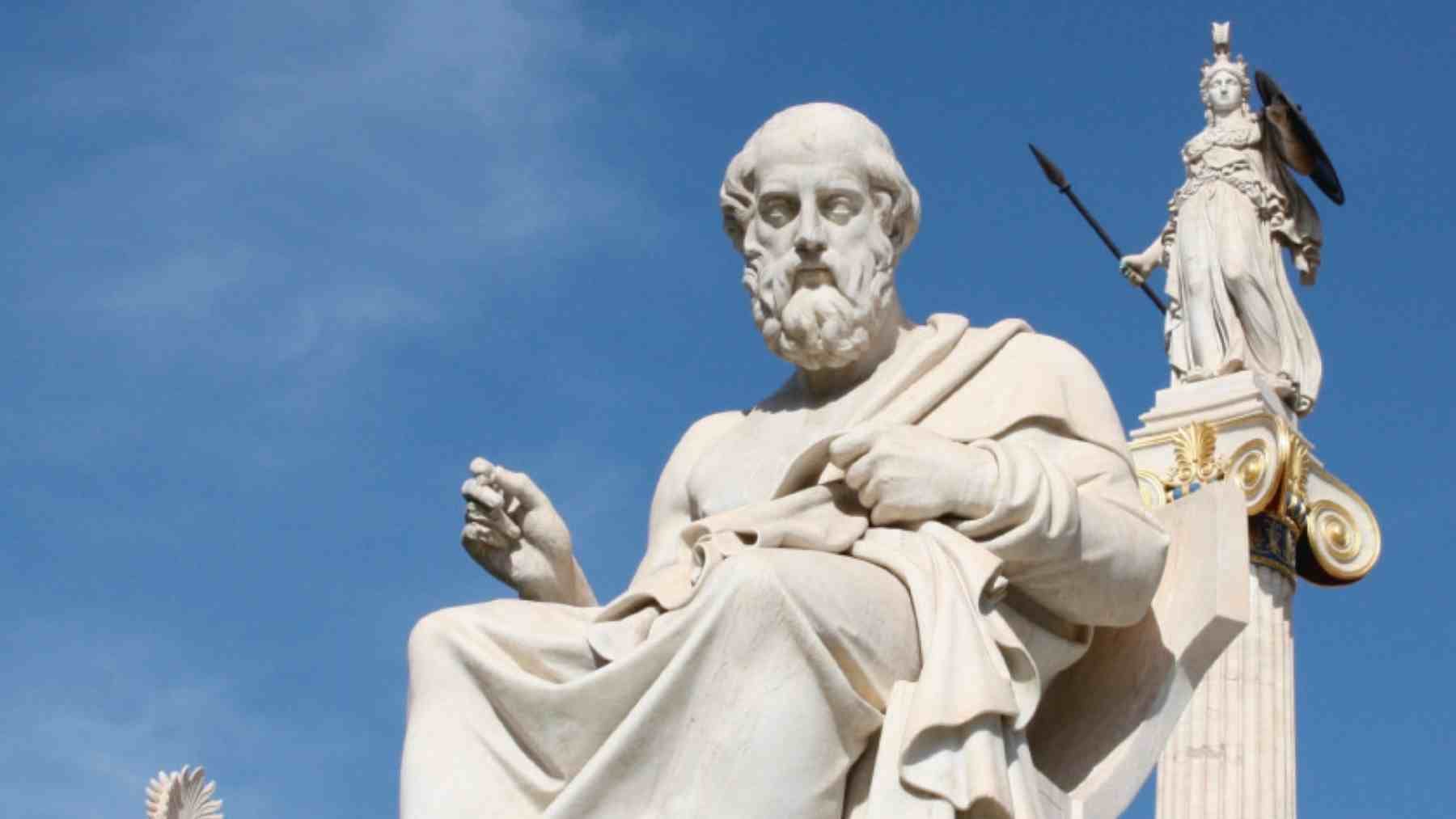
Most people think of poverty as a lack of money, food, housing, or basic security. Plato looked at the problem from another angle, asking what happens when the list of things we believe we need keeps growing faster than our ability to feel satisfied. In Laws, the Greek philosopher describes a “rule of moderation” and says that poverty consists “not in decreasing one’s substance, but in increasing one’s greed.”
That does not mean real financial hardship is just a mindset. It is not. But Plato’s old line still feels surprisingly modern in a world of wish lists, social comparison, beauty trends, fitness upgrades, and the quiet pressure to keep improving everything about ourselves. What if some of our stress is not only about what we lack, but about the desires we keep adding to the pile?
Why the quote still lands
Plato was not writing a self-help post. The passage appears in a political and moral discussion about land, debt, moderation, and social order, which makes the idea more serious than a simple “be grateful” slogan. In practical terms, he was warning that unchecked appetite can destabilize both a person and a community.
For everyday wellness, the point is more personal. There is a difference between needing enough and feeling that enough never arrives. That gap can become exhausting, especially when each purchase, milestone, or body goal only creates the next thing to chase.
Desire can feel endless
A new phone. A better gym routine. Another serum, supplement, sneaker, or “life-changing” morning habit. None of these things are automatically bad, and many can be useful, but the trouble starts when every desire becomes a requirement for feeling okay.
Modern research gives this ancient idea some backing. A meta-analysis published in the Journal of Personality and Social Psychology examined 753 effect sizes from 259 independent samples and found that materialism was associated with significantly lower well-being across commonly used measures. The link was strongest for risky health and consumer behaviors and for negative self-appraisals.
The comparison problem
The mind does not measure satisfaction in a vacuum. It often compares. That is why a person can have a stable home, a full closet, and a decent routine, yet still feel behind after five minutes of scrolling.
A 2024 study in SSM – Population Health analyzed 1,592 adults in Taiwan and found that both objective and subjective relative deprivation were negatively associated with health, happiness, life satisfaction, social relationships, and financial stability. Notably, subjective deprivation showed stronger associations with outcomes than objective deprivation.
Moderation is not denial
Plato’s answer was not to erase desire completely. A life without goals would be flat, and wanting better health, comfort, beauty, or financial security can be healthy. The real issue is whether desire is guiding your life or quietly running it.
A useful question is simple. Will this serve my life, or will it only calm a comparison for an afternoon? That small pause can turn an automatic craving into a conscious choice, which is often where better self-care begins.
Gratitude may help
This is where gratitude enters the conversation, not as a cure-all, but as a practical counterweight. A 2024 Frontiers in Psychology study found that a gratitude-based intervention reduced adolescents’ belief that material wealth brings happiness and signals success. A second part of the research suggested that parents who express gratitude perceived themselves as raising less materialistic children.
That is not magic. Gratitude does not pay rent, erase debt, or remove real barriers to health. But it can shrink the emotional distance between “I have nothing” and “I have something worth noticing,” and that shift matters more than people often admit.
How to use it in daily life
One way to apply Plato’s warning is to clean up your desire list the same way you would clean a closet. Some wants are useful. Some are outdated. Some were never really yours in the first place, but arrived through advertising, comparison, or pressure from people around you.
Try delaying nonessential purchases for 24 hours, unfollowing accounts that leave you feeling inadequate, or naming three things that already make your day easier. Small? Yes. But small habits are often where mental balance begins.
Plato’s point today
The reason this ancient sentence still survives is that it names a problem people recognize instantly. You can have more and still feel poor in satisfaction. You can also have modest means and feel steadier when your desires are clearer, calmer, and less controlled by comparison.
At the end of the day, Plato’s warning is not anti-money or anti-ambition. It is a reminder that well-being depends not only on what we collect, but on what we keep wanting after we already have enough.
The study was published in SSM – Population Health.