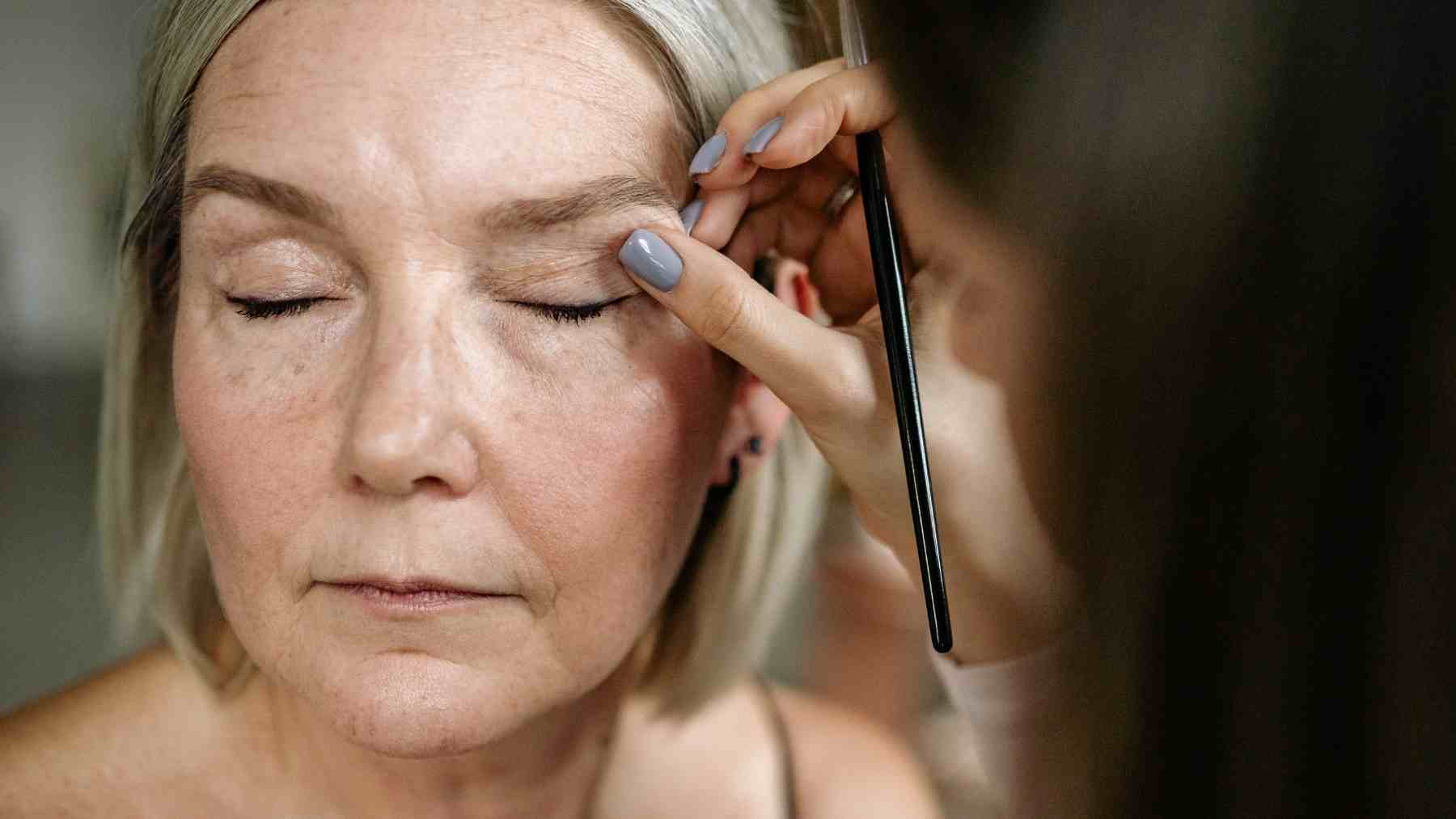
A growing number of women are choosing to leave the house without foundation, mascara, or even a tinted moisturizer. Psychology does not point to one neat explanation, but the pattern is clear in recent reporting and research. For many, a bare face is linked to comfort, authenticity, and stepping away from beauty rules that can feel exhausting on a busy morning.
The catch is that other people often read faces with and without cosmetics very differently. Studies on first impressions suggest makeup can shift how strangers judge confidence, competence, warmth, and even career status within seconds. That’s why going makeup-free can feel like a bigger decision than it should.
A bare face is not a personality test
So what does “not wearing makeup” really say about someone? In real life, it can mean almost anything, like a preference for simplicity, skin sensitivity, or just being late for work and trying to catch the train. The most accurate takeaway is that it is rarely a reliable window into character.
Tara Well, a psychologist at Barnard College of Columbia University, has argued that the “no-makeup look” can reflect greater ease with one’s real appearance and a desire to be seen without camouflage. That does not mean every woman who skips makeup is making a social statement, and it definitely does not prove anything about her mental health on its own.
There’s also a practical angle that gets overlooked. Makeup can be time-consuming, expensive, and mentally “sticky” in the sense that it adds one more thing to monitor throughout the day. Sometimes the decision is less about identity and more about not carrying an extra task around in your head.
How makeup shapes snap judgments
In a widely cited experiment published in PLOS ONE, researchers showed the same women’s faces with and without different makeup looks, then asked viewers to rate them on traits like attractiveness, competence, likability, and trustworthiness. Even with extremely brief exposure times of 0.25 seconds (250 milliseconds), cosmetics had significant positive effects on all outcomes.
But here’s the nuance that matters for everyday life. In that same work, when people had longer to look, the effect of makeup on likability and trust varied depending on the style, meaning some looks lost their advantage once viewers had time to think. In plain English, makeup can help at first glance, but “more” does not automatically translate to “better” once someone starts forming a fuller impression.
Another layer is that identity still matters more than makeup in many cases. A 2016 PLOS ONE paper comparing professionally applied cosmetics with differences between faces found that makeup can meaningfully shift attractiveness ratings, but between-person differences remain larger overall. That helps explain why two people can wear the same product and get totally different reactions.
The double bind in workplaces and public life
These impressions do not stay in the mirror. In a 2006 Journal of Applied Social Psychology experiment, participants rated photos of the same women with and without cosmetics, and the women wearing makeup were perceived as healthier and more confident, with appearance also shaping assumptions about social and professional outcomes. It’s a reminder that some workplace expectations are not written down, but people still feel them.
That pressure shows up in newer research too. A 2026 study in the journal Science Communication describes makeup as a kind of “code switching” among women in science communication, used to navigate expectations of credibility, professionalism, and authority. The study also highlights the downside, which is that these strategies can reinforce gendered norms that link competence to appearance in the first place.
And of course, it’s not just the office. Video calls, social media, and high-definition phone cameras can make people feel like they are constantly “on,” even when they are just trying to run errands or grab coffee. No wonder some women experience going makeup-free as relief, while others experience it as exposure.
What the research suggests about self-esteem and anxiety
One of the most misunderstood parts of this topic is the mental health connection. A small 2008 study in Individual Differences Research found cosmetic usage was positively correlated with anxiety and conformity, and negatively correlated with measures like self-esteem and social confidence. It was correlational, so it cannot prove makeup causes anxiety, but it does show that appearance management can overlap with insecurity for some people.
At the same time, larger studies suggest the relationship is not one-directional. In 2022, researchers surveyed 1,483 Brazilian women and examined how self-esteem and body image attitudes relate to money spent on makeup, time spent applying it, and how often it’s used. The findings point to a more complicated mix where body image attitudes and different forms of self-esteem relate to makeup use in different ways, rather than a simple story of “low confidence equals more makeup.”
This is where it gets real for readers. If makeup feels fun, creative, or grounding, that can be valid. If it feels like a daily requirement to be treated well, that is a different situation, and it can quietly drain well-being over time.
Skin health and ingredient awareness
For some people, skipping makeup is not primarily psychological at all. It is dermatological. Cosmetics can trigger irritant or allergic contact dermatitis, and reactions may show up as itching, burning, or a rash, sometimes taking days to appear after exposure.
Ingredient awareness matters here, especially for sensitive skin. The U.S. Food and Drug Administration lists common cosmetic allergen categories that drive many reactions, including fragrances, preservatives, dyes, metals, and natural rubber. If someone goes makeup-free because their skin calms down without certain products, that is not “letting herself go.” It is basic health management.
The takeaway
Maybe the most useful question is not “What does she mean by not wearing makeup” but “Why do we feel entitled to decode it.” Research on first impressions shows how quickly appearance cues become assumptions about competence, trust, and status, even when none of those things have actually been measured.
That is the part worth challenging, especially if we care about mental well-being in everyday spaces like offices, schools, and family gatherings.
At the end of the day, going makeup-free can be a self-care decision, a skin-care decision, a time-saving decision, or simply a neutral one.
The study was published on Science Communication.