The point is not to romanticize emotional silence or call neglect a parenting strategy. The same report notes that the era’s distance around feelings caused real harm, even as psychologists now study what got lost when childhood became more supervised.
Resilience was built in the boring minutes
In 1966, developmental psychologist Diana Baumrind described three parenting models, “authoritarian,” “authoritative,” and “permissive,” and her work changed how researchers talked about parenting. Her labels still show up any time we argue about what kids “need” at home. An OECD review later summarized “authoritative” parenting as firm but warm and responsive, unlike “authoritarian” parenting which demands obedience without that responsiveness.
But kids living through that period did not need a framework to feel what daily life demanded. They lived in the gap between needing something and getting it, and those small delays quietly trained patience, problem-solving, and self-trust. In the report, the examples are almost painfully ordinary, waiting for a TV show at its airtime, saving up to buy something, and sitting with boredom without a screen.
Free play was a kind of emotional gym
That unsupervised time was not just “running around.” Psychologist Peter Gray has argued that as children’s independent activity and free play have shrunk since the 1960s, youth rates of anxiety, depression, and suicide have risen in parallel, while also acknowledging that correlation is not proof. What happens when every argument gets an adult referee before a kid learns to negotiate it?
The American Academy of Pediatrics makes a similar case from a clinical angle, describing play and “safe, stable, nurturing relationships” as part of healthy development and noting that play can help regulate a child’s stress response. In practical terms, play is where kids rehearse coping before the stakes feel high.
The quiet shift from “I can” to “life happens to me”
Gray’s work often points readers toward another big idea, “locus of control,” which measures whether people feel life is mostly shaped by their actions or by outside forces. In the report, psychologist Jean Twenge’s analysis is framed as a warning sign that this belief has moved in the wrong direction for young people.
In a large meta-analysis of U.S. samples, Twenge and colleagues reported that locus of control became substantially more external from 1960 to 2002, and that the average college student in 2002 was more external than about 80% of students in the early 1960s. Their data set included more than 14,000 college students and nearly 8,000 children, which is part of why the finding still gets cited.
When your baseline assumption is “I can influence what happens next,” setbacks land differently. When the assumption becomes “someone else will fix it or something else will decide it,” stress has an easier time taking over.
Distress tolerance is not the same as emotional numbness
The report uses the phrase “distress tolerance” for the ability to feel bad without needing that discomfort to stop immediately. It is a useful concept, and researchers study it because it relates to a wide range of psychological symptoms and disorders.
But there is a trap here. A child can learn to sit with discomfort while also learning that their emotions are inconvenient, and that second lesson is not resilience, it is disconnection.
That is why the healthiest takeaway is a both-and approach. Let kids struggle with age-appropriate problems, and also teach them the language to name what they feel and ask for support.
What “bring back independence” can look like in 2026
Start small and make it routine. Build in blocks of unstructured time where adults are nearby but not directing the play, because the point is to let kids negotiate rules, boredom, and minor conflict without a referee. Keep it age-appropriate and genuinely safe, with clear boundaries and check-ins.
Then widen the circle of responsibility in practical ways, like letting an older child place their own order at a counter, handle a small budget, or plan the steps for a school project. It is the everyday repetition that reinforces a more internal sense of control, not one big leap.
And for adults, the same training still works. Practice “micro-delays” like leaving your phone in another room, taking a walk without headphones, or waiting a few minutes before responding to a stressful message, and notice that you can tolerate the feeling and still choose your next move.
Why this matters right now
It is hard to talk about resilience without naming the backdrop. The CDC’s 2023 Youth Risk Behavior Survey results describe a youth mental health crisis, while also noting some improvements from 2021 to 2023, including a drop in persistent sadness or hopelessness from 42% to 40% among high school students.
Modern kids are not “weak” and parents are not “doing it wrong,” but the direction is still clear. Giving young people more agency and more real-world practice dealing with discomfort can be preventive mental health. The report was published on “CDC.gov”.
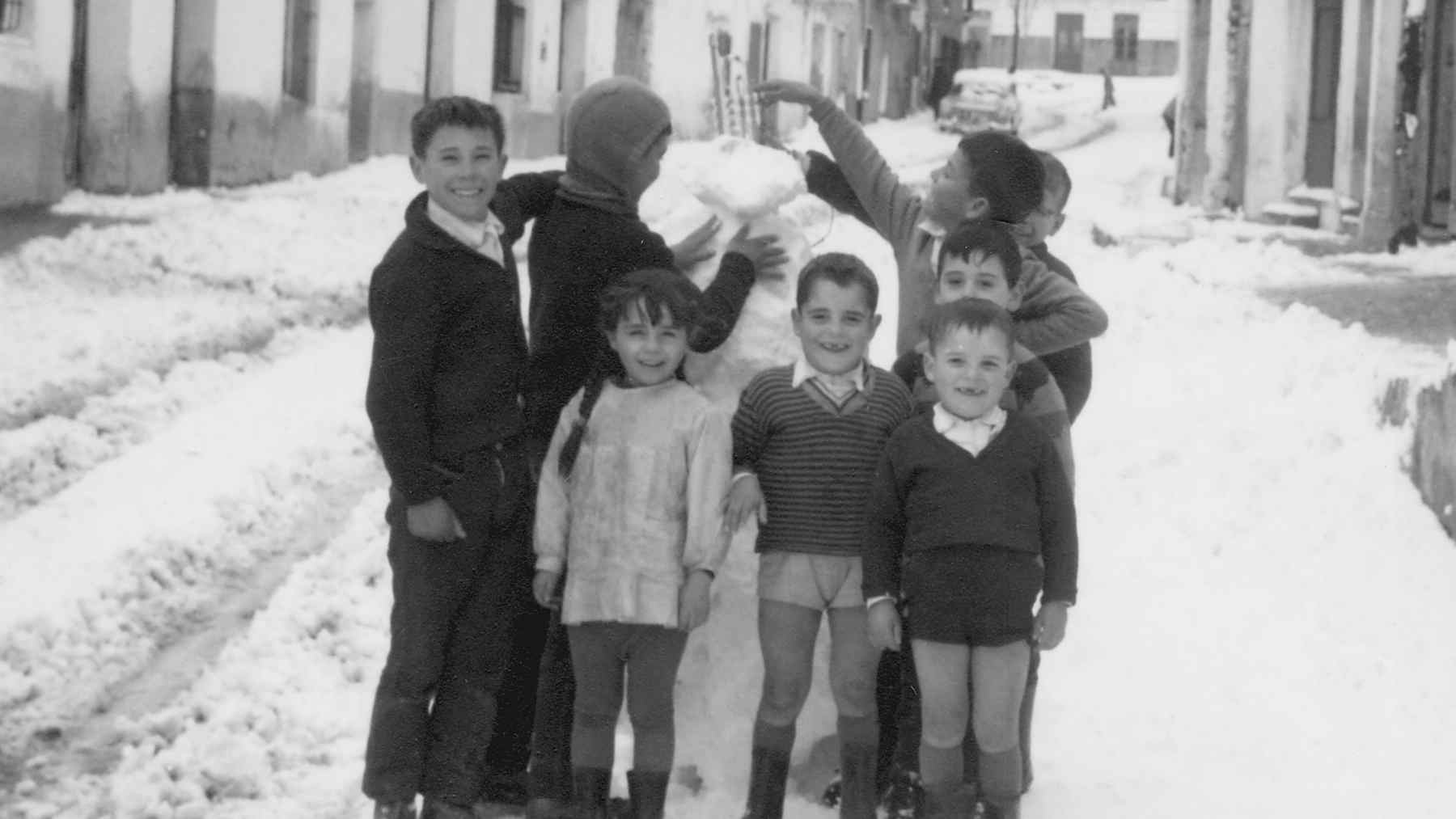
If you grew up in the 1960s, you might remember being told to stop crying, go outside, and “work it out” on your own. A recent report argues that this hands-off style did not just make people “tough” it built a specific kind of resilience that is getting harder to find today.
The point is not to romanticize emotional silence or call neglect a parenting strategy. The same report notes that the era’s distance around feelings caused real harm, even as psychologists now study what got lost when childhood became more supervised.
Resilience was built in the boring minutes
In 1966, developmental psychologist Diana Baumrind described three parenting models, “authoritarian,” “authoritative,” and “permissive,” and her work changed how researchers talked about parenting.
Her labels still show up any time we argue about what kids “need” at home. An OECD review later summarized “authoritative” parenting as firm but warm and responsive, unlike “authoritarian” parenting which demands obedience without that responsiveness.
But kids living through that period did not need a framework to feel what daily life demanded. They lived in the gap between needing something and getting it, and those small delays quietly trained patience, problem-solving, and self-trust.
In the report, the examples are almost painfully ordinary, waiting for a TV show at its airtime, saving up to buy something, and sitting with boredom without a screen.
Free play was a kind of emotional gym
That unsupervised time was not just “running around.” Psychologist Peter Gray has argued that as children’s independent activity and free play have shrunk since the 1960s, youth rates of anxiety, depression, and suicide have risen in parallel, while also acknowledging that correlation is not proof.
What happens when every argument gets an adult referee before a kid learns to negotiate it?
The American Academy of Pediatrics makes a similar case from a clinical angle, describing play and “safe, stable, nurturing relationships” as part of healthy development and noting that play can help regulate a child’s stress response. In practical terms, play is where kids rehearse coping before the stakes feel high.
The quiet shift from “I can” to “life happens to me”
Gray’s work often points readers toward another big idea, “locus of control,” which measures whether people feel life is mostly shaped by their actions or by outside forces. In the report, psychologist Jean Twenge’s analysis is framed as a warning sign that this belief has moved in the wrong direction for young people.
In a large meta-analysis of U.S. samples, Twenge and colleagues reported that locus of control became substantially more external from 1960 to 2002, and that the average college student in 2002 was more external than about 80% of students in the early 1960s.
Their data set included more than 14,000 college students and nearly 8,000 children, which is part of why the finding still gets cited.
When your baseline assumption is “I can influence what happens next,” setbacks land differently. When the assumption becomes “someone else will fix it or something else will decide it,” stress has an easier time taking over.
Distress tolerance is not the same as emotional numbness
The report uses the phrase “distress tolerance” for the ability to feel bad without needing that discomfort to stop immediately. It is a useful concept, and researchers study it because it relates to a wide range of psychological symptoms and disorders.
But there is a trap here. A child can learn to sit with discomfort while also learning that their emotions are inconvenient, and that second lesson is not resilience, it is disconnection.
That is why the healthiest takeaway is a both-and approach. Let kids struggle with age-appropriate problems, and also teach them the language to name what they feel and ask for support.
What “bring back independence” can look like in 2026
Start small and make it routine. Build in blocks of unstructured time where adults are nearby but not directing the play, because the point is to let kids negotiate rules, boredom, and minor conflict without a referee. Keep it age-appropriate and genuinely safe, with clear boundaries and check-ins.
Then widen the circle of responsibility in practical ways, like letting an older child place their own order at a counter, handle a small budget, or plan the steps for a school project. It is the everyday repetition that reinforces a more internal sense of control, not one big leap.
And for adults, the same training still works. Practice “micro-delays” like leaving your phone in another room, taking a walk without headphones, or waiting a few minutes before responding to a stressful message, and notice that you can tolerate the feeling and still choose your next move.
Why this matters right now
It is hard to talk about resilience without naming the backdrop. The CDC’s 2023 Youth Risk Behavior Survey results describe a youth mental health crisis, while also noting some improvements from 2021 to 2023, including a drop in persistent sadness or hopelessness from 42% to 40% among high school students. (cdc.gov)
Modern kids are not “weak” and parents are not “doing it wrong,” but the direction is still clear. Giving young people more agency and more real-world practice dealing with discomfort can be preventive mental health.
The report was published on CDC.gov.